
Benjamin Franklin was 81 years old and in poor health when he signed the Constitution in 1788. In a letter to a French scientist bragging about the permanence of that document, Franklin famously wrote, "Our new Constitution is now established, and has an appearance that promises permanency; but in this world nothing can be said to be certain, except death and taxes."
That truism points to the unalterable fact that businesses dealing with taxes and the end of life are recession-proof, depression-proof, and inflation-proof. And as long as governments rule over people and the secret of immortality eludes scientists, those industries will grow.
Today, the death industry is enjoying unprecedented growth. In fact, entrepreneurs have invented new and exciting ways to separate people from their hard-earned cash to take advantage of the boom in dying. Websites like afterall.com, which help drive millions of dollars in spending by people cataloging their end-of-life wishes online, are doing land-office business. The hospice industry is exploding in numbers and value, attracting billions of dollars in private equity. The old-fashioned family-owned funeral home is disappearing, being replaced by franchises and corporate ownership. Grief counseling and support, which was a field valued at $4 billion in 2024, is expected to double to $8 billion in 2032.
The rise in expected customers for these end-of-life businesses is what's driving the growth spurt. Upwards of 60 million baby boomers are expected to die in the next 30 years, and good old-fashioned American capitalism is working its magic to turn a profit on all of it. It's a $100 billion industry now and is expected to top $217 billion by 2034.
One of the newest industries in the dying business is the emergence of "death doulas." A "doula" is an ancient tradition going back to the Greeks, where slave women or servants assisted the woman of the house in domestic chores and child rearing.
In the 1970s, doulas became specialized female helpers who assisted new mothers with breastfeeding and newborn care in various cultures. America, being the melting pot it is, embraced doulas for a variety of tasks, including those related to childbirth.
Today, the meaning has expanded far beyond its 1970s birthing roots. It is used as a broad term for anyone who provides emotional, physical, and informational support during major life transitions — hence the rise of modern terms like "postpartum doulas," "antepartum doulas," and "death doulas" (or "end-of-life doulas").
Death doulas can be used alone or in conjunction with hospice care. And the need and desire for their services are causing a huge increase in their numbers. "Between 2019 and 2024, membership in the National End-of-Life Doula Alliance—a dues-paying organization for death doulas and those who train them—grew from approximately 260 to over 1,600," notes The Free Press culture writer Kat Rosenfield. "On social media, posts from death doulas rack up thousands of views; topics range from environmentally friendly funeral practices to what a death rattle really sounds like."
The popularity of this content is proof not only that a market exists for the services that death doulas offer, but so too does a hunger for a more expansive cultural conversation around the topic of death itself.
There are any number of reasons for this, not the least of which is simple supply and demand: An increasing share of the American population is entering their twilight years, in a world where life expectancy is greater than ever, but dying well remains difficult. In many cases, the end of life is entangled with a maddening bureaucracy that regulates everything from the dispensation of medication and how many hours a hospice nurse can spend in your home, to whose consent is required if you wish your body to be cremated instead of interred. Among other things, death doulas may function as end-of-life administrative assistants, helping to manage funeral planning, medical advance directives, and the proverbial getting-in-order of affairs.
"But even in cases where a patient’s family is present and on top of things, there’s still something to be said for having someone in the room who isn’t grieving the loss to come, who can absorb the burdens that a dying person and their loved ones don’t want to put on each other," Rosenfield writes. One Reddit poster confirmed the value of a death doula in that regard. “It has been so eye opening to see the relief and overwhelming positive reaction my Mom has had to having someone to talk to about the fact she is dying.”
I've heard more than one friend who later died make the simple observation that "dying sucks" and not just for the obvious reasons. This reality has fed the growth of death doulas who see too many people dying alone and terrified.
“I saw a lot of death, and almost every single death that I witnessed was tragic and awful and done poorly,” said Kacie Gikonyo.
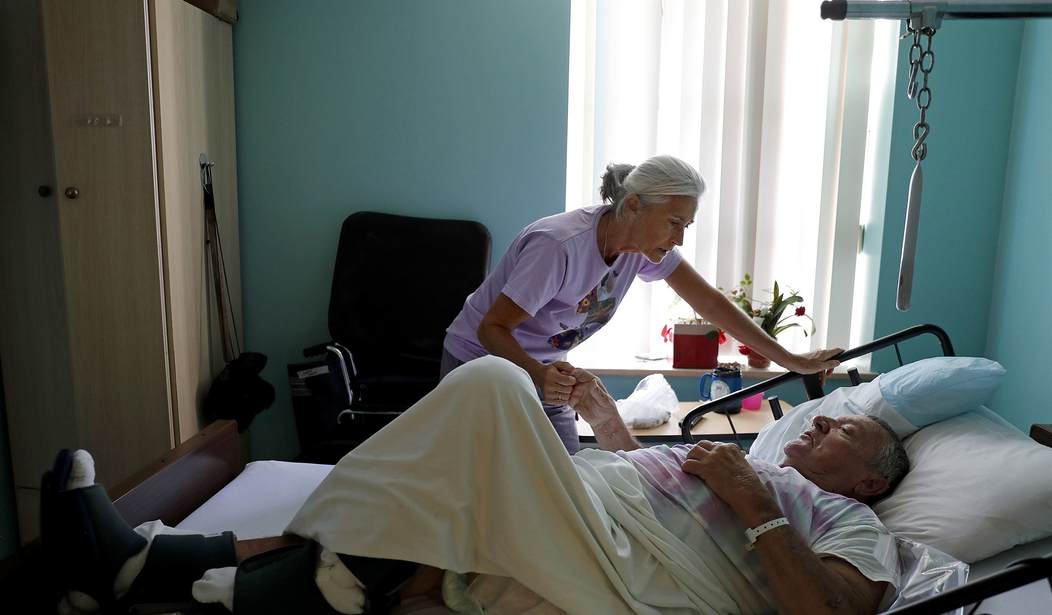
The 42-year-old had been a registered nurse for a decade when the pandemic struck, but what she experienced in those early days was radicalizing. At the time, Gikonyo was working as the infection preventionist in a long-term care facility; the job was highly administrative, “hours and hours and hours in my office sitting in front of a computer.” Meanwhile, down the hall from her office, people were dying—and dying cruelly, terrified, and alone. Gikonyo stopped keeping pace with her paperwork and sat with these patients instead, holding their hands—despite repeated reprimands from corporate headquarters. “That was my tipping point. It was profit and productivity over human experience,” Gikonyo said. In this moment, she realized, “I really think I’m meant for something more, to guide people through death in a more human way as opposed to in a clinical way.”
She has more than 70,000 followers on social media who read posts like “10 Things You’ll Never Hear Me Say to a Dying Person” along with promoting her school, a 40-hour certification program for people who want to train as death doulas.
But the more important work someone like Gikonyo does is with dying patients themselves—asking them to consider how they want to die, to think about what they want to see, hear, smell, and touch, as they reach the end. Will the room be filled with family, or family photos? Will you want a view, a weighted blanket, a favorite song playing as you slip away?
“One woman, her dream was to die on the beach,” Gikonyo said. The actual beach, of course, was not in the cards—but they got close. During the woman’s final days, a video of the ocean was projected onto the ceiling above the woman’s bed, accompanied by a soundtrack of crashing waves. Her family rubbed suntan lotion on her skin; her feet rested on a cookie sheet that had been mounded with warm sand. This is one of Gikonyo’s favorite stories; it’s why she does the work she does.
“It was,” she said, “really a beautiful death.”
Mikey Marin, 41, who works with end-of-life patients in the Philadelphia suburbs, believes it's just as important to help a client make the most of whatever life they have left as it is to help them die. She helped one client with terminal blood cancer and dementia for three years, "acting as everything from social secretary to chauffeur to, occasionally, day-drinking-and-gambling companion," according to Rosenfield.
“I take her to a ladies lunch every other week. I take her to have Communion with her church family. But the other day, she wanted to go to the casino and have a glass of wine—so we made sure it was fine with her family, her medication, her doctor, and we went to the casino and had a glass of wine together.”
Death doulas can be described as people who create a bridge between the healthcare system, which works on the living, and the funeral industry, which cares for the dead. Even without the boom in dying due to the passing of my generation, they are necessary adjuncts to the idea of a compassionate death. Dying alone doesn't terrify me, but having someone there at the end, I imagine, would be a comfort.
Related: When Death Is Near, What Do People Regret the Most?