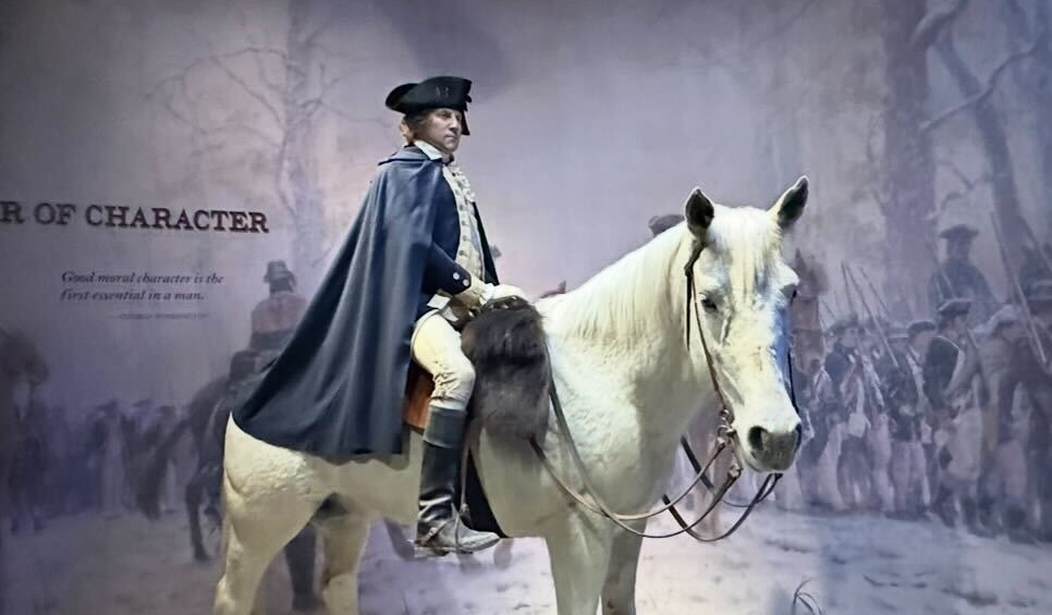
Today, March 15, is the anniversary of George Washington squelching the Newburgh Conspiracy more effectively and peacefully than perhaps any such planned military rebellion has ever been squelched.
The background of the conspiracy, according to Washington's Mount Vernon, is that Congress and the states had often been irregular in paying the Army, and by 1780, while technically Congress had provided half-pay for retired soldiers, the states simply didn't provide the necessary cash. Alexander Hamilton and others tried to urge a tax for raising revenue, but that was unpopular with the states. In 1781, the Battle of Yorktown was the last major battle of the American Revolution, and while British troops wouldn't actually leave or give up entirely until 1783, enthusiasm among citizens for providing more military pay was not exactly high. The troops encamped at Newburgh were afraid they would never see Congress live up to its financial commitments, which did in fact occur in some cases.
On March 10, 1783, an anonymous call went out for officers to meet, along with a fiery message from General Horatio Gates's aide Major John Armstrong (Gates was a rival to Washington). Armstrong thought Washington was being too polite to Congress and that instead the officers should threaten the legislators with disbanding — and remember, the opposing British soldiers were still in America at the time — or with refusing to disband after an official peace treaty came through. The latter was a barely disguised threat of a military coup.
Washington knew that perhaps the whole fate of the country, and the outcome of the Revolution, was at stake. As he said, “The army is a dangerous instrument to play with.” On March 11, he issued general orders criticizing the proposed meeting but allowing another one four days later.
Read Also: Heroes of the Battle of the Alamo
Hence, on March 15, a group of officers gathered to discuss their grievances, and Gates was in charge of the meeting. Suddenly George Washington entered the room. His officers had not expected to see him there, nor were they initially inclined to lend an ear to what we now call the "Newburgh Address." The commander-in-chief assured the officers that Congress would certainly pay them, and urged that they give a "distinguished proof of unexampled patriotism and patient virtue" by giving up their mutinous plans. Finally, Washington pulled out a letter from Congressman Joseph Jones, who was in sympathy with their sentiments and aimed to help them obtain their just pay.
American Battlefield Trust detailed how Washington moved the officers to abandon their plans:
The letter’s contents assured Congress’ good intentions. While reading the letter, Washington took out a pair of reading glasses. He then said to the officers, “Gentlemen, you will permit me to put on my spectacles, for I have not only grown gray but almost blind in service of my country.” The combination of Washington’s surprise arrival, the Newburgh Address, Washington’s need to put on his reading glasses, and his comments about his service to his country all caused the officers to see their wrongdoings. Some officers openly wept in reaction to Washington’s show of vulnerability to them. After Washington left the [room], most of the officers overwhelmingly supported Washington's admirable intentions, and the officers put their faith back into the Confederation Congress to await their payment. Two days following Washington’s surprise arrival to the Newburgh camp, news of it spread to Philadelphia. Copies of Washington’s address spread throughout the city. On March 19, 1783, Congress voted to allow commutation for all soldiers in the form of full pay for five years.
As usual, Washington had proved the indispensable man. There was no military coup. The nascent nation was saved, all thanks to the persuasive genius of George Washington.