







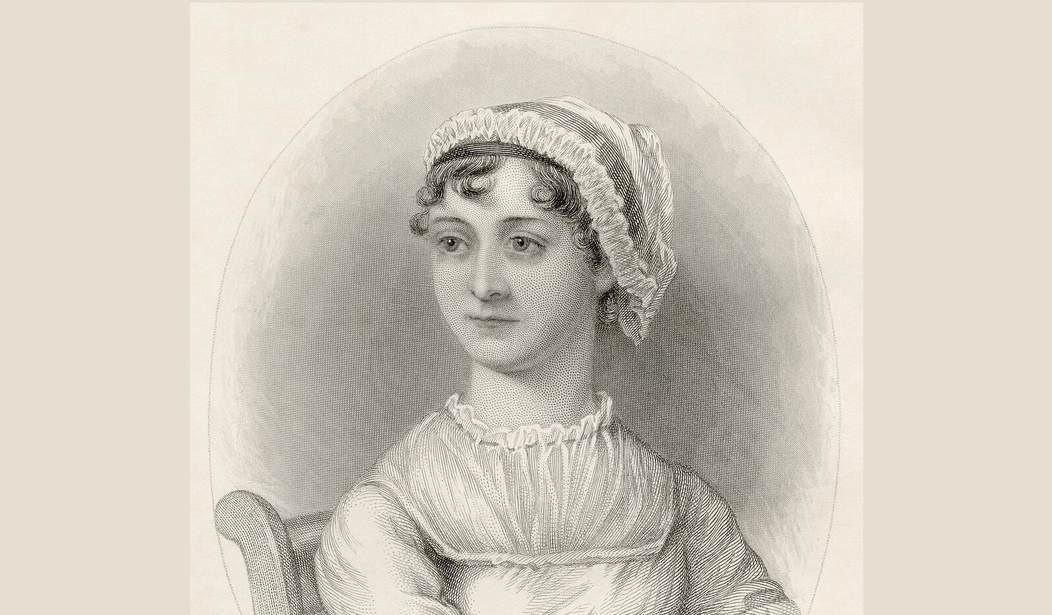
On this day exactly two and a half centuries ago, one of the greatest English writers was born. Jane Austen lived and died in relative obscurity, but her name is now a household name around the world, and her brilliant witticisms and strikingly unique characters are more famous than many a historical speech or figure.
Whether you have read Jane Austen’s novels a dozen times are only once, whether you are primarily a reader or a movie watcher, every one of us has been exposed to Jane Austen. She is as much a part of culture in the English-speaking world as William Shakespeare or Charles Dickens or Edgar Allan Poe.
Pride and Prejudice, Persuasion, Sense and Sensibility, Northanger Abbey — these titles and more from Austen’s collection have been reprinted in hundreds of different forms and editions. Numerous renowned actors and actresses have portrayed Mr. Darcy, Colonel Brandon, Anne Elliot, Fanny Price, and the Bennet sisters. Austen’s History of England is satire, and yet it is much more worth reading than many a woke historical treatise today. What is it in Austen’s books that has aged so well in two and a half centuries?Jane Austen is often classified as a romance novelist, but she was so much more than that. More accurately, like her most famous creation Elizabeth Bennet, she was an acute observer and critic of human nature. At age 21, when she penned Pride and Prejudice, she already understood more of the foibles, follies, sins, virtues, prejudices, perversions, and triumphs of human nature than many a man three times her age. Most romance novelists fill their books with caricatures, two-dimensional stereotypes, overstrained passion, and unoriginal observations. Jane Austen created people, as complex, original, and unforgettable as any great man or woman in reality.
Likewise, she could make a character admirable or ridiculous not by going into great detail on his or her secret thoughts and histories, but simply in a conversation of a few lines. One effusion of Mrs. Bennet's, one speech of Mr. Bingley's, one letter of Lady Susan's, one conversation of Marianne Dashwood's, or one boast of Sir Walter Elliot’s, and we feel as if we know them. Then just as we become comfortable with these realistic characters, Austen pulls a sudden plot twist and reveals an unsuspected character quirk.
Recommended: Keeping History Alive for Future Generations
My English professor in college once joked that he knew Jane Austen was a great writer, because she could write about nothing and make it interesting. What he really meant is that she never wrote about battles or national catastrophes or murders or any of the sort of monumental crises we generally expect to catch our attention in fiction. She wrote about the struggles and victories of everyday life, from the breakfast table to the dining room. And yet she did it so skillfully that her writing holds more interest than many a poorly conceived epic.
Perhaps it is because we recognize people we know in her writings, yet at the same time there is a something about every character that makes him different enough to be fascinating. Surely, we all know gossips and back-stabbers and fools and hypocrites and Good Samaritans, but in Jane Austen's novels as in real life, there are no cardboard cutouts — there are only people. And that is why her novels are as fresh with interest today as they were more than two centuries ago.
Editor’s Note: Support and follow PJ Media’s coverage of breaking news and cultural analysis. Join PJ Media VIP and use promo code FIGHT to get 60% off your membership.



Join the Conversation
VIP members get the ability to comment on articles.