
Welcome to The Front Porch, PJ Media's new lifestyle column posted weekly by yours truly, Ashley McCully. As if you needed one more reason to snag a VIP membership, these articles are reserved for our inner circle so if you aren't a member, consider this your personal invitation! Click this link and use promo code FIGHT for 60% off—it's a smashing good deal, y'all. Once you get that squared away, pull up a chair and join us on The Front Porch to chat about life in the neighborhood.
 It's back-to-school season in America and I don't know about y'all, but I really like this time of year. New school supplies, new clothes, a new teacher — it's like a fresh start, and not just for the kids. Teachers get a clean slate, and parents can return to their routines with renewed vigor. But I've gotta say, the farther into this education cycle I get, the more I want year-round school.
Whether we call it "year-round" or "intermittent" or even "balanced calendar," the idea of having more frequent and shorter breaks makes a lot of sense. How do dual-income households manage ten weeks of little kids at home? Either an inordinate amount of money is going to childcare or camps, or someone is working from home with frequent distractions. My daughter went to an art camp: five days, three hours per day — $250! And that's in the middle-of-nowhere North Carolina. Granted, she had a great time, but wow, that was one week of mornings for one kid!
My brother has kids younger than mine, and both he and his wife work full-time, demanding jobs. Her salary for the summer covers camps for them, 8 a.m. to 4 p.m. And I'll tell y'all, these camps are not walk-in friendly. If you aren't signed up in February or March, you're out of luck. Wouldn't it be easier, more cost-effective, and a lot more business-friendly to have a couple of two- or three-week breaks, maybe one in May around Memorial Day and one in July for Independence Day?
Out in Texas (my home state), there's a state representative who is pushing for a September start date. Republican Jared Patterson has the TX-106 district, which is a northern chunk of the Dallas-Fort Worth metroplex, and I've known Jared for a while — he's a good guy, and he's right on the idea of changing the calendar but mistaken about how to change it.
The current way of doing things "doesn't make sense for our economy, it doesn't make sense for our students and teachers, it doesn't make sense for the grid, this is one of the dumbest things we do as a state to start in the middle of the hottest month," Patterson told WFAA.
Back when Jared and I were in grade school, we went back to school in early August because, honestly, it was too dang hot to do anything else. A lot of the kids were inside anyway, so they might as well be in school instead of playing Nintendo. And then we got No Child Left Behind and testing became a massive priority, so districts front-loaded the school year to give teachers as much time as possible to prepare students. Now, it's all about football: Gotta start two-a-days and training so sophomores who don't yet have their driver's licenses can start being recruited for college.
If Jared wants to keep people safe from the heat and save money on cooling bills, starting in still-blazing hot September isn't going to do much. After all, teachers and administrators are still in those buildings setting up classrooms, undergoing training, and managing bus route logistics, so the A/C still has to be on in August.
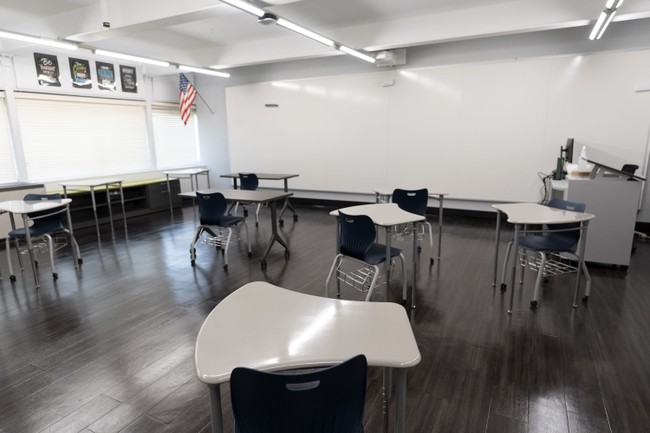
Did y'all know the first six weeks or so of the current school year are spent getting kids "back into the swing of things"? Reviewing material from the last grade level (which might as well have been ages ago) and re-acclimating students to sitting at desks for hours at a time (a big ask for early elementary), getting their brains to function before 10 a.m. (a heavy lift for middle schoolers), reduce their eating habits to a 25-minute lunch (nigh impossible for high school boys) — talk about a waste of time! We wouldn't have to do that if the kids went to school year-round.
Related: Back to the Future: Raising Today's Kids Like It's 1985
To me, this is common sense. As adults, we don't get summers off. As a teacher, I would rather have more long weekends and a week off here and there. The teachers get paid for 187 days of service, so it doesn't matter if it's over ten or 12 months. We would certainly see less burnout; that stretch between MLK weekend in mid-January and Easter/Spring Break (usually early April) was brutal for me, and I was considered a spring chicken!
Countries like Japan, China, and South Korea are known for rigorous academics and highly motivated young people. Do you think it's a coincidence that they have 200(ish) days of school a year? Five weeks off in the summer, two weeks off for winter break, two weeks off in the spring. I don't think we would ever be able to adopt their schedule because, culturally, wrestling away athletics in the name of academics would be like tackling a honey badger like it's a house cat. That doesn't mean we can't make some adjustments that benefit both the student and the athlete side of the student-athlete title.
 In 2012, Allen Independent School District in Allen, Texas spent $60 million on Eagle Stadium, which seats 18,000 spectators. The state's high school football programs have only gotten more intense.
I know, I know — homeschool. That's another topic for another day. I'd need a fresh cup of coffee to engage in that conversation and, trust me, I really want to! The fact is, right now, the dominant trend in the good ol' U.S. of A. is a nine-month school year, so that was where I started. This column is a conversation, so get yourself into the comments and let's keep jawin', as my great aunt would say.
Join me next Saturday and bring your road trip stories for the comments. I took my kids on a pretty spectacular two-week adventure and have put together my Top 10 favorite Buc-ee's snacks. Do you know a road warrior? Get them to sign up, and let's sit down again next week on The Front Porch.