





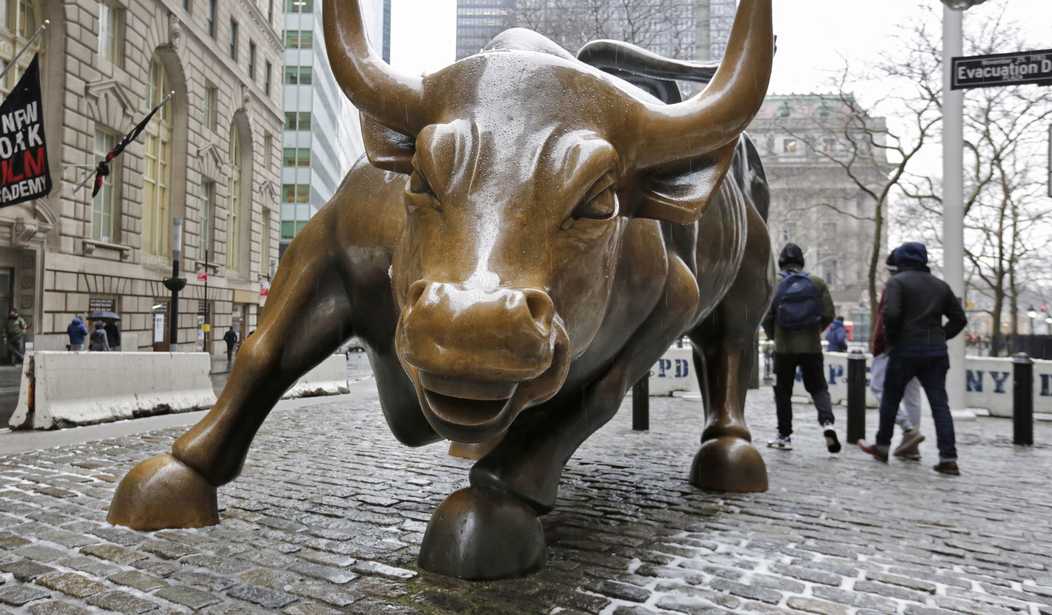
Texas has been in a battle for economic supremacy for decades. Under Gov. Greg Abbott's leadership, the Lone Star State economy has grown from $1.59 trillion in January 2015 to $2.9 trillion in December 2025. Texas ranks second only to California's $4.3 trillion GDP in these united states. Globally, Texas surpasses Russia, Italy, and Brazil when it comes to economic activity. According to the International Monetary Fund of 2025, the Texas economy outpaced eight of the top ten countries.
Politicians attribute Texas's success to a competitive and predictable tax environment, as well as pro-growth policies and an entrepreneurial spirit inherent to the state. Toyota is moving Tacoma production to San Antonio. Samsung Electronics America dropped New Jersey for DFW. Tesla boot-scooted out of Delaware and into central Texas. Fifty-seven of the Fortune 500 companies are now based in the Lone Star State, but that's not enough: Texas is coming for Wall Street itself.
Friday, July 10, 2026, marks the first day of public trading in the Texas Stock Exchange (TXSE). Banking on Texas brand identity and the want of a less burdensome path to public markets, the TXSE hopes to rival Nasdaq and the NYSE.
"Positioned as a lower-cost, faster-moving alternative to legacy exchanges, TXSE aligns with the overall business-friendly environment in Texas and aims to serve companies seeking a simpler path to public markets along with investors looking for access to dynamic new listings," says the Texas Economic Development Corporation on its blog.
The Architects
Republican Tan Parker was elected to the Texas House of Representatives in 2006 and quickly earned a reputation for being effective, conservative, and business-friendly. The Texas Attorney General at the time? None other than Greg Abbott. Also in the mix? Glenn Hegar, then a Texas House Representative. These three men climbed the GOP ranks in Austin to become Governor Abbott, Comptroller Hegar, and State Senator Parker, all titles needed to make the vision of the TXSE a reality.
Parker started the legislative process with gold bullion and other precious metals; Abbott signed off; Hegar got it up and running. Parker expanded into Texas staples, like oil and gas, cotton, and cattle; Abbott signed off; Hegar got it integrated. Parker traveled to Wall Street in search of financial partners, and companies like Charles Schwab, Citadel Securities, Fortress Investment Group, BlackRock, and other heavy hitters bought into the equities exchange vision with a total of $161 million in backing.
Unlike the New York Assembly bozos who wanted to tax securities transactions and transfers during COVID, Texas passed a constitutional amendment prohibiting the taxation of securities transactions or transfers. The financial world took notice: Texas is open for business.
The Domino Effect
The NYSE and Nasdaq have opened locations in Dallas in response to the TXSE. Not only does this mean thousands of new jobs, but it trickles down to housing, infrastructure and transportation, local businesses, and new voters. Parker is confident that people who work in finance — with actual dollars and cents that require forethought and common sense — are conservative in nature.
The University of Texas–Austin, Texas A&M University, Southern Methodist University (Dallas), and Rice University (Houston) are renowned for their undergraduate and Master's finance programs. These universities, while already difficult to get into, are going to experience a new wave of applicants vying for credentials in the coming decades.
A mere 20 minutes from these new financial destinations is Dallas-Fort Worth International Airport. Ironically, that airport is larger than the island of Manhattan. This enormous source of jobs, mobility, and tax revenue is currently undergoing a $12 billion capital program, complete with a new 31-gate terminal expansion, and is due to partially open in 2027. Even closer is Dallas Love Field, another airport that is home to Southwest Airlines, which is also growing to increase annual passenger flow from 18 million to 24 million.
While none of these items is a direct result of the TXSE, they are all certain to help. Perhaps the biggest boost for prosperity amid this new era of American finance is Texas's commitment to competition. "Government's job is to give some light structure and get out of the way," said Texas Public Policy Foundation's President Greg Sindelar during a conversation with Parker in January.
Not only will we see a head-to-head competition between a red state (Texas) and a blue state (New York), but we will also witness local politics' direct effect on the national and global stages. New York City's socialist mayor Zohran Mamdani is up against Dallas Republican mayor Eric Johnson. According to Parker's economic modeling, the TXSE and its subsequent effects make Texas's surpassing of France as the seventh-largest economy in the world imminent.
Related: Banana Ball Proves That the Free Market Still Knows Best
"With the Best Business Climate in America and unmatched pro-growth policies, Texas is the premier destination for job creators from across the country and the world. We will keep attracting world-class investment, create jobs, and expand opportunities for Texans for generations to come," said Abbott.
Imagine that, y'all: A government that actually wants businesses to grow and succeed. Now, if only that generations-long I-35 project could wrap up, preferably before the orange road cone becomes a state symbol.
Editor’s Note: Thanks to President Trump’s leadership and bold policies, America’s economy is back on track.
Help us continue to report on the president’s economic successes and combat the lies of the Democrats. Join PJ Media VIP and use promo code FIGHT to receive 60% off your membership.

Join the Conversation
VIP members get the ability to comment on articles.