
Note: Most Thursdays, I take readers on a deep dive into a topic I hope you'll find interesting, important, or at least amusing. These essays are made possible by — and are exclusive to — our VIP supporters. If you'd like to join us, take advantage of our 60% off promotion.
“Gentlemen don’t read each other’s mail.” —attributed to Henry L. Stimson, Secretary of State to President Herbert Hoover
"Sh'yeah, right... as if." —Wayne Campbell of Wayne's World
Secretary of State Henry L. Stimson thought gentlemen don’t read each other’s mail, and in 1929 shut down America's first-ever peacetime code-breaking organization. Fast-forward to 2026, and we’re not just reading it — we’re using it in real-time to drop hell on the sender’s doorstep. Let's talk about the unsung and unseen heroes of Operation Epic Fury — the people who provide the intelligence that tells the operators exactly where and when — to drop a bomb, fire a missile, launch a drone, or (I suspect, anyway) squeeze a trigger.
But before we get to current events, let's take a quick look at how we got so good at this stuff.
1929 wasn't exactly a banner year for the United States: The St. Valentine’s Day Massacre in Chicago, residents of the Mississippi Valley still reeling from the massive '27 floods, the ongoing farming crisis deepened, and of course, the stock market crashed on Black Thursday, followed in short order by Black Monday and Black Tuesday.
In a lesser-known but still totally boneheaded move, SecState Stimson withdrew his department's funding from the Cipher Bureau, also known as the Black Chamber.
Which, by the way, cool name.
The Black Chamber was established in 1919, just a couple months before the Treaty of Versailles established peace — ha! — in Europe. Run by cryptologist Herbert O. Yardley, the top-secret office got its funding from State and the Army Signals Corps, but our stripped-to-the-bone interwar military couldn't afford to keep the whole thing going all alone.
And Another Thing: Stimson's main ethical concern was that the Cipher Bureau read mail from "friendly" countries like Britain and France. But as Tom Clancy joked in one of his techno-thrillers many years ago, spying on friends isn't really spying — it's just keeping an eye on things. "Trust but verify" goes for friends as well as rivals. The important thing is not to get caught and cause a public incident that even friends can't afford to keep that blind eye turned to.
For a while though, Yardley's Cipher Bureau did some very cool — and totally American — things. It operated covertly in New York City disguised as a commercial code company, decrypting foreign diplomatic cables, and providing the resulting intelligence to U.S. officials.
Today, we'd call what the Cipher Office did "SIGINT," or Signals Intelligence.
Stimson called it reading other people's mail, and in his mind, that's something that "gentlemen" shouldn't do. So he shut it down almost as quickly as he learned of its existence, despite the fact that SIGINT — or ciphers and decoding them — played a part in America's intelligence efforts going all the way back to Gen. George Washington during the Revolutionary War.
One example is Dr. Benjamin Church, who served as the Continental Army's chief physician — and on the side as a British spy. He was exposed when a coded letter sent to British forces was intercepted and quickly decoded. Church was arrested and imprisoned.
Washington was a big fan of ciphers, which are really just the flip side of SIGINT. Reading the other guy's mail is great, but keeping him from reading yours is just as important. But unlike the British, our Revolutionary War codebreaking efforts were more opportunistic than systematic.
That would change. Bigly.
The Army soldiered on in a small way without the Black Chamber, establishing the Signal Intelligence Service (SIS) in 1930. Chief cryptanalyst William F. Friedman and a handful of civilian employees did what they could, focused initially on breaking foreign diplomatic codes (especially Japanese) and developing secure U.S. systems.
SIS grew during the 1930s — as did the threat from Imperial Japan — and by 1940 made a key breakthrough in decrypting Japan's Type B Cipher Machine (called Purple by SIS) used for diplomatic communications. They couldn't read everything, but they could read enough "MAGIC" traffic to gain insight into the Empire's diplomatic strategy, including tensions with the U.S., negotiations over China, and preparations for war.
And Another Thing: Let's give credit where it's due. As FDR's Secretary of War during WWII, Stimson turned right around on the ethics of reading other people's mail. A bit late, one might argue, but war does tend to focus the mind. If one wants to win, anyway.
The Imperial Japanese Navy (IJN) used its own system called JN-25, which U.S. Navy codebreakers started going after in the late 1930s. They weren't able to break it in time for Pearl Harbor. We suspected a sneak attack might be coming — and had discussed the possibility — but we believed the hammer blow would likely fall on Subic Naval Base in the Philippines. MAGIC and other indicators showed Japan’s focus on southern expansion into the Dutch East Indies, Malaya, and Singapore — and American naval and air forces at Subic and Clark Airfield sat smack dab in the middle of Japan's lines of communications to the lands they coveted.
Our preparations included delivering aircraft to various bases in the Pacific, which is why two of our three Pacific-based carriers were absent from Pearl on Dec. 7, 1941. The third carrier, USS Saratoga (CV-3), had just completed a refit in San Diego, embarked her air wing, and was on her way to Pearl when Japanese warplanes suddenly darkened the skies over Pearl Harbor.
American codebreakers, however, were able to decrypt enough JN-25 traffic to allow Adm. Chester Nimitz to prepare for the Battle of Midway six months later. A little like his IJN counterpart, Adm. Isoroku Yamamoto, Nimitz was a bit of a gambler. Unlike Yamamoto, Nimitz always carefully calculated the odds — he never bet big when the odds of winning were small.
And Another Thing: Preparing for Midway, Nimitz issued a famous order to admirals Frank Fletcher and Raymond Spruance, who would command American forces against the Japanese: "You will be governed by the principle of calculated risk, which you will interpret to mean the avoidance of exposure of your force to attack by superior enemy forces without good prospect of inflicting, as a result of such exposure, greater damage to the enemy."
Thanks to our SIGINT, Nimitz had a remarkably clear picture of the Combined Fleet's main elements, and that their target was Midway — and roughly when they'd arrive. And he liked the odds of his three carriers (with their larger air wings) plus an "unsinkable" airbase on Midway, versus the Combined Fleet's four flattops. Nimitz laid the trap, and sprang it on June 4. By June 7, the U.S. Navy sent all four IJN carriers to the bottom of the ocean, effectively cutting the heart out of Yamamoto's offensive capabilities.
The SIS, by the way, evolved into the Signal Security Agency (SSA) during the war, and eventually became the National Security Agency (NSA) in 1949. You've probably heard of the latter, which to my tastes might do a little too much spying. At least here at home.
We're really very good at SIGINT, which I should also mention has two main branches: communications intelligence (COMINT) and electronic intelligence (ELINT).
But when we team up with the Israelis and their mad HUMINT skills?
Fuggidaboudit.
We'll never know exactly what combination of SIGINT and HUMINT resulted in the blast that killed Ayatollah Ali Khamenei during the current conflict's opening minutes, but it was certainly the result of countless man-hours of careful intelligence work in the days, weeks, and even months beforehand — and split-second last-minute confirmation of Khamenei's presence courtesy of American satellites, or U.S. or Israeli recon drones.
And Another Thing: At this point, you got that HUMINT is "human intelligence," right? The real secret-agent stuff.
Israel hit Khamenei's compound with an estimated 10-15 missiles, not because they'd crossed their fingers and hoped for luck, but because Jerusalem and Washington were totally confident of his location and wouldn't settle for anything less than reducing his House of Leadership to Nothin' But Rubble.
But that was just one small part of what transpired across Iran at about 9:45 a.m. local time on Saturday.
Also killed during that opening wave:
- Defense Minister Amir Nasirzadeh.
- Chief of Staff of the Armed Forces Abdolrahim Mousavi.
- Islamic Revolutionary Guard Corps (IRGC) Commander Mohammed Pakpour.
- Ali Shamkhani, a key adviser to the supreme leader.
- And at least 40 other senior Iranian commanders.
If you were an IRGC colonel on Saturday morning in need of instructions and you picked up the phone, there was a good chance nobody answered. Because there was nobody there to answer.
It was the Battle of Midway all over again, except instead of just sinking four aircraft carriers and other assorted warships, we'd snuck assassins into Tokyo to take out Yamamoto, Prime Minister/army chief Hideki Tojo, and Emperor Hirohito, too. All at the same time.
The icing on the cake came Monday, when Iran's Assembly of Experts met to choose new leadership, and we blew up that meeting, too. Apparently there's some confusion — this is war, after all — over whether the actual Assembly was there, or just clerks to count the votes.
But we still knew exactly when and where, thanks to U.S.-Israeli SIGINT and HUMINT.
There's also the case of the Minzadehei compound, a secret underground nuclear research and weapons development site on the outskirts of northern Tehran. Apparently, it had been specifically flagged as a post-Operation Midnight Hammer relocation site for Iran's weaponization research.
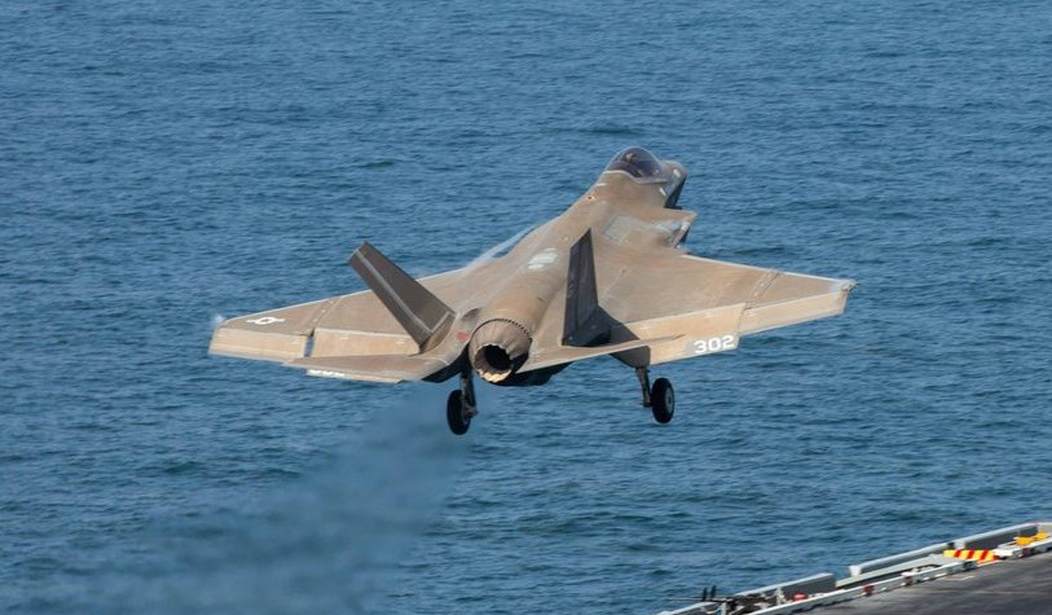
We weren't supposed to know about it. But SIGINT intercepts of communications among scientists, security personnel, and IRGC commanders revealed increased activity and the site's purpose, and U.S. spy satellites confirmed. The Israeli Air Force pounded it to bits with F-35I stealth jets on Tuesday.
And Another Thing: Researching this week's essay is when I learned that Israel's name for its side of the effort is Operation Roaring Lion. Maybe it's just coincidence, but the Lion and Sun motif comes from ancient Persian history, up to and including the flag of pre-revolutionary Iran flown by Shah Mohammad Reza Pahlavi's government. Did Jerusalem lay out its war aims right there in the name?
None of this is to say that the U.S. doesn't do HUMINT well or that Israeli SIGINT sucks. Quite the contrary. But we have SIGINT capabilities a nation Israel's size doesn't, and Mossad's people know the land — and often fit in — better than ours do.
The funny part — OK, another funny part — comes courtesy of my Hot Air colleague, Ed Morrissey:
Yesterday morning, the Israelis hit the headquarters of Iran's Assembly of Experts in Qom, destroying the building while its 88 mullahs met – somewhere – to choose the next 'supreme leader.' Hours later, Iran's news services announced that the council had selected Mojtaba Khamenei as his father's successor, despite his absence from public view since Ali Khamenei's death in the opening minute of the war. No one has seen any signs of the Assembly of Experts, either.
Today, however, Iranian news services have retreated from those claims.
"No one's seen Mojtaba in a vertical and respiratory status since his father's death," Ed added. "Supposedly, he's mourning his father and working remotely, or something."
Maybe he just doesn't want to wear the Turban of Death. Certainly not where we can see him in it. And as recent events have shown, if there's anything we can't see from the air, the Israelis already have nailed down from the ground.
But even more likely, as Ed pointed out, the decapitation strikes have Iran's factions scheming for leverage over one another for control of the government. Or whatever is left of it. There will be less by the time you read these words.
What the confusion looks like from my desk is that the new IRGC leadership believes they'll take charge once the rubble stops bouncing, and that they'll have a weak ayatollah under their thumb. But judging by how hard Epic Fury/Roaring Lion is hitting the IRGC, there might not be enough of it left to assert much real authority.
But that's all speculation and outside the scope of this article, anyway.
Whatever the case, it's clear that broadly speaking, Iran's leadership was deeply compromised by Israeli HUMINT, and its military exposed by American SIGINT in ways that perhaps no country has ever been before.
The opening hours — minutes, really — of Epic Fury/Roaring Lion was the kind of gamble that Nimitz would have appreciated: Coldly calculated, and based on the kind of intelligence enjoyed only by the very best of the best.
They're the kind of gentlemen we ought to be grateful to have on our side.
Last Thursday: Will the Real Tom Cruise Please Star in This Picture?