





Pakistan's federal budget for Fiscal Year (FY) 2026-27 has been officially passed by parliament with a total outlay of approximately $67 billion. Defense spending has shown a consistent upward trend, rising steadily over the last five years.
The recent budget heavily prioritizes military spending over public welfare by raising defense spending by 18% to 3 trillion Pakistani rupees ($10.8 billion). This highlights the armed forces as the clear winner during attempts to meet strict economic stabilization targets. Notably, the budget grants little to the human resources that actually drive long-term economic growth.
The combined federal allocations for higher education, primary schooling, and healthcare account for only a fraction in comparison to the military's multi-billion-dollar budget. Roughly 46 billion rupees ($165 million) for higher education and 25 billion rupees ($89 million) for healthcare were allocated. Their combined total pales in comparison to the massive federal defense budget.
Poverty levels in Pakistan have increased dramatically in recent years. According to an Pakistan Economic Survey 2025-26, the national poverty headcount ratio increased to 28.9% in FY2024-25, up from 21.9% in FY2018-19 (a rise of 7 percentage points). This has pushed approximately 27 million additional people into poverty, bringing the total number to around 70 million. Rural poverty surged from 28.2% to 36.2%; urban poverty rose from 11% to 17.4%.
Data confirms that Balochistan remains the poorest province with a poverty rate standing at exactly 47%. However, Balochistan is also the country’s largest province and is richly endowed with natural resources that include coal, copper, gold, and huge oil reserves. Since the region’s annexation by Pakistan in 1948, Balochistan has seen at least five rebellion movements for independence or wider autonomy. The latest wave of rebellion began in the early 2000s. The region’s history is marked by Pakistan’s forceful suppression of the Balochi right to self-determination. According to recent research by Carnegie Endowment for International Peace:
One of the regime’s principal challenges over the past three years has been to consolidate control at home. The regime’s guiding doctrine is the 'hard state' approach, which involves an uncompromising, militarized framework for internal security and political management. This approach relies on political repression and constitutional redesign to centralize the regime’s command structure and narrow the space for political dissent and mobilization.
As part of this “hard state” approach, the regime’s list of political prisoners continues to expand. Most recently, a leading human rights activist (who has spent years campaigning against enforced disappearances in Balochistan) has been sentenced to life in prison. Dr Mahrang Baloch, leader of the Balochistan Unity Committee (BYC), was convicted of "murder and terrorism" alongside fellow activist Sibghatullah Shahji. Pakistani authorities maintain that the solution lies with the military rather than dialogue and political negotiations. This purely kinetic approach exacerbates deep-seated political and economic grievances of the Baloch, perpetuating a cyclical quagmire.
Pakistan's Federal Budget thus allocates the largest amount of budget for its military to continue its violent suppression of the Baloch issue and to pursue its other military ambitions.
In addition, a large chunk of the budget goes to debt servicing (interest payments), leaving limited space for social expenditure and asset creation.
Debt servicing consumes a massive share of the budget at around 8.054 trillion rupees (28 billion USD, nearly 42–43% of total federal expenditure).
Combined with defense, these two-line items account for over 11 trillion rupees ($39 million), more than 60% of the total federal outlay. This leaves very constrained fiscal space for social protection, education, health, infrastructure, and development spending (Federal Public Sector Development Programme [PSDP] limited to around 1 trillion rupees/$3.5 billion).
The defense budget is nearly three times the entire federal development budget and significantly higher than combined federal allocations for education and health. Social protection (mainly Benazir Income Support Programme) has increased to 838 billion rupees ($3.01 billion/up ~17%), but overall social sector spending remains insufficient relative to rising needs.
The sectors that directly uplift human capability such as education have thus been given a mere pittance.
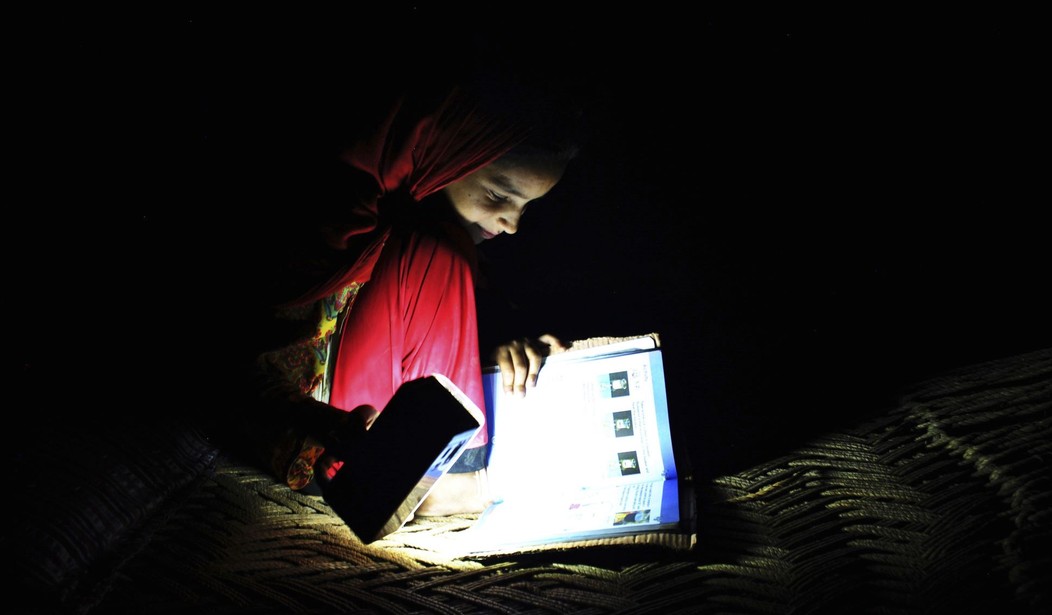
The World Bank estimates that approximately 77% of Pakistani children can neither read nor understand simple, age-appropriate text by age 10. Pakistan, however, allocates historically low portions of its GDP to public education, limiting resource availability and teacher training.
Pakistan's overall national literacy rate is 63%. It is even lower for females — only 52%. Female literacy also drops dramatically in rural areas compared to urban centers.
The primary education completion rate in the country stands at 57%. According to the World Bank,
Pakistan has roughly 25 million children between the ages of 5 and 16 who are not in school — the second largest out-of-school population in the world. However, this figure alone does not guide action. Policymakers need to know where these children are and why they are out of school.
Many factors have contributed to this situation such as a lack of schooling, the economic pull of child labor, and a continued social acceptance of child marriages for girls, amongst others.
The quality of the education is also problematic and needs profound reforms. Some schoolbooks incite hatred against non-Muslims. The new school curriculum further Islamizes education and indoctrinates children into believing that adherents of non-Muslim religions are inferior. In 2021, scholars Camilla Hadi Chaudhary and Farid Panjwanib Aga Khan revised Pakistan's national curriculum, and concluded:
The education delivered to the majority of Pakistan’s children under the umbrella of the national curriculum remains below expected standards, and this violates their right to an education that empowers them to be critical thinkers and socially productive agents.
Chaudhary and Khan argued that Pakistan's government should instead implement a rights-based educational system in line with Pakistan’s constitutional obligations to its religious minorities and to international human rights conventions.
However, at a time when millions of Pakistani children are out of school, the federal government allocated just 46 billion rupees ($165 million) for higher education, science, and technology, alongside a minor 22 billion rupees ($79 million) for basic education and skills.
Healthcare is also neglected. The total federal allocation for the health sector is 25 billion rupees ($89 million). This funding is meant to cover specialized cancer treatment, emergency response, and tertiary facilities across the country. However, it breaks down to pennies per citizen.
Critics point out that while the military secures an 18% funding increase, ordinary citizens face squeezed middle-class incomes, tighter tax regimes, and inadequate public services.
At a 23 June seminar hosted by the Human Rights Commission of Pakistan (HRCP), civil society representatives concluded that the 2026/27 "austerity" budget had systematically undermined low-income household welfare, labor protections, and gender equality.
Economist Dr Fahd Ali observed that lower public spending on education, health, social protection, and nutrition would deepen existing inequalities. At the household level, he argued, changing consumption patterns and declining nutritional quality reflected growing economic distress.
Economist Dr Hadia Majid argued that the budget’s gender commitments appeared largely rhetorical. The responsibility for education, health and protection has been shifted almost deviously to the fiscally constrained provinces. The tax relief measures announced were also unlikely to benefit most women, given low female participation in formal employment. Despite persistently poor outcomes in maternal health, child survival and girls’ education, the budget has failed to address the structural barriers limiting women’s economic participation.
Labor leader and "All Pakistan Trade Union Federation" (APTUF) secretary general Rubina Jamil criticized the budget as prioritizing expenditures that did little to address the needs of working people, while offering limited protection for those most vulnerable to economic insecurity. Economist Dr Aqdas Afzal also observed that despite rising remittances and headline poverty indicators, the budget reflected an economy that failed to undergo meaningful structural reform.
The allocation of national resources demonstrates the priorities of a state. Governments are expected to balance spending between security needs and investments in human capital (like education and health). Through its new budget, however, Pakistan's government heavily taxes salaried individuals and formal businesses to fund an 18% hike in military expenses when its people lack basic health, literacy, education, employment, infrastructure, and economic opportunities.
It appears that Pakistan is budgeting to protect the state from perceived external and domestic military threats while leaving its society to decay from within.
Editor’s Note: Thanks to President Trump and his administration’s bold leadership, we are respected on the world stage, and our enemies are being put on notice.
Help us continue to report on the administration’s peace through strength foreign policy and its successes. Join PJ Media VIP and use promo code FIGHT to receive 60% off your membership.

Join the Conversation
VIP members get the ability to comment on articles.