
If you were to stand at my parents’ gravesite, you’d be calmed by the beauty and the peacefulness of it all. My mother, in her younger years, bought into one of those advance plans with a newish Catholic cemetery, and she picked this spot many decades before she actually needed it.
It’s one of those cemeteries where the vast majority of the markers are at ground level, so that while you definitely know you’re in a cemetery, it doesn’t evoke Halloween imagery. Very few headstones that protrude from the ground. If I were making a scary movie, this cemetery wouldn’t be a contender for a filming location.
Instead, on a nice summer day, if you’re in such a mood, you can take a deep breath of fresh air, take in the quiet and peacefulness of place, and enjoy the sun in the sky with just enough shade around you to let you feel that you’re in nature, that this final resting place is within nature. The birds are chirping and there is not a peep from the traffic out on the main road.
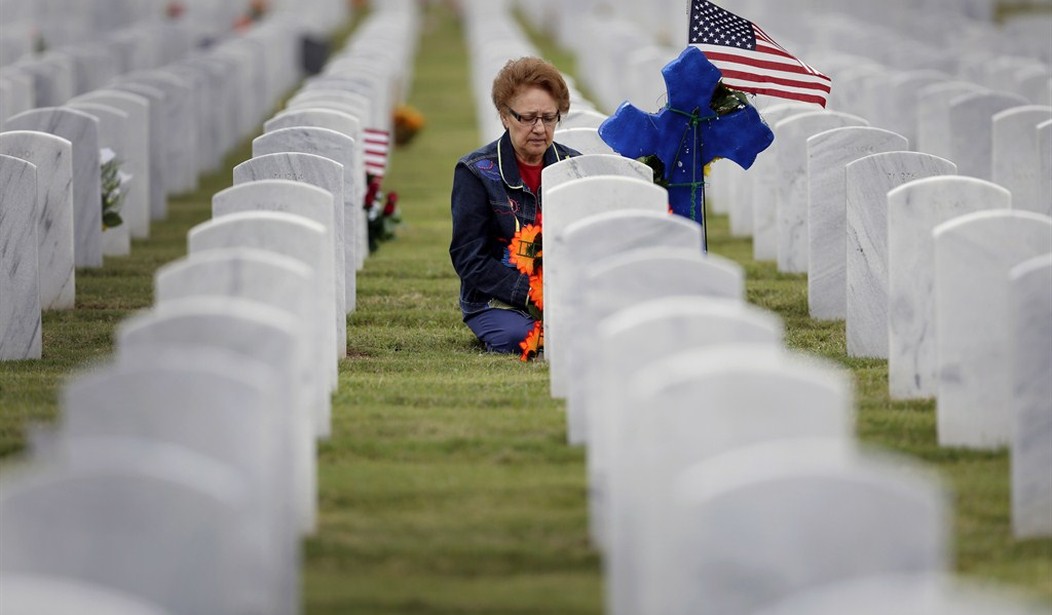
In three directions, all you see are other well-kept gravesites, most with some tasteful and sometimes touching decorations, including many U.S. flags in their brass holders. In one direction, you see an open grassy field against a backdrop of a dense forest. That’s the backdrop I choose to face when I visit. The place just feels like a very nice meditative park.
It’s felt this way to me since right after my dad died, and again when my mom came here so many years ago. This is in contrast to the sometimes highly charged family drama and energy that characterized the days and weeks prior to their deaths.
What I’ve seen before, and most definitely after my own experience is that this is common.
In my dad’s case, at 83 years old, he was in pretty good shape, all things considered. He had heart issues and chronic pain issues, but that’s pretty much all we knew of before a fall sent him to the emergency room, and a physical unraveling began that took only month or so before it was done. In the process, we learned he had pulmonary fibrosis, something his doctors totally missed over the years.
I wasn’t ready for this, and so as his advocate, the nurses, the doctors and the staff at the hospital where he spent his final days dreaded seeing me. I fought them to make sure he got the care he deserved, and sometimes I just fought them.
Fighting became a theme. In a large Irish Catholic family, it’s not hard to come by strong opinions, and there were many. I can say that for the most part, the levels of love and respect for my father dominated the tone, and for that reason his final days were not unpleasant to him. But behind the scenes, the bickering and tensions sometimes took over.
Usually, the battle was over who was trying to take control, or it was over whom others perceived weren’t engaged enough. All of this led to unsettled relationship business after my father received his dignified veteran's burial.
Some old family wounds were reopened, and some were caused for the first time. It takes years for some of these things to resolve themselves, if they ever do.
Four years later, it was my mother’s turn, and the family drama wasn’t as highly charged. We siblings all knew what to expect, and each played his or her role.
Oddly enough, however, my one sibling who loved my dad but didn’t stick around for his wake decided to hang back for my mother’s wake. And it was then that the healing between him and the rest of us started. It was years later at one of my kids’ weddings that I finally had the chance to comfortably and lengthily talk to my brother in ways we once did so routinely.
I could never figure that. Why, I wondered, does it take the loss of a parent in our case to resolve family squabbles?
But I’ve seen this same dynamic play out before and many times after. My mother and her sisters had their own dramas when their father was sick and dying. But at the funeral home, it was like a switch was clicked, and all of a sudden they were crying in each other's arms, and they all became much closer after that.
I’ve come to expect the same when I hear stories from our many friends who’ve gone through the process of losing parents over the years. This is less likely when the loved one dies suddenly. This pattern seems to follow a slightly longer-term process involving a dying loved one and grown children.
And so, in the days leading up to that final breath, we fight with doctors and nurses. We order every last measure to save our loved one and get him or her to live just one extra day. We order machines, social workers, medications, experimental procedures. We get on the phone with insurance companies. Time is of the essence. This has to be done right now!
We do this on the one hand, while battling each other when we’re not on the phone or meeting with people wearing scrubs. And then it all peaks. There’s nothing more that can be done. Words such as “hospice” come up. Resignation starts to set in. So does exhaustion.
Society has a way of putting a neat little bow around this most raw time in our lives. We have rituals for this. It starts in the funeral home with the visitations and the “celebration of life,” which is much needed and very therapeutic. The religious rite follows this, and in the case of the Catholics is the funeral mass, which reminds us that if we believe in God and heaven, our loved one truly is at peace and in heaven now. Then comes the cemetery procession, which starts to ease us into what will be the permanent calm after this storm.
It can be jarring when faced with the finality of it all at the burial ceremony. But this is one ritual that doesn’t wait for anyone. It has to happen, and it does.
But then at some point weeks, months, or even years later, you come back to this place, and you think to yourself, “We went through all of that drama and it came to this anyway?”
Then you look out at the trees, you hear the birds, you feel the warmth of the sun, and you truly do know that your loved one is in a better place. And if you’re lucky, your family is now in a better place, too.