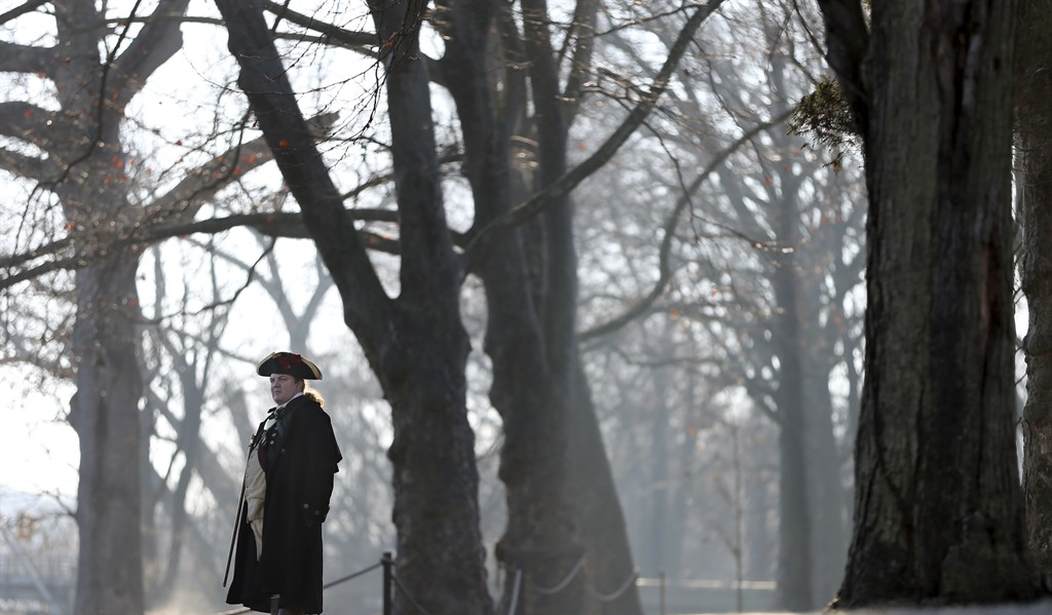

The Battle of King’s Mountain in South Carolina took place on Oct. 7, 1780, near the end of the Revolutionary War. It represented a decisive victory for the Continental Army, helping to permanently loosen control of the southern colonies from the British.
The battle consisted of loyalist militia groups who were under the command of British Maj. Patrick Ferguson. These groups fought against roughly 900 patriots.
When he learned of the victory, Thomas Jefferson called it “The turn of the tide of success.”
Prior to the battle, the Americans suffered one of their worst defeats in the Siege of Charleston, which happened in May of 1780. The British then scored another victory at the Battle of Camden.
Feeling his oats, British general Charles Lord Cornwallis ordered Ferguson to go to North Carolina in September. He wanted Ferguson to recruit locals to fight in his loyalist militia, and he wanted them to protect his left flank as he moved his main army through both North Carolina and South Carolina.
Ferguson found himself facing off with a group called the Overmountain men, who were rough pioneers from the Carolina backcountry and the Appalachian mountains, along with mountainous territories located in present-day Tennessee and Kentucky.
The American commander was a cavalryman named Harry “Light Horse” Lee. He described his men this way: “A race of hardy men who were familiar with the use of the horse and the rifle, stout, active, patient under privation, and brave.”
Historians have quoted the British as describing Lee’s men differently. They said Lee’s men were “more savage than the Indians.”
Accounts of the battle represent a consensus view that Ferguson misjudged the Americans. At first, he thought all he had to do was issue a proclamation for the locals to “desist from their opposition to British arms.” If they didn’t follow his orders, he promised to “march over the mountains, hang their leaders, and lay their country to waste with fire and sword.”
Imagine how a fiercely independent American from the back country might react to something like that. Yeah, it didn’t work.
So, on Oct. 7, 1780, the Overmountain men showed Ferguson what American resolve looked like on King’s Mountain. The battle on that rocky mountain in western South Carolina wasn’t huge, but it was significant in letting the British commanders and the crown know that by this point, America wasn’t going to stay in their grasp for long.
The loyalists suffered a decisive loss, which marked the first real step backward for British hopes of keeping the American South for its own.
One of the interesting anecdotes from the battle was when a group of American scouts identified the location of Ferguson and his men. They took this intelligence back to their commanders, who then empowered the militia men to make their own decisions.
More to the point, they told the men, “Don’t wait for the word of command. Let each one of you be your own officer and do the very best you can.”
The Americans knew the geography, the countryside, and what they had to do. It was quite basic. The plan was to attack the loyalists from all sides of the mountain. That’s what they did.
After the battle, the Americans had suffered 90 casualties, including 28 dead, while the British loyalists suffered over 1,000 casualties, with 157 killed.
It’s easy to read stories of war and glorify the battles, but there is always something that comes out of all of these stories that serves as a reminder of the horror of war.
After the Battle of King’s Mountain, one American militia member was quoted as saying, “The dead lay in heaps on all sides, while the groans of the wounded were heard in every direction. I could not help turning away from the scene before me, with horror, and though exalting in the victory, could not refrain from shedding tears.”
After this momentous engagement in South Carolina, Gen. George Washington told his own troops that “crude, spirited, hardy, determined volunteers who crossed the mountains served as proof of the spirit and resources of the country.”
Also for our VIPs: ‘America 250’ Tuesday: Five Podcasts That Will Get You in the Spirit of 1776