When you hear the song “Yankee Doodle” today, you rightfully can pick up its Revolutionary War vibe in a historical sense, but chances are you have no idea what a troll that song was. And you probably don’t realize the important role it played in setting the tone for the conflict between the Americans and the British in the 1770s.
The musical tune was a widely known British number before the 1750s. According to legend, however, somewhere around 1755-1758, British military surgeon Richard Schuckburgh wrote a set of new lyrics to the music. His words were designed to mock the American colonists.
Historians say that Shuckburgh wrote the first verses of “Yankee Doodle” during the French and Indian War. He allegedly composed the song after observing colonial allies in action.
In his version of the song, the Americans were a simple, unsophisticated, and vulgar people. He even went as far as to frame the American colonists as cowards. A glossary of terms from the time period would help.
In Schuckburgh’s lyrics, “doodle” meant hillbilly or hick. “Dandy” described an arrogant, self-centered fool.
The word “Yankee” is a mystery, though some have speculated its origins are tied to Dutch settlers in America, who often used the nickname “Little Jan.” This may have led to “Jankee,” but spelled phonetically as “Yankee.”
New York City can trace its origins back to the 17th Century, when early Dutch settlers dubbed their new town “New Amsterdam.” The word was used derisively by the British to mock all of the Americans, however.
Schuckburgh’s song was meant to parody the unkempt colonial soldiers who served alongside what he clearly felt were the superior British troops and officers. These are his lyrics:
Brother Ephraim sold his Cow
And bought him a Commission;
And then he went to Canada
To fight for the Nation;But when Ephraim he came home
He proved an arrant Coward,
He wouldn't fight the Frenchmen there
For fear of being devour'd.
Keep in mind, this is a British military surgeon describing his allies, not his enemies. Needless to say, this did not sit well with the colonists, who were finding more and more reasons to want to put the British in their place in North America.
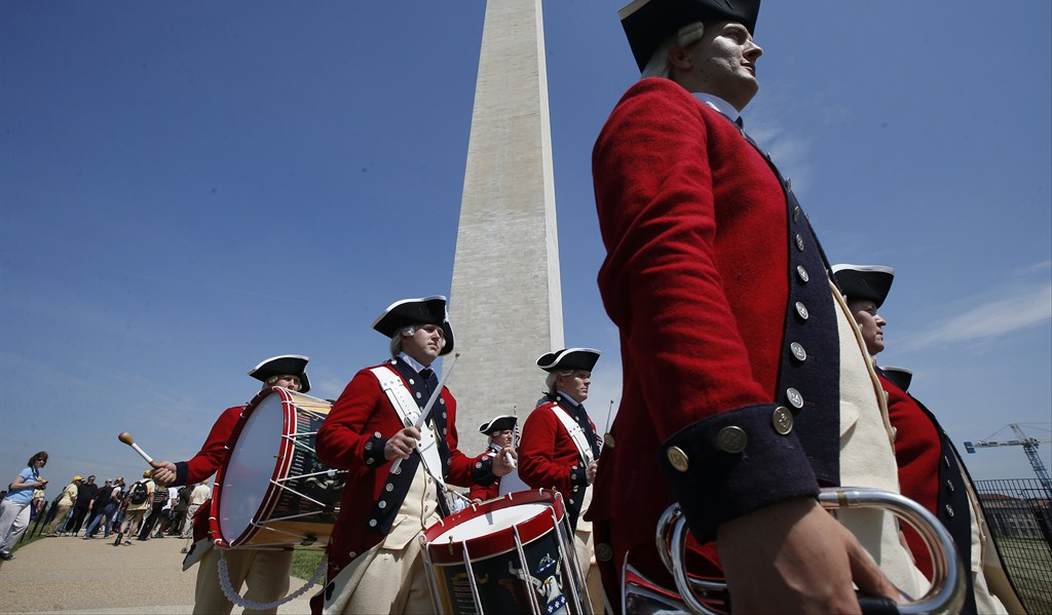
The song later embedded itself into American culture in 1775 on April 19, when the British army marched in formation out from Boston to seize guns and ammunition from Americans in the surrounding countryside. They taunted the colonists by marching to the tune of “Yankee Doodle” on fife and drum.
A group of Minutemen – farmers and locals who volunteered to fight – met the British regulars on the village green in Lexington, Mass., where one thing led to another, a musket went off, and a battle ensued. Eight Americans were left for dead as the British troops marched on to Concord, where they did find a cache of weapons that they destroyed.
When the British started their march to return to Boston, militia took up positions along the route and attacked them. The American Minutemen fought using what at the time would have been considered guerrilla tactics. They fired from behind rocks and trees and other protective cover. They shot and killed a growing number of British regulars who made easy targets as they marched in their red coats in formation.
Historical accounts say that some of the British regulars retreated and fled. Still, other British troops took their frustration out on the Americans by invading homes and setting them ablaze. More British troops had to be called upon to rescue those first on scene.
While it’s difficult to prove, as the story goes, the colonial militia sang “Yankee Doodle” as British soldiers retreated. It was nothing less than some Revolutionary War smack-talk in the form of song. After one side taunted the colonists with a song, the colonists returned the favor by rubbing in the British army's humiliation with the same song.
It was the militia’s way of saying, “Game on," as the Revolutionary War commenced.
The fight for independence had begun, and Americans now had their Continental Army's unofficial anthem, which served as a constant reminder to the troops and the colonists of how the British actually felt about them.
Related: ‘America 250’ Tuesday: Five Irishmen Who Helped Shape the American Revolution
As it evolved into an American patriotic song, new verses came, went, were changed, or shifted. In fact, the first verse of the song that you likely know was only added decades later in 1842, which is:
Yankee Doodle went to town
A-riding on a pony
Stuck a feather in his cap
And called it macaroni.
By the way, “macaroni” as used in the song is not about noodles. The word was meant to describe someone so overdressed that they looked ridiculous.
In one of the earliest-known versions of the song, the first verse and chorus went like this:
Father and I went down to camp,
Along with Captain Gooding:
There we see the men and boys,
As thick as hasty pudding.Yankee doodle, keep it up,
Yankee doodle dandy;
Mind the music and the step,
And with the girls be handy
Put yourself in the shoes of those colonists. Constantly demeaned and looked down upon by their British betters, but now given the opportunity to make a statement to that country, its monarchy, its leaders, and its army that they were done taking it. That's the mood, the tone, the context, and the story behind the patriotic song, "Yankee Doodle."