
A few years back, but not that long ago, I sat on a window seat of sorts in the Pittsburgh City-County Building, just outside the mayor’s office, overlooking that part of Downtown. With me was the mayor’s Harvard-educated urban planner who was in charge of “mobility” and “accessibility” initiatives.
I was there to talk with her about communications surrounding local civic leaders’ vision of improved public transportation and master planning, at least that’s what I thought. But the exact nature of our discussion revealed itself pretty quickly.
Looking out that window, you could see how the already narrow streets of this 268-year-old town were clogged up with bike lanes, bus lanes, and in some cases, man-made barriers that narrowed the streets further. In some cases, there was on-street parking. In others, there was no parking, with the exception of busy loading zones. And along with all the old and new tall buildings in the area, you could also see parking garages.
As we sat there, my host explained why there were so many obstacles in place for cars. By design, they were there to create automotive gridlock. They were there to make it more difficult to drive downtown. They were there to make commuters so disgusted (my words) with their commute that they’d welcome the opportunity to take mass transit to work instead of driving. On top of all this, she said, she wanted to see the city start to tear down parking garages so that there would be fewer parking spots, not more.
This, she told me, was how urban planners nationwide were going to create these urban utopias, and “incentivize” suburbanites to move back into cities. The goal was not to make the downtown area more attractive to people who work there, but rather to make the commute a nightmare.
I brought up a number of challenges to that way of thinking, most notably, the harsh winters Pittsburgh gets, its broken Public Works Department that oftentimes just gives up when it snows and only salts a few main roads, and the treacherous terrain for people who might need to walk a mile in the winter to get to a bus stop. You don’t want to know the answers to these questions, trust me, but all of this was rendered moot later when the COVID-19 pandemic hit and work-from-home changed everything.
Urban planners are big fans of this sort of technique, using misery to “incentivize” the masses. So are public health experts. Remember how no one was forcing you to get the vaccine? You had the option of not getting vaccinated, particularly if you really didn’t value your job and the money you needed to keep a roof over your head and feed your family. But if you did value those things, well then, you were welcome to consent to the jab. No pressure here.
There are a few ways to describe all of this, but the most accurate one for me is something the experts say is not a thing. I prefer to call it “forced consent.”
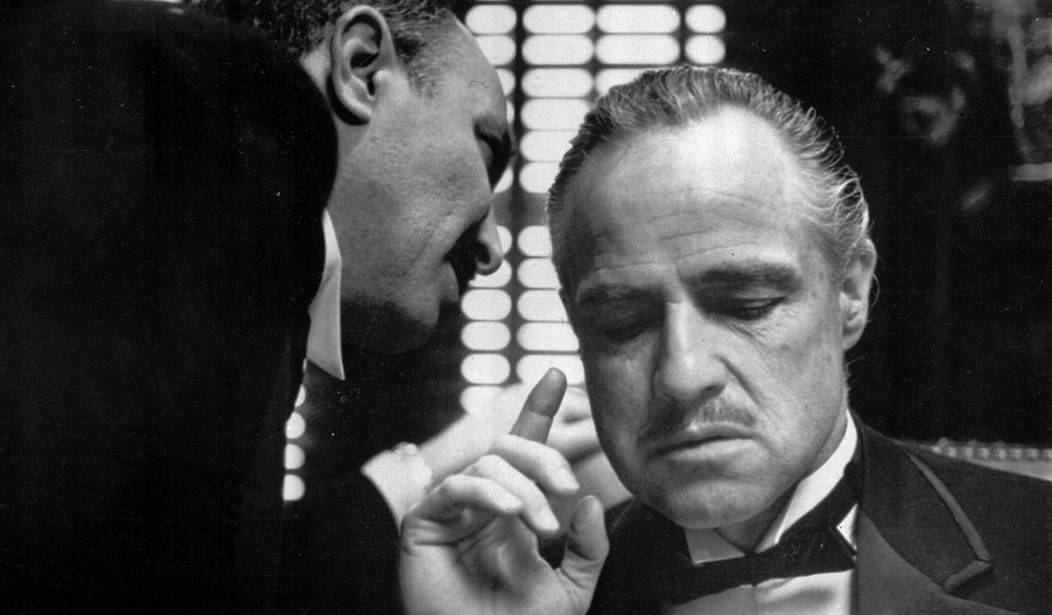
The Godfather’s Don Vito Corleone called it, “An offer you can’t refuse.”
When I did some research on “forced consent,” I was informed that it doesn’t exist because it’s a contradiction in terms. Of course, that’s the whole point. When someone coerces you, you can’t freely consent to anything. But how often does the coercer ever admit to coercion? The offer is always portrayed as giving a person the option of consenting to a particular action or decision, even though that person is painted into a corner. This is all by design. Nothing is left to chance.
My research told me there are more accurate terms for this. One is “coercive choice,” where the authority structures the options so that all reasonable or humane alternatives are removed. This leaves one single option that is not in the best interest of the individual.
Canada’s Medical Assistance in Dying (MAID) program comes to mind. Initially billed as an option only for late-stage, terminally ill people, it’s now “prescribed” for people who are not terminally ill. Depending on the situation, certain treatment options may not be offered, but suicide is right there, ready and waiting.
Another term is “constructive coercion.” This is where conditions are deliberately made intolerable so that the thing you never wanted to do in the first place is a welcome reprieve from the treatment you have been getting.
My example of intentional traffic congestion in a downtown area is constructive coercion, since its purpose is to coerce commuters into moving into the city or changing modes of transportation.
While there are a few other terms, one other one worth mentioning here is institutionalized coercion, where the coercion is embedded into the system. Bureaucracies have mastered this. So have customer service lines.
You are forced to wait and wait for so long that you give up. That’s not a bug. It’s a feature.
The Democrats are the party of big government for this very reason. No one person can ever be held accountable for anything, and yet the system does what the left wants it to do, which is to deny you any sense of autonomy, independence, and individuality.
If you reduce the red tape and make government more responsive and efficient, then you, the citizen, would be in charge. You would have the power, and the left would not.
I tend to think of all of these varied terms as falling under the umbrella of “forced consent.”
The threat of being censored or banned on social media is a manifestation of it. The threat of being de-banked is another. The threat of losing your job or even your kids is yet another.
If you refuse to use proper pronouns, or if you try to convince your son he’s not a girl, or if your daughter doesn't want a boy walking around naked in her locker room, you and she can be the target of forced consent. Do you really want to work for that school? You should “consent” to using pronouns. Do you really want to keep custody of your son? You’d better not take him to “conversion therapy.” Do you want your daughter to stay on the swim team? Just consent to be quiet.
Forced consent is real, and it’s one of the left’s favorite tools. Once you learn to see it, you will see it everywhere coming from the left. But it’s only effective if we let it become part of the system. We can’t let that happen.