The Buddha taught that suffering is caused by craving, attachment, desire, and ignorance. The solution, therefore, is the Middle Way — and always avoiding extremes.
According to legend, before he became the Buddha, Sidhartha Gautama was a wealthy prince. (That’s why statues of the Buddha often feature elongated ears: His expensive, heavy jewelry weighed down his earlobes.) Unfulfilled with princely life, he tried the opposite — asceticism. But that didn’t work either.
Eventually, the Buddha learned that only the Middle Way is the path to Nirvana: not too hot, not too cold. Extremes are bad; the middle is good. Middle, middle, middle.
In other words, Buddhists are extremists about moderation.
Which, of course, is contradictory. And it might be why Buddhism is the only major religion whose global numbers are shrinking.
Children are the epitome of extreme emotions: One moment, you wanna lavish ‘em in hugs and kisses; the next, you wanna wrangle their little necks. The potential pain and sorrow are indescribably, unbearably intense — no earthly heartache compares to the agony of a parent losing a child — but then again, so is the joy.
The joy is beyond extreme! It’s beyond words! It’s why you can’t truly understand what it feels like to be a daddy or a mommy until you’re blessed with a child — and experience it yourself.
A life without extreme emotions is a life poorly lived.
Just don’t be reckless about it. You’ve got to… moderate your extremism.
And maybe that’s why Buddhists tend to have fewer children. It was one of the theories that Pew Research raised:
The median age of Buddhists around the world was roughly 40 as of 2020. That was nine years older than the median age of the overall global population (31). It was also older than the median age of Jews (38), Christians (31), Hindus (29) and Muslims (24).
Buddhists around the world were estimated to have 1.6 children per woman, according to Pew Research Center’s most recent estimates for 2010-2015.
That’s about one full child less than the average fertility level for women globally. It’s also well below the minimum of 2.1 children per woman that typically is needed for a population to stay the same size (without other factors like immigration or, in the case of religious groups, conversion).
But that’s not the only factor: More people are abandoning Buddhism than joining it. The religion is suffering (no doubt from “extremism,” eh?) a shocking 22% attrition rate of its followers:
Globally, Buddhism has attracted many converts. For every 100 adults who were raised Buddhist, 12 adults have joined, according to a Center analysis of people ages 18 to 54. In proportion to its population, Buddhism gains more converts than Christianity, Hinduism or Islam do. (Due to data limitations, we don’t have comparable worldwide figures for Judaism or other religions.)
However, Buddhism also loses a higher share of its adherents than any other world religion we study. For every 100 adults who were raised Buddhist, 22 have left Buddhism and now identify with other religions or with no religion.
As a result of this switching in both directions, there is a net loss of 10 adherents for every 100 people raised Buddhist. [emphasis added]
Most people stick to the religion of their birth. So when over one in five Buddhists are quitting, something weird is going on.
I think it’s because they’re extremists for moderation, which contradicts human nature. It’s just not who we are: We’re hardwired to be creatures of extremism: extreme love, extreme passions, extreme fears, and extreme dreams.
Which is why I don’t trust anyone without at least one illogical opinion.
Just like “extreme moderation” is, by definition, contradictory, it’s also illogical to always be logical. Yes, much of the world runs on logic — but anyone who’s been on this planet for more than, say, a week realizes that countless emotions, decisions, choices, and impulses are extraordinarily illogical. They’re destructive, harmful, and counterproductive.
And exciting, too!
Our planet isn’t in the shape that it is because humans are logical and predictable. It’s in this shape because we’re not! Therefore, if your worldview requires everyone to behave logically, your worldview is fundamentally flawed. Over and over again, your assumptions will be wrong.
Expecting a politician — or anyone else — to always be logical is a waste of time.
And that’s part of the problem with evaluating President Donald Trump’s MOU to end the Iran War: If you’re on the outside looking in, you’re relying on incomplete information to piece together what the heck is really going on. You’re reading news reports and listening to “expert” commentary — but unless you’re in the room with President Trump, Vice President JD Vance, Secretary of State Marco Rubio, and the rest, you’re Blue’s Clues-ing your way through explanations. You flat-out don’t know if the White House is acting illogically — or if its decisions would make perfect, logical sense if you were privy to more information.
I think I understand President Trump’s thought process on the MOU. I’ve observed the facts on the ground, I’ve read the news reports, and I assume people usually act in their (perceived) self-interest. Therefore, certain explanations are a helluva lot more logical than others.
I’ve also applied the same approach to Vice President Vance’s PR smackdown of our wartime ally, Israel: I don’t know what’s in Vance’s heart. I can only judge him on his actions.
But what happens when someone is acting illogically?
Most of the time, your PR tactics unmask your political objectives — which makes sense, because PR is a means to an end: You use A to achieve B. So, if I see your PR tactics (and understand how you perceive your self-interest), I can almost always figure out what your goals are.
Except when people behave illogically. And that happens a lot!
To me, antisemitism is illogical. It’s frickin’ stupid — as is racism: Hating someone for something they can’t help, like the color of their skin, is the telltale sign that someone is a moron.
But antisemitism certainly exists. (Hello, Democratic Party!) So does racism. And without question, plenty of very, very smart people have very, very stupid beliefs.
This means that I probably have a blind spot in identifying the first sign of antisemitism and racism because I need ample evidence before I’ll attribute an illogical explanation to someone’s actions.
Eventually, of course, I’ll get there. But the first few times Tucker Carlson and Candace Owens were chirping about Jews and Israel, my kneejerk assumption wasn’t that they were closeted antisemites who were juuuuust starting to pry open their closets. Instead, I gave them the benefit of the doubt for as long as I possibly could. (Not anymore: Calrson and Owens are 100% antisemites. At this point, the evidence is overwhelming.)
I don’t think Vance is an antisemite. I need more evidence than his PR smackdown of Israel (while defending his boss’ foreign policy, no less). It’s difficult for me to envision that a genius-level Catholic kid who worked his way out of poverty, served in the Marines, married an Indian woman, and was trusted and vetted by Donald Trump — the most pro-Israel president in U.S. history! — would be a closeted antisemite, and we’re catching glimpses of its ugly shadow in his speeches.
It’s possible. But Occam’s razor, I think, cuts the other way.
I’m hoping his illogical beliefs are about something more benign, like his theory that UFOs and space aliens are demons!
Yet I also understand why some pro-Israel Republicans feel otherwise. To them, the evidence at hand — Vance’s relationship with Carlson, his reluctance to condemn Groypers, his condemnation of Israel — all leads to the highly logical conclusion of antisemitism.
Plus, I’m also aware of my blind spot. I’ll be the first political writer to identify a new PR tactic, but I won’t be the first to call someone a racist or an antisemite. Other writers will be persuaded long before I will, because my “default setting” tilts heavily towards logic.
And antisemitism and racism ain’t logical. That’s the weakness of my worldview.
Speaking of logical blind spots…
PRediction: President Trump has expressed confidence that, with the MOU signed, the rest of the negotiations with Iran will “go pretty quickly.” These negotiations include thornier subjects, like putting bulletproof nuclear restrictions in enforceable legalese.
No pressure, JD!
I simply don’t see how that’s possible. Given Iran’s language, conduct, behavior, and incentives, I predict the negotiations will fail. All that’ll happen is a glut of Iranian oil will hit the market — which will be great for our economy (and the mullahs' wallets) — but will lessen our leverage for extracting a U.S.-friendly settlement.
This is going nowhere fast.
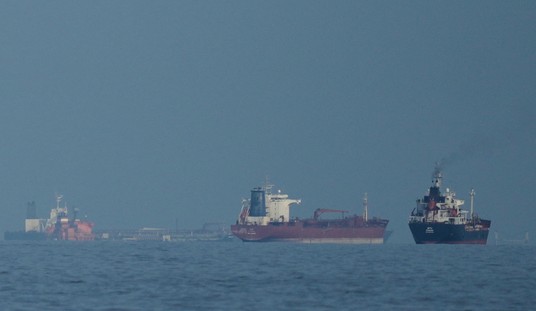
Hezbollah is still raining missiles on Israel. Iran has just declared the Strait of Hormuz closed, demanding immediate payments in the billions.
It’s looking like Uncle Sam is gonna be left with egg on his face. (And Iran will look like a super-stud, for telling America to eff off.)
PRojection: That’s because it’s far more likely that the Iranians will be emboldened by the one-sided language in the MOU than coaxed to make reciprocal concessions.
We had more leverage when we were dropping bombs on their head. We had more leverage when their leaders were dying in big, loud explosions. We had more leverage when we had a blockade. We had more leverage when we held their feet to the fire with sanctions, restrictions, and prohibited ANY Iranian oil from being sold on the open market. We had more leverage when the Iranians economy was reeling — and no revenue was coming in.
Why the heck did we forfeit all this leverage before the real negotiations began?
That’s the part that makes no sense to my logical mind: If the MOU was the best we could do when we had more leverage… how will we get an even better deal when we have less?
PRaise: On the other hand, one possible reason is that I’ve badly underestimated the success of the Iran War — and the negotiating gains of Vance, Steve Witkoff, and Jared Kushner.
The officials described the text of the [MOU] agreement as incredibly vague, mainly intended to create a more favorable environment for the highly technical, in-person talks to come. They added that the framework is aimed at providing Iran the ability to sell it politically to their internal audience.
Additionally, the officials said that the text of the memorandum of understanding — which Vice President JD Vance told CNN Monday is one-and-a-half pages long — didn’t reflect critical back-channel commitments Iran has made to the US, which they argued gave them more confidence in signing on to the arrangement.
“People shouldn’t read too much into the language of the MOU,” one of the officials said, describing the agreement as a “political document.”
[…]
The official added that the president’s team of negotiators “came up with language that allows (Iran) to say what they need to say for their domestic politics.” [emphasis added]
Look, maybe the White House knows a helluva lot more than the rest of us. Maybe Iran has been pounded into oblivion, they’re desperate to sign a peace deal, and we’re 60 days from a landmark diplomatic victory.
Maybe the Iranians requested a one-sided MOU — so they could survive the political fallout from signing a one-sided peace deal!
We don’t really know the temperature in Iran. Those of us who hoped for regime change were waiting for freedom-loving Iranians to rise up and overthrow the mullahs. But it’s entirely possible that the mullahs are more afraid of being overthrown by outraged Islamic hardliners than freedom-loving Iranian reformers.
If so, it explains the White House’s MOU posture and behavior.
As for how likely this explanation is, I’ll leave that up to you. It’d be awesome if it’s true, though.
PRedator: But even if it’s true, the White House had to know that once the MOU’s wording went public, the Outrage Meter would hit 11. It was as foreseeable as night following day.
Between the liberal media, Iranian propaganda, MAGA hawks, and the Woke Right, the outrage was fast and furious. The gaudy $300 billion figure in the MOU was immediately compared to President Barack Obama’s Iran bribe — and not favorably:
This is a jaw-dropping, horrific surrender document complete with hundreds of billions in reparations. It is the predictable result of incompetent negotiation and the foolhardy strategic catastrophe of starting and pursuing this disastrous war. The U.S. will not soon recover from… https://t.co/1IEvigIamz
— Susan Rice (@AmbassadorRice) June 17, 2026
Instead of strategically — and aggressively — combating the predictable PR fallout, the White House kept the info private for over 24 hours, denied (accurate) leaks of what the MOU was, and then blasted the president’s allies for criticizing the deal. It created the impression of an administration that had something embarrassing to hide.
Not good. Do better next time.