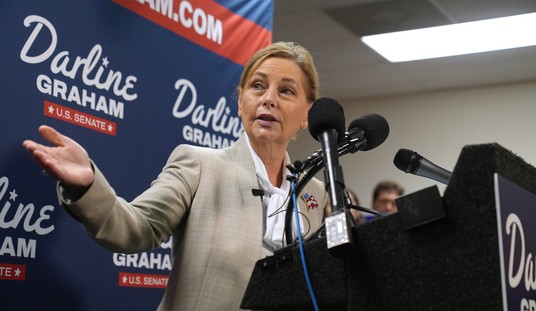
Fame is currency: You can spend it all kinds of creative ways. The celebrity marketplace overflows with enticing options.
And if you’re not careful, you can spend it too quickly.
Most of the time, a celebrity’s #1 priority is monetizing his or her fame. It’s a fleeting commodity, after all — you’re probably not gonna be famous forever — so your objective is to make as much money as you can, while preserving your fame for as long as possible. Long-term sustainability is key.
But if your #1 goal is monetization, the political arena is rife with landmines.
In terms of PR real estate, the political “middle ground” has shrunk to the size of a postage stamp. Everything is hyper-politicized.
Which means, when celebrities comment on a hot political issue, they invariably disappoint a portion of their audience. Some will applaud; some won’t care at all; others will quit being fans and walk away for good.
Occasionally, a celebrity will elevate his or her profile by latching onto a political issue. For example, back in the 1990s, Richard Gere was synonymous with Buddhism, “Free Tibet,” and the Dalai Lama. It didn’t hurt Gere a whit; instead, it made him seem passionate, cerebral, and more interesting than the average Hollywood actor.
(By the way, have you noticed that NONE of today’s liberals support “Free Tibet” anymore? There’s actually a very good reason for that: Today’s young liberals get their news through TikTok, and the Chinese government controls TikTok.)
But Gere was the exception. Most of the time, when celebrities enter the political fray, they diminish themselves AND their fame.
Thus they have less currency to spend.
So imagine: You’re a world-famous actor, athlete, singer, or whatever. Your fan base consists of conservatives, liberals, moderates, and undecideds. They support your career and think highly of you.
Would you comment about politics?
It’d be tempting, because celebrities have platforms that we “normies” do not. Unlike you and me, when superstars speak their mind, the whole world stops and listens.
That’s powerful. Be a shame not to take advantage of it, right?
Especially if it’s a political issue that’s important to you.
But then again, although the whole world will listen, it’s unclear how many are actually being persuaded. Usually, the end result is that the side you’re supporting will appropriate your comments for its own purposes; the side you’re opposing will hate you; and everyone else will shrug his or her shoulders.
And what the hell does that accomplish?
But you could also argue that every action matters in the Culture War, no matter how small. Even if you can’t persuade en masse, you could at least create a climate that’s more welcoming of your political opinions.
That’s one of the powers of celebrity: mainstreaming ideas, products, trends, and beliefs.
Besides, money isn’t everything (especially after you’ve already got a few million in the bank and a wicked-cool Ferrari in the garage). So if a celebrity is passionate about, say, saving babies from abortion, who cares if it costs ‘em a movie role — or a few million Instagram followers? These celebrities should follow their heart.
‘Cause it costs the babies a helluva lot more than a movie role or Instagram followers.
It ultimately comes down to the personal priorities of the celebrity: What matters most to you?
Michael Jordan very famously avoided politics, noting, “Republicans buy shoes, too.” Other celebs opine about everything under the sun — often with minimal knowledge, research, or insight.
I’ve thought about this a lot, because I’ve had to advise celebs on this. (It falls under the banner of brand management.) So let’s pretend that I’m not America’s most beloved and/or best-looking conservative commentator, and was instead a (lowly) football player or a movie star.
Personally, I wouldn’t talk about politics at all.
And if anyone asked me about it, I’d answer, “Yeah, I have lots of political concerns, but I’m also worried about how divided our country is. That’s a serious problem, too. Instead of contributing to the division, I want to bring Americans together. In the [football stadium/movie theater], it doesn’t matter if you’re a Democrat or a Republican; we all cheer, boo, cry, and celebrate. We already have enough people arguing about what makes us different. In my own small way, I prefer to focus on all the things we still have in common.”
We’re in a hyper-divided age; choose your legacy wisely. Having a legacy as a political bomb-thrower is one option.
In liberal Hollywood, it’s a popular option.
Another is being a safe harbor in a violent storm.
(Pays better, too.)