
There are hundreds, if not thousands, of Christmas movies and TV specials to choose from each holiday season. We all have our favorites, and arguing among ourselves about which one is the best is practically a national pastime.
But there's one that almost every American can agree on — unless you're a communist or something — and it's practically a symbol of the season. Not only is it on TV, but it's also in stores, on merchandise, in parades, on Christmas ornaments, and yard decor. It's a humble little 25-minute cartoon that warms the hearts of multiple generations.
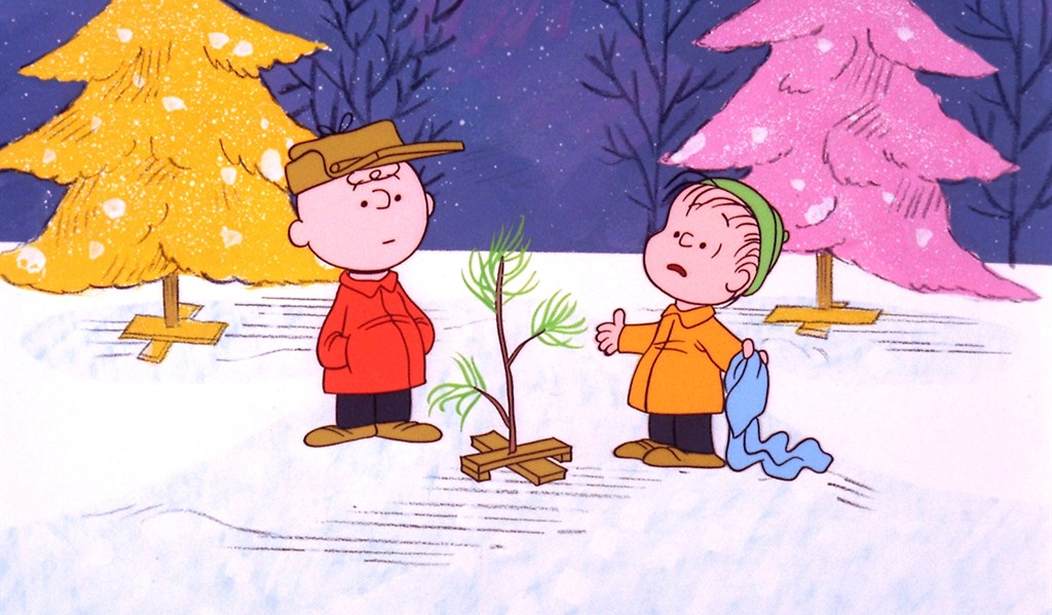
Yes, I'm talking about A Charlie Brown Christmas.
But did you know that it wasn't expected to be a hit? In fact, almost everyone involved in its creation, production, and initial airing either thought it would flop or didn't want to put it on TV at all.
The story goes that Peanuts comic strip creator Charles Schulz hadn't planned on making a Christmas special, but after Charlie Brown and the gang appeared on the cover of Time magazine, someone from Coca-Cola's ad agency called producer Lee Mendelson and pitched the idea. Mendelson lied and said that he and Schulz were already working on such a project, and he called Schulz up and told him he had to write it ASAP. He also called up animator Bill Melendez and asked him to get involved.
According to New York Magazine:
The three met in Schulz’s office in Sebastopol, California. Schulz wanted the show to focus on the childhood stress of putting on a Christmas play. Mendelson had just read The Fir-Tree by Hans Christian Andersen and suggested the story include a tree that is as sad and misunderstood as Charlie Brown. They cranked out an outline and put it in a Western Union shipment to Atlanta. Several days later, the agency told them they had a short six months to deliver the animated special.
In the midst of production, a rep from Coke came out to check in on things and told the men he was disappointed. The pacing was too slow. They assured him that it was because they hadn't added the music and color to the animation yet. He gave them a second chance, saying that if he relayed his thoughts back to the agency, they would most certainly scrap the idea.
But even with the addition of songs from up-and-coming jazz musician Vince Guaraldi, CBS hated it. They didn't think a Christmas cartoon should have jazz music or "big words," like the line when Lucy says, "We all know that Christmas is a big commercial racket. It’s run by a big Eastern syndicate, you know." As a child who grew up watching this stuff religiously, I would like to tell those CBS execs that I actually loved that about it. I learned new words that were funny, though I wasn't sure why, and I felt like I was a part of some sort of inside joke. I can still recite those lines by heart, but I digress.
There were also arguments between Schulz, Mendelson, and Melendez. Mendelson wanted to add a laugh track, and the story goes that Schulz walked out of the room at that suggestion. And when Schulz decided that Linus would recite a verse from the book of Luke, the other two men nearly lost it.
Recommended: Did Teddy Roosevelt Ban Christmas Trees in the White House?
"We looked at each other and said, ‘Well, there goes our careers right down the drain,’" Mendelson has said in the past. "Nobody had ever animated anything from the Bible before, and we knew it probably wouldn’t work. We were flabbergasted by it."
Again, I have to speak up here and say that this is the first Bible verse I learned by heart as a kid, and I didn't learn it in church.
Once production finally finished, CBS was still hesitant. The network felt it was unpolished, slow, and lacked action. They still hated the music, and they felt some of the voice actors felt amateurish. However, it was too little too late. Coke had thrown the money into it, and the TV Guide had printed its debut. There was no going back. CBS decided they'd air it once and never again.
That changed when they realized people loved it. A whopping 49% of the entire American TV audience tuned in and wanted more. Media critics reviewed it warmly and favorably. It went on to win a Peabody and an Emmy, and CBS suddenly wanted the team to produce more specials.
It seems the only person who wasn't surprised was Schulz, the Sunday School teacher and Army veteran from Minneapolis, Minn., who believed in his characters and knew they were exactly what the public wanted.
A Charlie Brown Christmas originally aired on Dec. 9, 1965, which means it turns 60 next week. That's 60 years of American families sitting down together to enjoy something sincere, meaningful, and heartfelt in a world where those things are disappearing. I hope that wherever you are, you get a chance to watch it this Christmas. I know I will.