





Sometimes I feel like John the Baptist wandering the wilderness, telling people to prepare for the coming apocalypse.
"Prepare ye, oh America, the debt crisis is anon!"
Not very catchy, but I believe that somehow, if I repeat it often enough, some people will start listening.
We're now in the midst of campaign season. Both parties are competing to see how much free stuff they can throw at voters. Voters are used to it. They've come to expect it. It's very popular.
"What’s not popular (members of both parties have found), is campaigning on cutting stuff," writes Wall Street Journal's Damien Paletta. "Yes, Democrats often want to raise taxes (or cut military spending) to offset the costs of their new proposals, but that rarely happens."
Republicans are no better. They want to cut spending on social programs to raise military spending. It also rarely happens. In fact, House Republican leaders are pushing a $1.5 trillion increase in defense spending without any cuts elsewhere.
So much for the "Party of Fiscal Sanity."
"What’s remarkable about this election is how spending cuts initially were such a centerpiece of Trump’s agenda (see, RIP DOGE) and now…crickets," Paletta writes.
Trump, like any other presidential candidate of the last 50 years, has talked about spending cuts and then done little or nothing. Even Jimmy Carter talked seriously of cutting "wasteful spending." In 1978, he vetoed a public works appropriations bill and a Department of Defense bill that included funding for a nuclear‑powered aircraft carrier, explicitly citing "wasteful spending."
Carter’s early fiscal program (1977–78) included significant spending increases, especially for employment programs and economic stimulus. The Congressional Budget Office notes that his 1977–78 revisions added $31.6 billion in stimulus measures.
So while Carter tried to cut certain programs, he simultaneously expanded others. He was an easy target for Ronald Reagan and the Republicans in Congress.
Unfortunately, talk of the debt and deficit has today become verboten.
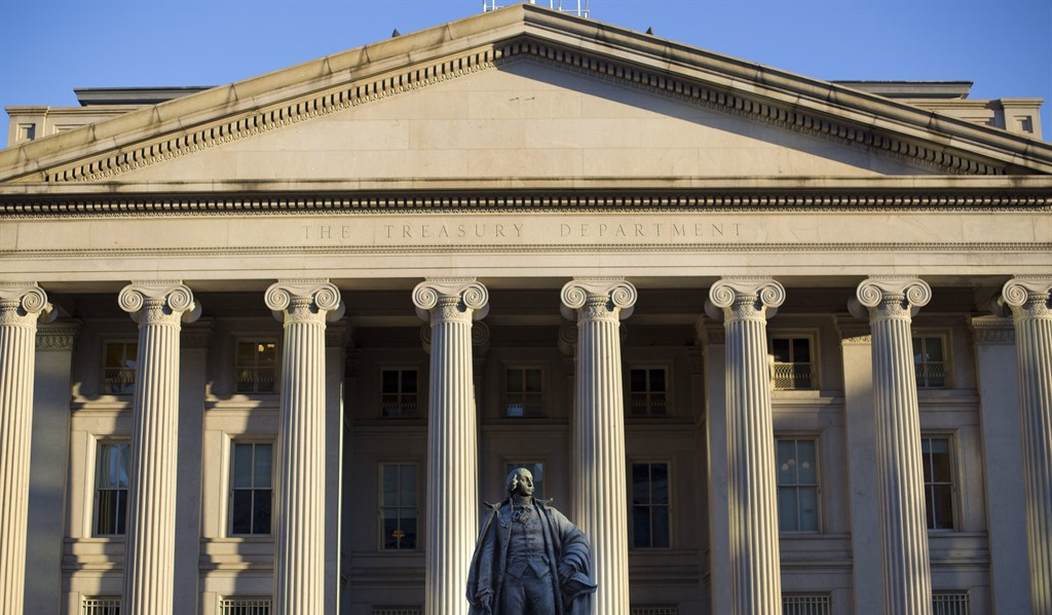
"Total government debt is barreling toward $40 trillion. The deficit—or gap between revenue and spending—is projected to be $1.887 trillion this year, and then breach $2 trillion next year, according to the Congressional Budget Office. Borrowing this much money costs a tremendous amount of money. The government is poised to pay $1.1 trillion in interest on its debt this year.
This is not money we're borrowing from our children. It's not money we're borrowing from our grandchildren. It is money we're borrowing from no one that won't ever be paid back. Debt will continue to pile up faster and faster, not only because spending is out of control, but also because interest on the debt skyrockets.
It's a terrible, awful, stupid game that Congress and the executive are playing, where Congress makes a big show of being careful about spending and the president mouths platitudes about waste. Meanwhile, we're paying $3 billion a day in debt servicing.
Fortune reports, "In its August budget update, the CBO reported that net interest on public debt totaled $963 billion between October 2025 (when the fiscal year begins) and July 2026. That equates to $96.3 billion a month, or approximately $3.18 billion a day over the 303 days in between."
"Unsustainable" is a buzzword tossed around a lot in Washington. It doesn't mean that we can't maintain the same rate of spending tax dollars. It means it's going to get to a point where Congress can no longer pretend that nothing's wrong; eventually, the issue is going to become so critical that Congress is going to be forced to confront it.
The value of U.S. debt isn't necessarily a concern for economists—it does, after all, form the basis of the U.S. Treasury market, one of the safest asset classes on the planet. The concern for debt hawks is that the U.S. debt-to-GDP ratio is becoming unbalanced (currently at 122% per the St. Louis Fed), and lenders at some stage will attach a higher risk premium to lending, pushing up interest as a result.
While the bull case is that the U.S. can rebalance by boosting economic growth, bearish concerns range from inflation to the crowding out of public investment by interest payments. Bridgewater Associates founder Ray Dalio has warned as much, saying a "debt-induced heart attack" will be prompted by debt payments crowding out public spending.
Clearly, nothing is going to happen unless a catastrophic collapse is imminent, either because of a massive global downturn triggered by a serious Chinese recession or an inflation event that raises interest payments on the debt to unbearable levels.
Related: Why We'll Probably Never Know the True Origin of COVID-19
Until then, sit back, relax, and pop some popcorn. Watching the two parties vie with each other in spending money that won't be earned for a century is entertainment in and of itself.
Editor's Note: The Democrat Party has never been less popular as voters reject its globalist agenda.
Help us continue exposing Democrats' plans to lead America down a dangerous path. Join PJ Media VIP and use promo code FIGHT to receive 60% off your membership.

Join the Conversation
VIP members get the ability to comment on articles.