Big-time college sports were never as pure or unsullied as they made themselves out to be. But the jig is up. Faced with billions of dollars in lawsuits, chaos in conference realignments, and threatened antitrust actions by the courts, school athletic departments and governing bodies are begging Congress to save them from themselves.
Indeed, many of the problems are of the schools, the conferences, and the National Collegiate Athletic Association's (NCAA) own making. Greed and hubris have led to the current state of confusion and chaos. That, and the simple fact that no one follows the rules already in place.
Court rulings and ongoing antitrust lawsuits (such as House v. NCAA) have systematically stripped the NCAA of its regulatory authority. Without an antitrust exemption, attempts to cap "name, image, and likeness" (NIL) payments, restrict roster transfers, or enforce uniform eligibility rules face immediate injunctions and court losses.
Direct revenue-sharing models force athletic departments to distribute tens of millions annually to athletes. Allocating the majority of funds to revenue-generating sports like football and men's basketball has triggered legal challenges under Title IX and threatens funding for Olympic and non-revenue sports across smaller-division programs.
The combination of unrestricted transfer portal access, year-round athlete recruitment, and booster collectives has created continuous roster turnover. Without collective bargaining or formal employment contracts, schools operate in perpetual free agency without long-term contract stability.
Commercial expansion—including massive media deals, ongoing conference realignment, and proposed private equity investments—has increasingly severed college athletics from universities' core academic mission.
The rapid growth of legalized sports betting and prediction markets has exposed student-athletes to heightened harassment, online abuse, and potential game-manipulation pressures. Following the widespread legalization of sports wagering, the NCAA investigated dozens of athletes for gambling violations. Notable cases included betting and point-manipulation probes involving athletes at Iowa and Iowa State, as well as an NCAA disciplinary case sanctioning former Division I men's basketball players across New Orleans, Mississippi Valley State, and Arizona State.
Colleges, conferences, and the NCAA were far too busy making money to do anything to address the numerous problems arising from court decisions and missteps over NIL, conference realignment, and women's sports. Naturally, when everything began to collapse all around them, they all turned to Congress as supplicants.
The prospect of getting involved in a juicy issue like college sports predictably led to a sausage-making party on the Hill. Everyone had a pet amendment they wanted added; everyone wanted face time to talk about the bill. So for three years, the Protect College Sports Act (PCSA) languished in committee. Then, a breakthrough. Two major conferences, the Big 10 and the SEC, dropped their opposition to the bill and allowed it to move to the Senate floor.
Alas, more logrolling by members delayed the vote on the bill until after the August recess. Its fate after that is unknown.
PCSA was the brainchild of Sens. Ted Cruz (R-Texas) and Maria Cantwell (D-Wash.) — a 171-page Frankensteinian whopper that aimed to cure everything from name, image and likeness and the transfer portal to eligibility limits and conference realignment (the latest version sought to limit conferences to 19 members). They even tried to ward off the next Lane Kiffin by declaring coaches couldn’t change jobs during the season. All of which was deemed essential to “save” an extremely popular multibillion-dollar enterprise from itself.
That’s because College Sports Inc. managed to convince politicians of all stripes that their schools will all go bankrupt if something isn’t done to rein in their escalating costs. As if some external party is forcing athletic directors to give football coaches guaranteed $90 million contracts, then give them blank checks to build a $50 million roster.
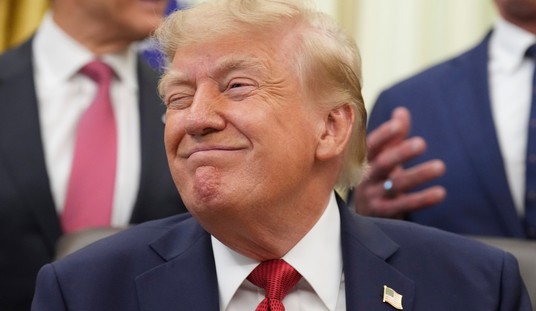
“Without this Bill, millions of young Athletes will be hurt, programs will be canceled, Women’s and Olympic Sports will go away, the fans will be robbed, and Universities will go broke,” President Donald Trump said this week while urging the Senate to pass the PCSA.
Yes, yes, yes, Mr. President. Cats and dogs living together. Mass hysteria! It's not as bad as that. After all, this is a multi-billion dollar industry. Certainly, some of what Trump is predicting will happen, but a university with a couple of billion-dollar endowments isn't going "broke" anytime soon.
Regardless, something has to be done, if only to address issues such as revenue sharing and conference realignment reform. Some highlights:
Targeted Antitrust Exemption: Grants the NCAA, athletic conferences, and member institutions limited antitrust immunity to establish and enforce national rules without constant threat of court litigation.
It also overrides conflicting state NIL and transfer laws to create a single federal governance standard.
NIL: Codifies direct revenue-sharing frameworks and caps compensation that institutions can pay to student-athletes. Requires athletes to disclose NIL agreements exceeding $600 to a national database maintained to establish fair market value.
Transfers & Eligibility: Restricts student-athletes to one penalty-free transfer, with exceptions for head coach departures, sport cancellations, or graduate study. Implements a strict five-year competition framework beginning at age 19, and bans former professional athletes from returning to play college sports.
Conference & Coaching Limits: Caps major power conference sizes at 19 institutions and limits conference consolidation to prevent the formation of an unregulated "super league." Prohibits head coaches from changing jobs or signing with another institution mid-season.
Athlete Welfare & Non-Revenue Protection: Mandates extended scholarship guarantees that cannot be revoked due to injury, athletic performance, or roster decisions. Requires five years of post-eligibility medical coverage for sports-related injuries and establishes a catastrophic injury fund.
It also protects women's, Olympic, and non-revenue sports by prohibiting major programs from cutting varsity sport sponsorship levels.
Exclusively for our VIPs: Chicago Native Pope Leo Is Being (Sort of) Credited With the Sudden Resurgence of the White Sox
What happens without the PCSA? The free-for-all will continue, with the rich schools getting richer and the poorer schools struggling to keep afloat. I don't know if the PCSA will fix many of the problems it's supposed to address. Loopholes will be found that make some of the reforms meaningless. Meanwhile, litigation will continue, and the threat of the NCAA's dissolution remains.
Many smaller schools may be forced to drop expensive sports like football and hockey and to dramatically curtail travel for minor sports. It seems certain that college athletics will look far different in five years than it looks today.
Editor’s Note: Every single day, here at PJ Media, we will stand up and FIGHT, FIGHT, FIGHT against the radical Left and deliver the conservative reporting our readers deserve.
Help us continue to tell the truth about the Trump administration and its successes. Join PJ Media VIP and use promo code FIGHT to receive 60% off your membership.