





As Los Angeles Mayor Karen Bass oversees the number of rebuilding permits awarded to transgender people and drag performers, other, less critical decisions are falling through the cracks.
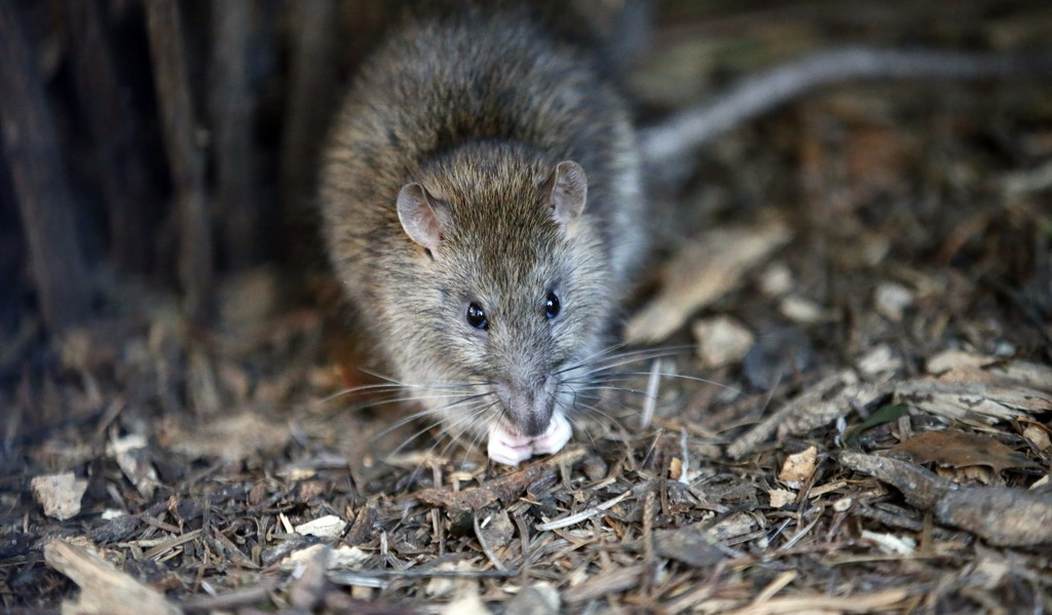
Rats. Los Angeles has a rat problem. Not a rat problem like all big cities. Los Angeles rats are of a particular variety.
In addition to some of them being the size of cats and chewing on everything in sight, the rats are literally flea-bitten. And the fleas that chew on the rats carry the medieval disease typhus.
It's just a hop, skip, and a jump from a rat for the typhus-bearing fleas to land on a human in the densely populated city of Los Angeles. And that's where Los Angeles has a medieval problem.
Fleas become infected when they feed on the blood of carrier animals. In urban settings, the primary reservoirs are rats, opossums, and stray cats. Once a flea contracts the bacteria, it carries it for the rest of its life. Unlike many vector-borne diseases, in which the disease is injected directly through saliva during a bite, typhus is primarily transmitted through flea feces, commonly known as "flea dirt."
Flea-borne typhus does not spread directly from person to person. But when you have four million people living in close quarters and the little rascals; it's nothing for a flea to leap from human to human, infecting them with the Rickettsia typhi bacteria.
"Since 2009, the number of flea-borne typhus cases in L.A. has increased by a staggering 2,300 percent," write Christopher Rufo and Ryan Thorpe in City Journal. "Last year, the county recorded more cases than at any point in its history."
This City Journal investigation—based on interviews with leading rodent experts, on-the-ground reporting, and a review of hundreds of pages of documents obtained via public-records requests—reveals that Los Angeles County has allowed a disease once associated with the Middle Ages to terrorize a major metropolis.
In L.A., crumbling infrastructure, a homelessness crisis, garbage-ridden streets, ineffective rodent control, and state restrictions on popular rodenticides have combined to enable the spread of a medieval disease. Whether you see them or merely pass by as they furrow in the dark, one thing is clear: in Los Angeles, the rats are everywhere.
In 2018, it was clear that L.A. had a serious problem. For much of the early 2000s, the county recorded just a handful of flea-borne typhus cases each year; in 2009, for example, it saw just nine. But in 2018, L.A. battled multiple localized typhus outbreaks, marking a watershed moment for public health officials in the county.
"The rats, meantime, spread disease in predictable ways," Rufo and Thorpe write. "They feed on trash, fleas feed on those rats, and the infected fleas bite people, who in turn suffer anything from a mild illness treatable with antibiotics to a sickness that ends in death."
Los Angeles's famous homeless encampments are breeding grounds for typhus, as one unlucky LAFD captain at Station 6 found out.
“This encampment, which I believe you are aware of, is located on both the city and county side,” Fire Captain Raul Cabrera wrote. “The Fire Station is being overrun by rats coming from the encampment directly across the street. We were hoping not only for regularly scheduled cleanup but also a more permanent solution... I would like to be proactive in this situation before the rats make a permanent home in the Fire Station or one of our City family members gets sick.”
For other city employees, it was too late. Elizabeth Greenwood was a deputy city attorney who discovered insect bites on her leg one day at work. A week later, she was bedridden and unable to go to the bathroom without assistance. “It felt like somebody was driving railroad stakes through my eyes and out the back of my neck,” Greenwood said.
In 2022, L.A. suffered more typhus outbreaks, marking another turning point in the county’s fight against the disease. That year, L.A. saw 171 cases of flea-borne typhus and noted that its five-year average for typhus cases had doubled. The county also battled multiple simultaneous outbreaks in neighborhoods including Boyle Heights, Eagle Rock, and Glassell Park, and suffered three typhus deaths—the first documented fatalities in decades.
By 2024, L.A. would see another record high for flea-borne typhus cases: 187. In 2025, that record was broken again, with 220 cases; the county also investigated three localized outbreaks. Local public-health officials noted that some 90 percent of typhus patients required hospitalization last year.
The city’s rat problem has worsened. In 2025, the pest control company Orkin released its annual list of the most rat-infested major cities in America. That year marked the first time since the list’s inception, more than a decade earlier, that any city other than Chicago had taken the top spot. This time, Orkin named a new location as America’s rattiest city: Los Angeles.
Shannon Sked, national technical director at Orkin, believes that the rats have not only exploded in population, but have become more aggressive as well.
“The most aggressive were surviving through that time,” Sked said. “Restaurants were closed, the food availability was changing. So those that were most willing to go out and search, they were the ones that survived. And that actually created a trend where we’re now seeing more presence, not just in total numbers, but observations where [the rats are] actually more willing to come out and interact in ways that 10 years ago we didn’t see that much.”
And yes, the problem is municipal government. Niamh Quinn, the human-wildlife interactions advisor for the University of California’s agriculture and natural resources division, says, “If you look where we are right now, [all these buildings] might have private pest control,” Quinn said. “But then there is literally no management here. There is no management of the landscaping, there is no management of the rodents, and there is no management of the trash. Municipal management would help fill in these holes. You wouldn’t have all of these gaps that are potential reservoirs of rodents that are invading into all of these other spaces that are managed.”
Why is it so difficult to get a handle on the rat problem in Los Angeles? The rats have a best friend in Gov. Gavin Newsom and the California legislature.
In 2020, Newsom signed A.B. 1788 into law. The bill sharply restricted the use of potent anticoagulant rat poisons in hopes of protecting “mountain lions and other wildlife.” Four years later, Newsom signed A.B. 2552, further expanding those restrictions.
Anticoagulants are the easiest way to control rat populations. The poison stops the manufacture of clotting agents in the rat's blood, eventually leading to the beast dying of internal bleeding.
Sked argues that Newsom's changes in the law made urban rat control significantly more difficult, including in Los Angeles, where the problem may be worse than ever.
Rufo and Thorpe conclude, "A county struggles to keep its streets clean, to keep garbage from piling up, to bring homelessness under control, to contain its growing rat problem, and to prevent medieval diseases from infecting its citizens—all in a state more interested in 'mountain lions and other wildlife' than the health of its own people."
I'm sure Gavin Newsom will talk up how he's saving mountain lions while humans suffer and die in his upcoming presidential campaign.
Editor's Note: President Trump is leading America into the "Golden Age" as Democrats try desperately to stop it.
Help us continue to report on President Trump's successes. Join PJ Media VIP and use promo code FIGHT to receive 60% off your membership.



Join the Conversation
VIP members get the ability to comment on articles.