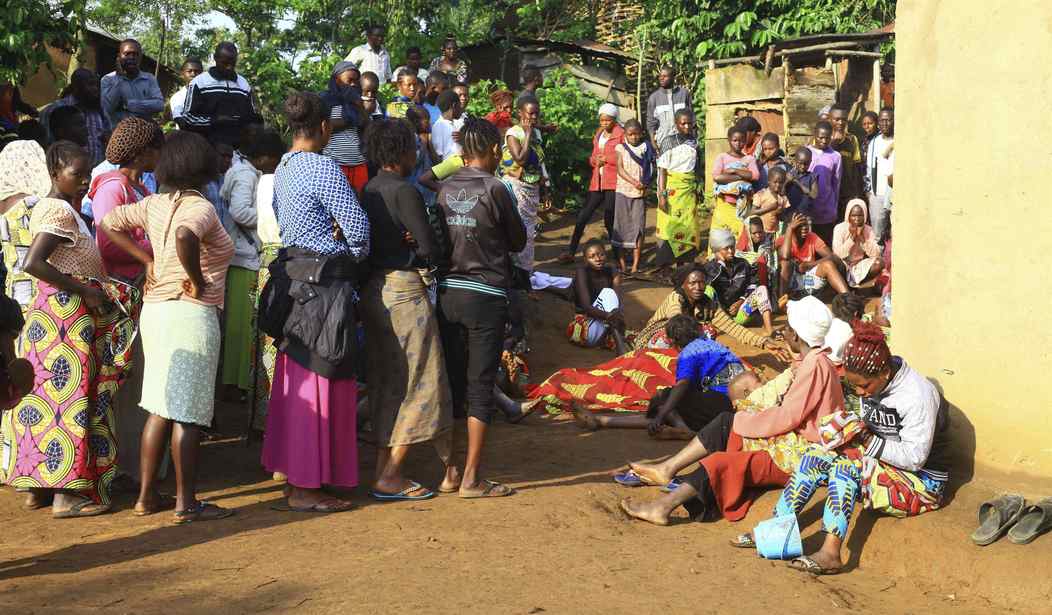

On May 15, health officials from the Democratic Republic of the Congo announced that the country was in the midst of an Ebola outbreak. Within two weeks, more than 300 cases had been reported in Congo, with 48 confirmed deaths. Another dozen cases were reported in neighboring Uganda, with one fatality.
The World Health Organization (WHO) is saying that this outbreak is already the third-worst epidemic in history. And it's only just begun.
This particular strain of the virus that causes Ebola is a nasty one. There's no cure, nor is there a vaccine. Ebola is actually one of a family of viruses called orthoebolaviruses, and they all cause what is known as a type of hemorrhagic fever. This is where your immune cells are infected by the virus, and this leads to internal bleeding, organ failure, and death.
Tanya Lewis, senior desk editor for health and medicine at Scientific American, said, "What’s different about this outbreak is it’s actually caused by a strain of what’s technically called a species of [orthoebolavirus] called Bundibugyo virus," she told the magazine. "It’s only caused, like, I think, two outbreaks in the past that we know of."
In addition to no vaccine to prevent the disease and no effective treatments to cure it, health care workers and government officials are being massively hindered by another kind of outbreak: anti-Western conspiracy theories. These rumors complicate the public health response, drive community resistance, and put healthcare workers at risk.
One prevalent conspiracy theory alleges that the Ebola virus is a biological weapon manufactured by Western nations or international organizations. According to this narrative, the virus was intentionally introduced into the DRC to decimate the local population, test experimental medical interventions, or justify foreign intervention.
Another hysterical theory is that the outbreak has been a fabricated crisis or a minor illness blown out of proportion, designed to generate massive funding for Western organizations and corrupt local officials. The theory about local officials stealing aid money is true, but the idea that massive funding is going to Western aid groups is false. Many communities harbor deep distrust toward the influx of foreign aid workers, NGOs, and international health agencies. Considering the history of Western assistance in the region being used as a cover for resource theft, it's easy to see how a rumor like this could spread. Eastern Congo is incredibly rich in cobalt, coltan, gold, and copper — materials essential for Western technology and green energy infrastructure. Because international corporations and foreign entities have historically profited from these resources while the local population remains in deep poverty, many residents view any sudden influx of Westerners with extreme suspicion.
A common local critique is: "Why do Westerners spend millions of dollars to save us from a disease that kills foreigners, but ignore the diseases that kill us every day unless there is something here for them to steal?"
There are also complaints about the lack of urgency in the response to the outbreak. Dr. Alex Bogole, a Congolese doctor in the hospital’s intensive care ward, told the New York Times, "They hold meetings and meetings,” struggling to contain his disdain. “What is the purpose of these meetings? People are dying, people are getting infected, people are in danger. It’s very slow.”
This lack of urgency feeds the conspiracy culture. The sad fact is that the conspiracies have a real-world effect on the spread of the disease and make aiding the afflicted much harder.
Fearing Western medical facilities, symptomatic individuals frequently hide from contact tracers, self-medicate, or flee to other regions, which rapidly accelerates community transmission. Distrust has historically boiled over into physical attacks on health clinics, treatment centers, and containment teams, occasionally forcing organizations like the WHO or CDC to temporarily suspend operations in high-transmission zones.
Recommended: The Flight of the Billionaires
It's also alleged that Western medical teams use their access to remote, conflict-ridden areas where mining deposits are located under the guise of "contact tracing" or "quarantine mapping." The rumor suggests that health workers are actually geological surveyors mapping out mineral veins or covertly transporting valuable minerals out of the country in medical supply crates.
Overcoming this deep-seated distrust is the single biggest hurdle health officials face in saving lives and stopping the virus from spreading further, according to the WHO.
How bad will this outbreak get? Without the full cooperation of local communities and the continued distrust among the affected population, the outbreak has a chance of achieving the dubious distinction of being the worst in history.