
Summits between superpowers are obsessively scripted so that no words uttered by the participants, no events, and no gestures go unplanned.
Both Donald Trump and Xi Jinping wanted something from each other out of this summit, the first in China in nine years. “Trump’s being here is sending the most important signal, that China and the U.S. are no longer aiming for new breakthroughs, but striving to restore some stability,” said Zhang Jiadong, a former diplomat and professor at Fudan University in Shanghai.
Trump wanted to jumpstart U.S. trade with China by signing deals to aid U.S. businesses. He brought along 17 CEOs of major corporations who, no doubt, will fan out and rub elbows with the trade ministers and government officials who will facilitate the deal-making.
On Xi's part, he wanted to warn Trump of missteps on Taiwan.
“The Taiwan question is the most important issue in China-U. S. relations,” Xi said, according to the Foreign Ministry readout. “If it is handled properly, the bilateral relationship will enjoy overall stability. Otherwise, the two countries will have clashes and even conflicts, putting the entire relationship in great jeopardy.”
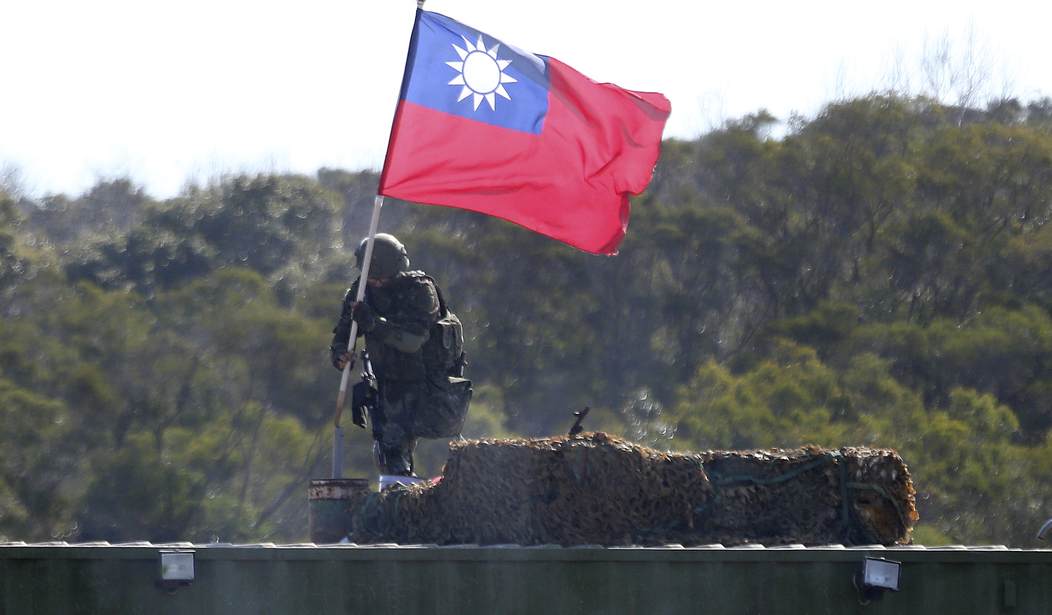
The context of these remarks should not go unnoticed. China has recently intensified its "grey zone" tactics — actions that are aggressive but stop short of open warfare — to exert pressure on Taiwan and normalize its presence in the region.
- Taiwan’s Coast Guard drove away the Chinese research vessel Tongji after it was caught conducting "illegal survey operations" just 29 miles south of Taiwan's tip.
- In late April 2026, a Chinese destroyer and frigate entered the southwestern waters of Penghu, a strategic archipelago in the Taiwan Strait. This is seen as an attempt to erode the "median line" — the unofficial buffer that has historically separated the two sides.
- Between May 7 and May 8 alone, Taiwan tracked 12 military aircraft and 8 ships operating around the island, with 10 of those aircraft crossing the median line.
- There have been practice blockades, transitioning from general maneuvers to specific rehearsals for seizing strategic ports and islands like Penghu.
I doubt whether hostilities with Taiwan are imminent. But Xi's warning, along with the provocative actions taken by the Chinese military in and around Taiwan in the last two months, demonstrates a growing level of military engagement that the U.S. cannot ignore.
Trump didn't respond to Xi's veiled, subtle threats, and he shouldn't have. Both leaders were simply trying to get their talking points on trade and security in front of the cameras. Both were successful.
A few hours after that conversation between Xi and Trump, Secretary of State Marco Rubio sat down with NBC Nightly News with Tom Llamas and insisted Xi's warning had no effect on U.S. policy.
“US policy on the issue of Taiwan is unchanged as of today and as of the meeting that we had here today,” he said. “It was raised. They always raise it on their side. We always make clear our position and we move on to the other topics.”
While Xi has repeatedly vowed to reunify China and Taiwan — by force if necessary — Rubio told NBC News that Beijing would be making “a terrible mistake to force that, through force or anything of that nature.”
“There would be repercussions for that, globally, not just in the United States,” he said. “And we kind of leave it there.”
On the other side of the Taiwan Strait, Taipei’s Ministry of Foreign Affairs fired its own rhetorical volley.
“China is currently the only risk to regional peace and stability,” the ministry said. “Even during the meeting between the leaders of the United States and China, the People’s Liberation Army continued to send military aircraft and ships to harass and threaten Taiwan in the region.”
In recent years, the U.S. military has played several wargames strategizing how a China-U.S. conflict might play out. It would be a bloody affair with the outcome favoring China. Recently, U.S. policy planners tried to fight the war from the Chinese perspective. The results were interesting.
In August 2025, 25 international experts gathered at Syracuse University to do something unusual: plan China’s invasion of Taiwan. For two days, academics, policy analysts, and current and former U.S. officials abandoned their typical defensive postures and attempted to inhabit Beijing’s offensive strategic mindset in a wargame. They debated not how America should respond to Chinese aggression, but how China might overcome the obstacles that have so far kept it from attacking the island nation.
This role reversal yielded an uncomfortable insight. The invasion scenarios that dominate U.S. military planning — involving massive amphibious assaults on Taiwan and preemptive strikes on American bases — may fundamentally misread Beijing’s calculus. As the wargame revealed, analysts seeking to understand China’s intentions should pay greater attention to plausible alternative military pathways to reunification that involve far less force and far more political calculation.
Unless we station a large amount of military assets around Taiwan and are willing to commit a large percentage of American forces to the battle, it seems certain that China would eventually prevail. Their supply lines are thousands of miles shorter, and they can bring more power to bear on the conflict and more quickly than the U.S.
China might win, but it would be a world pariah, with trade embargoes imposed on it by its best customers. Making China pay for its aggression against Taiwan makes more sense than trying to hold off China's entire armed forces for any length of time.