Iran's ability to threaten anyone is ending. The combined forces have been systematically deconstructing Iran's offensive capabilities, one bomb and drone at a time.
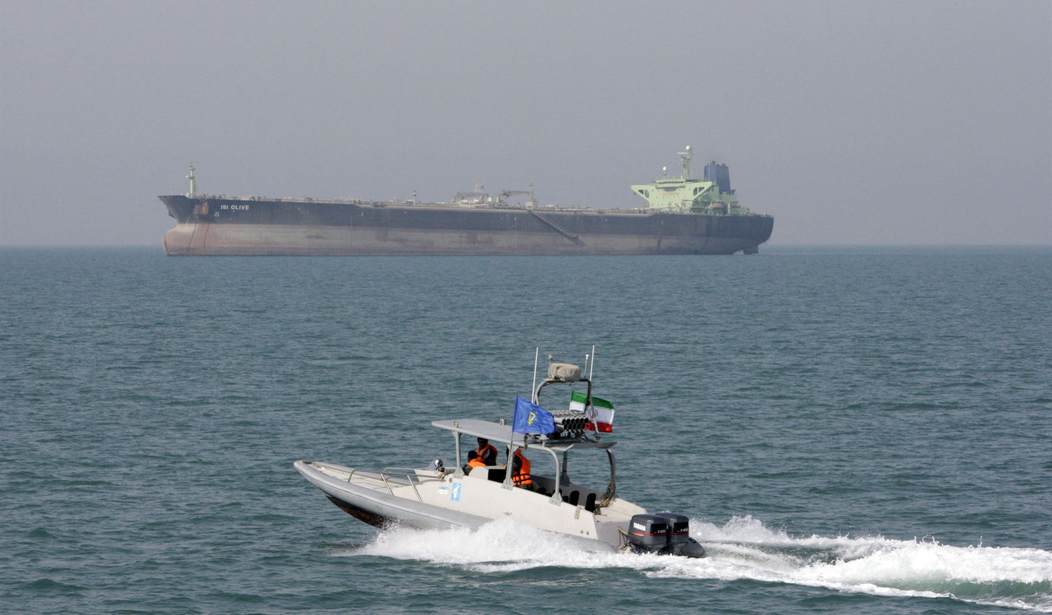
Tehran will be vastly weakened militarily whenever this conflict ends, except in one huge way: The Iranians will find it relatively easy to choke off commerce moving through the Strait of Hormuz with a few drones and missiles. Even in their vastly weakened state, unless the U.S. and Israel can permanently end Iran's ability to terrorize shipping and threaten travel through the strait, the war will have been an exercise in futility.
According to Israeli analyst and The Free Press writer, Amit Seagal, several military objectives remain for the combined forces.
1. To act jointly with the United States to reopen the Strait of Hormuz.
2. To permanently deny any future Iranian regime the ability to again close the Strait, including through the development of alternative methods.
3. To dismantle Iran's weapons industry, with an emphasis on ballistic missile capabilities—this time targeting not just equipment but the factories that produce it.
Except for the occasional decapitation strike killing a high-ranking regime official, what remains for the combined forces is the systematic elimination of the regime's ability to harm Israel or the U.S. This includes making sure that Iran will never be able to reconstitute its ballistic missile and nuclear programs, as well as eliminating Tehran's ability to close the Strait.
Underscoring that goal, U.S. Central Command (CENTCOM) commander Admiral Brad Cooper said on March 11 that the United States aims to degrade Iran’s ability to interrupt shipping in the Strait and “end their ability to project power and harass shipping in the Strait of Hormuz.”
"A weakened regime that remains in power after this war would be able to disrupt shipping whenever and for however long it pleases with little effort if its current, relatively limited, strike campaign on shipping proves sufficient to cause the U.S. and Israel to" stop fighting, observes the Institute for the Study of War (ISW).
A failure to demonstrate the will and ability to deny Iran the ability to disrupt traffic will make it enormously harder to deter Iran from future disruptions. Stopping the war in current conditions would thus represent a major strategic challenge that the United States or Israel would need to contend with in future rounds of conflict with a regime that will continue to be a committed adversary. Iranian Parliament Speaker and former military official Mohammed Bagher Ghalibaf, for example, said that the strait will never return to its pre-war state.[3] Ghalibaf is presumably suggesting that Iran will continue to use the Strait of Hormuz and threats against it to coerce its adversaries and deter future military action. Ending Iran’s ability to disrupt shipping would demonstrate to Tehran that the United States and its partners can and will stop Iran by force if needed. It remains unclear whether military action will stop Iran from threatening the Strait. But ending the war without taking all feasible action to destroy Iran’s ability to disrupt traffic would communicate Iran that it can use threats to the strait to defeat its adversaries, including the United States, in any future conflict.
What about regime change? The goal was to "create the conditions for regime change," as Donald Trump announced at the beginning of the war. "Creating the conditions" for change is not the same as creating change itself. The U.S. and Israel could still create the conditions for the overthrow of the regime and then leave the rest up to the Iranian people. "It is premature to forecast the likelihood of such an uprising, as the air campaign is not complete, and people are very unlikely to rise against the regime in the midst of an active air campaign," observes ISW.
Israel hit the Iranian Revolutionary Guards Corps (IRGC) naval headquarters on Tuesday. This will make it much more difficult for Iran to threaten shipping in the Strait, but not impossible. One man with a cheap drone on one of the islands in the Strait could still accomplish what a few IRGC speedboats can do. Insurance rates for moving goods through the Strait would still be sky-high, preventing many companies from sending their ships through.
Ending the regime would seem to be the surest way to secure the Strait and keep ships safe.