
The Iranian opposition has always been badly divided. Part of it is the fractured nature of Iranian society, encouraged by the regime to keep the populace under control.
Beyond that, there is no history of the factions working together. The monarchy also found it convenient to ensure that the opposition was unable to unify. So, too, the Ottomans, who, like other imperial powers, played minorities off against each other as a means of control.
The current Iranian opposition is just as fractured, but circumstances may now be working to bring them closer together, if not unified under a single banner.
"Unlike some authoritarian states, such as Belarus or Venezuela, Iran’s opposition does not have a unifying infrastructure or a clear leader," writes Sanam Vakil and Alex Vatanka in Foreign Affairs. "Instead, it is best thought of as an archipelago of political islands divided by geography, generation, ideology, and exposure to repression." They include "neighborhood associations, student cells, women’s rights circles, ethnic movements, and labor organizations," Vakil and Vatanka write.
Urban vs. rural; old vs. young; women vs. men; labor vs. business; and every ethnic group against every other ethnic group. Throw in the nitroglycerine of religion vs. secularism, and you have a boiling, roiling stewpot under pressure that's always threatening to explode and make a huge mess.
This is the Iranian opposition in the 26th year of the 21st century, the 47th year of the theocratic/fascist state that has oppressed the Iranian people, murdered them, imprisoned them for thought crimes, beaten them, and destroyed their spirit.
No wonder it's so hard for the opposition to coalesce.
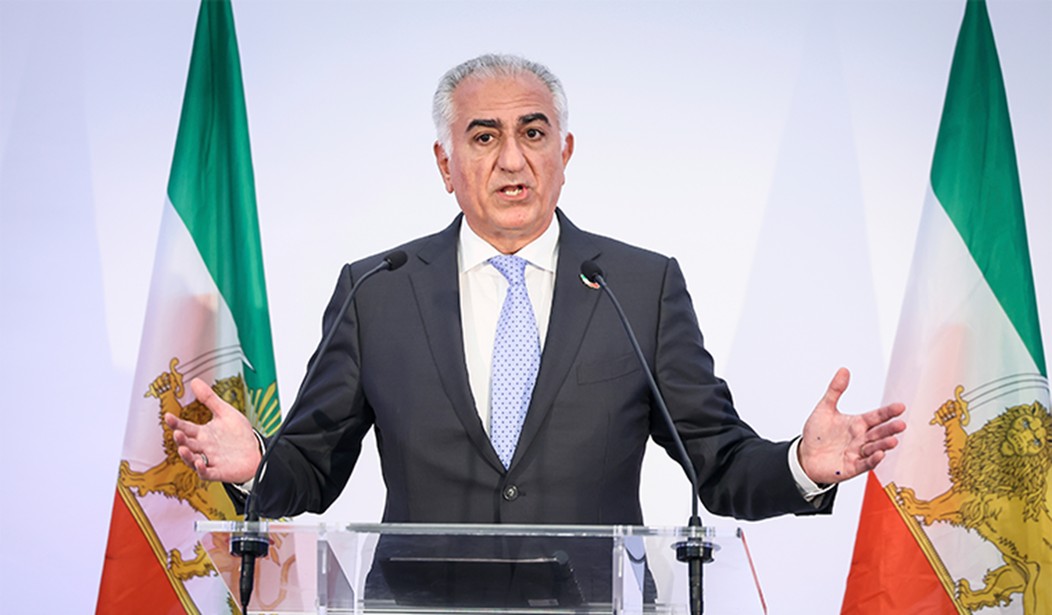
The protests of late December 2025 and the massacres of Jan. 8-9 have been a wake-up call for the opposition, especially the royalist faction led by the deposed Shah's son, Reza Pahlavi. Perhaps because the monarchists have been organized for decades and have ready-made networks in and outside of Iran, the activation of these networks was the most visible manifestation of opposition to the regime.
It should be noted, however, that the Pahlavi faction is not the largest opposition group, nor are they universally admired or liked. Some see the monarchists as anti-democratic and elitist. Pahlavi has sought to dispel those feelings, without much success.
Actions taken by his supporters haven't helped.
Along with the ascendancy of the radical royalists in recent years has come a hardening of positions vis-a-vis the other rival groups, chiefly the “17 Signatories.” On Dec. 12, during a mass funeral held for a human rights lawyer who some believe to have been killed by Iran’s secret police, pro-Pahlavi activists pelted their rivals with stones. When Nobel Peace Prize recipient Nargess Mohammadi, a member of that movement, rose to speak, they also chanted a slogan implying death to their rivals.
Pahlavi may be an eventual unifying force around which the opposition can rally, but as a long-term solution to Iran's governing problem, he's almost certain to be sidelined.
Other, more promising steps were taken recently when participants of the Iran Freedom Congress (IFC) convened in London.
"The assembly represents the most significant structural effort to date to transform decades of fragmented opposition into an organized, pluralistic framework capable of acting at decisive historical moments," reports the Middle East Forum (MEF).
“For forty-five years, the Iranian opposition’s great tragedy has not been a lack of courage or legitimacy. It has been the absence of an architecture that allows diverse forces to work together rather than cancel each other out,” said Gregg Roman, executive director of the Middle East Forum. “What is emerging in London is qualitatively different from anything we have seen before: a disciplined, pluralistic process that rejects both the dictatorship of the turban and the cult of the MEK [People’s Mojahedin Organization]. This is the kind of organized responsibility the Middle East Forum has long argued is essential for any credible post-Islamic Republic order.”
The last effort to unify the opposition was in 2023, and it collapsed in bitter recriminations and accusations of self-dealing.
Some diasporic activists, like their counterparts in Iran, have tried to bridge these divides. In February 2023, for example, eight Iranian exiles formed the Mahsa Charter to unite republican, monarchist, and other voices around shared principles of democracy, secular governance, gender equality, and an inclusive transition process. Its founders tried to sidestep the matter of who would lead their coalition. But April 2023, their efforts collapsed as a result of deep ideological differences and strategic disagreements.
Can the IFC succeed where the Mahsa Charter failed? The situation is far different today than it was three years ago. Then, the opposition was licking its wounds following the government's brutal suppression of the "Woman, Life, Freedom" protests. Opposition seemed hopeless, even futile.
Today, everyone has the sense that the Iranian regime is teetering. The business of planning a post-Khamenei government is real and has begun in earnest both inside and outside Iran. Whether the promising first steps blossom into something important will depend on individuals' ability to put aside their differences and work toward a common goal.
Recommended: Democratic Socialists of America Have Become More Radical and Are About to Become More Violent