
The scourge of old age is shingles.
You wouldn't wish your worst enemy to contract shingles. Watching a loved one suffer for weeks with the condition convinced me to get the shingles vaccine a few years ago.
Anyone who contracted chickenpox when they were kids is at risk for developing shingles after age 50. Chickenpox is caused by the varicella-zoster virus, which can lie dormant for decades before our immune system, weakened by age, allows it to re-emerge. If it awakens, it causes a painful, itchy rash that can create fluid-filled blisters that crust over, causing intense pain. In severe cases, it can cause blindness and deafness.
The first shingles vaccine was released by Merck in 2006. Zostavax used a live virus (considerably weakened) to trigger the body's immune response. Later vaccines, including Shingrix, re-prime the immune system to fight shingles.
Shingrix was found to be 90% to 97% effective at preventing shingles in adults aged 50 and up. It also had a side effect that puzzled — and excited — scientists and researchers.
As so often happens in science, unintended effects from the vaccines were noticed. Those who were vaccinated were less likely to develop dementia.
Was it "background noise" that made it appear there was a connection? Or was there something in the vaccine or something about how the body processed it that was beneficial to our brain's health?
The first problem in trying to determine whether the effect was real or a coincidence was to compare the vaccinated to the unvaccinated. Perhaps those who get vaccinated are generally healthier and more likely to resist dementia than those who are unhealthy.
In the past few years, studies have been putting that concern to rest. Instead of comparing vaccinated versus unvaccinated, researchers took advantage of vaccine rollouts in different countries, including Australia, Canada, and Wales. The vaccine introductions created clear cutoffs for people who were suddenly eligible for the vaccine and people who were permanently ineligible. These “natural” experiments lessened the concern of people being able to self-select their group.
So far, the results of these studies have consistently supported the finding that shingles vaccination is linked to a lower risk of dementia. The study in Wales, for instance, published in Nature in April 2025, looked at outcomes in over 280,000 older people after the September 1, 2013, debut of Zostavax. At the time, people 71 to 78 years old progressively became eligible for the vaccine, while those who were 80 at the start of the rollout were ineligible and never became eligible. Researchers looked at dementia diagnoses over a seven-year follow-up period and found that vaccination among the eligible reduced the relative rate of dementia cases by 20 percent compared with the ineligible group.
Further study suggests the data may underestimate the vaccine's effectiveness in preventing dementia. The original studies were based on the 2006 live virus Zostavax vaccine. The Shingrix vaccine is even more effective at preventing dementia.
In a study published this month, researchers "compared dementia rates among nearly 66,000 people who received the Shingrix vaccine and over 260,000 unvaccinated matched controls," according to Ars Technica. "The researchers found that the vaccinated group had a 51% lower risk of dementia compared to the unvaccinated controls.
By any standard, that's a "breakthrough."
So why aren't scientists and drug companies dancing a jig in celebration? Scientists can't figure out how exactly the vaccine is preventing cases of dementia.
However, many have speculated that by fortifying immune responses against the varicella-zoster virus and preventing reactivation, the vaccine reduces overall brain inflammation that could contribute to the development of dementia.
Another lingering question from the data so far is that several studies have found that women see more benefit from the vaccine than men in terms of dementia risk. It’s unclear why this would be the case, but researchers have noted that there are some potentially related associations: Women are more likely to develop dementia than men, and they’re also more likely to get shingles.
Another study published last month found that Shingrix may slow the aging process and reduce the risk of Alzheimer's disease.
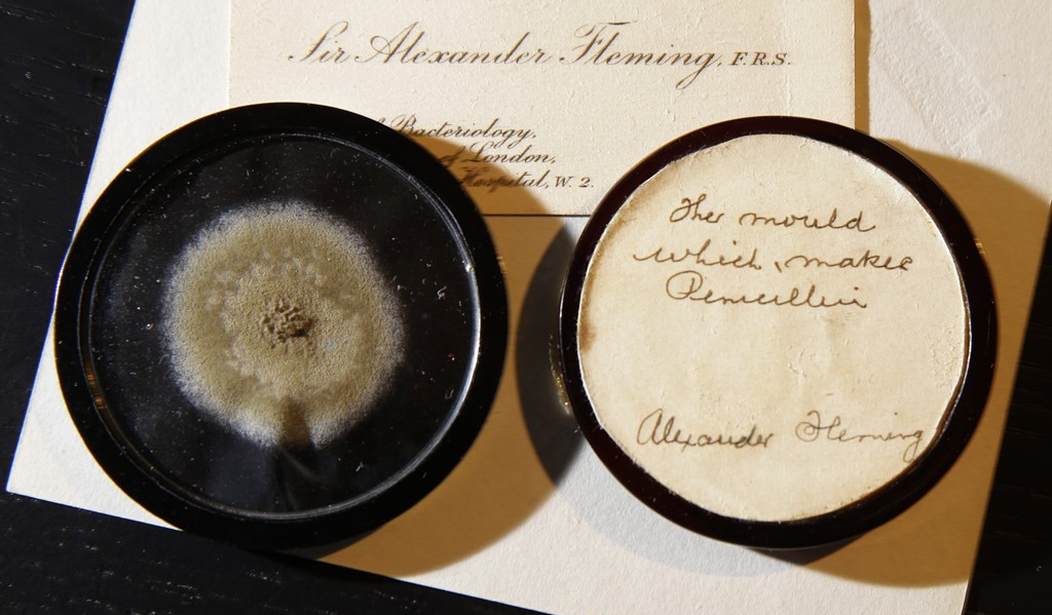
In September 1928, bacteriologist Alexander Fleming returned to his laboratory at St. Mary's Hospital in London after a two-week vacation. Before leaving, he had accidentally left a stack of Staphylococci culture plates on a bench instead of placing them in an incubator.
"That's funny," said Fleming when he saw a green mold growing in the petri dishes. The area immediately surrounding the mold was clear, meaning the bacteria in that zone had been destroyed. A mold, later identified as Penicillium notatum, had "contaminated" the dish. That contamination led to the development of penicillin, a drug that has saved more lives than any other drug in human history.
We may not know which processes are at work that make the shingles vaccine beneficial for our aging population. But the answers are just around the corner, and finding them may lead to other equally exciting discoveries.