
The Iranian theocracy is dying.
This past year, its invincibility was shattered by U.S. and Israeli warplanes and missiles, obliterating Iran's nuclear program. The people had been told that Israel and the U.S. would never breach the Iranian air defenses, and that both nations feared Iran's retaliation. Both propositions were shown to be false, dealing a massive blow to the government's credibility.
The signs of the regime's imminent collapse are growing. The economy, thanks to worldwide sanctions and U.S. pressure, is in free fall. "Iran’s economy slipped back into contraction in the first half of the current year as inflation accelerated and the rial sank to record lows," reports the anti-regime website Iran International.
"Agriculture contracted by 2.9% and industry and mining by 3.4%, while construction suffered a sharp 12.9% slump," according to the central bank. Oil grew by a paltry 1.1%, failing to offset huge losses in other sectors.
Food prices increased 72% for the year, according to the Tasmin news agency. The overall inflation rate stood at 42% year over year, with a 52% jump from November to December.
This has led to demands for higher wages, something President Masoud Pezeshkian says he cannot give.
“They tell me to raise wages, but someone should tell me where the money is supposed to come from,” he told the Iranian majlis, the nation's parliament.
Indeed, Pezeshkian is looking to slash the budget and the deficit to try to tame inflation. But doing so may inflame demonstrations that are already underway by a group that has been the most loyal regime supporters for 45 years.
Iranian shopkeepers have been the backbone of the revolution from the start. But the collapse of the value of the rial threatens to impoverish them. Iran's rial on Sunday plunged to 1.42 million to the dollar. On Monday, it traded at 1.38 million rials to the dollar. The U.S. greenback is the number one black market currency, making it impossible for traders and shopkeepers to participate in the Iranian economy, which is 40% off-book.
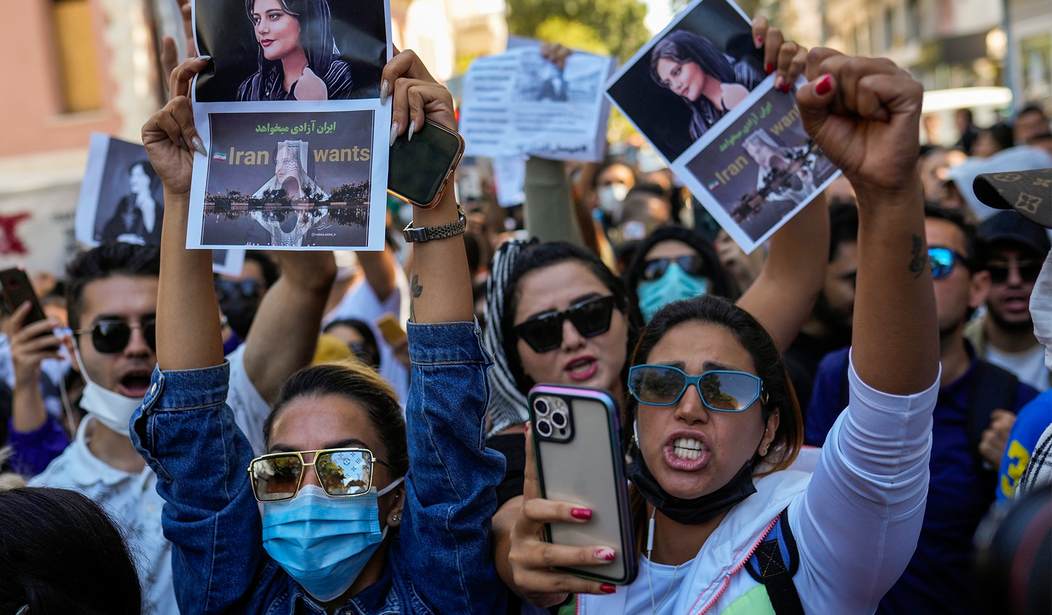
The shopkeepers took to the streets, as did others who are demanding change. One lone protester sat down in front of police in a scene reminiscent of the young Chinese man who stood in front of tanks during the Tiananmen Square protests.
Tweeted with caption:
— jadi (@jadi) December 29, 2025
"Tehran, Iran, Last days of 2025. A man protesting the economical situation"
Some people are saying this reduces the protests to "Economic" issues.
No! This is a protest against the whole regime. We want total change, as we wanted in all previous uprisings. pic.twitter.com/ki718SRSBM
Iranian journalist Masih Alinejad, targeted for death several times by the regime, reports that the protests are beginning to spread.
A teenager from Iran sent me these videos with this message:
— Masih Alinejad 🏳️ (@AlinejadMasih) December 29, 2025
“I was terrified while filming them. Please share them and show the world that we, the people of Iran, do not want this regime.”
The protests in Iran began in Tehran and are now spreading to cities across the country.… pic.twitter.com/4xu2S5vh86
Amid the turmoil, the head of Iran’s central bank, Mohammad Reza Farzin, resigned on Monday, pending the president’s acceptance, local news media reported. A former economy minister, Abdolnaser Hemmati, was set to replace him.
The economic turmoil poses a new challenge for Iran’s leaders as they seek to maintain control of their country of 92 million people while recovering from attacks on its nuclear facilities in June by Israel and the United States and a campaign of “maximum pressure” from the Trump administration aimed at securing a new agreement about Iran’s nuclear program.
President Pezeshkian responded to the demonstrations late Monday on X.
“The livelihood of the people is my daily concern,” Pezeshkian posted. He said the government planned to “reform the monetary and banking system and preserve the purchasing power of the people." He also said that he had asked the interior minister to “hear the legitimate demands of the protesters through dialogue with their representatives.”
The majlis is just as corrupt as the rest of the system. The people will get little satisfaction there. The entire rickety structure of government and society is coming undone, and it's hard to see how anyone can stop the collapse.
A sure sign of the futility of the government in its effort to stop the slide is that the number of executions has doubled in the last year, according to the BBC.
Norwegian-based Iran Human Rights (IHR) group told the BBC it had verified at least 1,500 executions up until the start of December, adding that many more have taken place since.
Last year, IHR was able to verify 975 executions - although the exact number is never completely clear as Iranian authorities do not give official figures.
However, the analysis shows another significant annual rise, and the figures chime with those provided by other monitoring groups.
Iran's government has previously defended its use of the death penalty, saying it is limited to only "the most severe crimes".
Execution figures were already on the rise before mass demonstrations broke out across the country in 2022 following the death in custody of Mahsa Amini.
The 22-year-old Kurdish woman was detained by morality police in Tehran for allegedly wearing her hijab "improperly".
In the year following the anti-hijab protests in 2022, executions climbed from 520 to 832. "Activists have said that the rate of executions in Iran increases when the regime feels under threat and that the aim is to forestall internal opposition by instilling fear in the population," reports BBC. If that's the case, the regime must be scared out of its wits.
Recommended: Zelensky to Seek 'Legally Binding Security Guarantees' in Sunday Meeting With Trump
With nearly half the economy gone underground, a worthless currency, inflation on the verge of getting out of control, and what may be the beginnings of another round of mass protests, the Iranian regime is ripe for collapse. It won't take much to push the regime out of the way as the whole, rotten structure is finally exposed for what it is: a hollow shell that can no longer sustain itself against a nation that has lost its fear.