







First, the good news is that the Consumer Price Index (CPI) rose significantly less than expected in November. The Bureau of Labor Statistics (BLS) reported a CPI of 2.7%, while a survey of economists polled by Dow Jones estimated the November inflation rate would be 3.1%.
There was no report for October because of the government shutdown. The BLS was forced to rely on other sources of information, but most of the data points that the agency uses to calculate the CPI were augmented by “nonsurvey data sources” to make the index calculations as accurate as possible.
The September report showed a CPI of 3%, so the 2.7% drop in November was significant, no matter whether future reports will have to be tweaked to account for the lack of data.
"The core CPI, which strips out volatile food and energy prices, was also cooler than anticipated, increasing 2.6% over 12 months. It was expected to have risen by 3%," reports CNBC. That is not only good news, but it's also totally unexpected,
Naturally, the American media is overjoyed by this good economic news. Or they will be as soon as they get their head out of their nether regions.
"Inflation cooled in November to 2.7%, but economists say to take it with "the entire salt shaker," advises CNN. The CPI dropped from 3% in September to 2.7% in November. It would be unusual (but not unprecedented) for a three-tenths-of-a-percent drop in two months. Totally dismissing the possibility is ignorant.
The Associated Press tried to explain why this wasn't good news at all in the headline.
"US says price increases eased last month but data may be distorted and Americans aren’t feeling it."
The Guardian wins the prize for the most childish headline:
"US prices continued to rise despite Trump claims they are ‘rapidly’ falling?
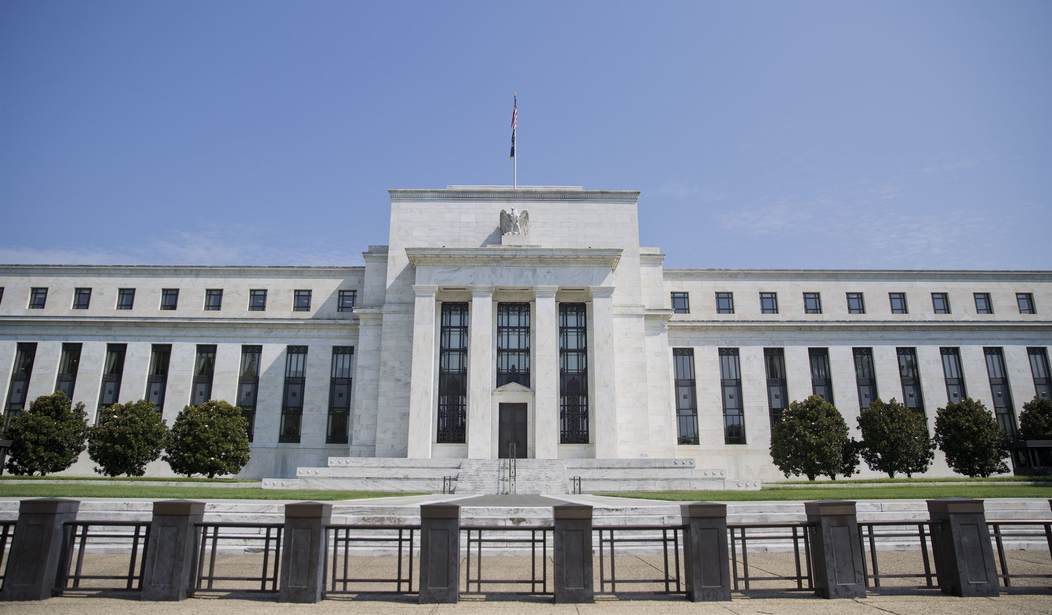
Essentially, November's CPI validates the Federal Reserve's "Steady as She Goes" policy of small, incremental cuts to the interest rate of 25 basis points.
This was the third consecutive 25-basis-point reduction in 2025, following similar cuts in September and October. Since the Fed began its cutting cycle in September 2024, the federal funds rate has been lowered by a total of 1.75 percentage points.
Economists may be hesitant to read too much into this report as the start of a downward trend in inflation because of the lack of October comparison data in the release.
Still, investors parsed through the report as they look for clues on future monetary policy moves from the Federal Reserve. The Fed earlier this month cut its benchmark overnight rate by 25 basis points for the third time in a row.
“A tame CPI will reinforce the Fed is focused on protecting the employment market. And that means a Fed ‘put’ is now in place for the economy,” Tom Lee, head of research at Fundstrat, said in a note ahead of Thursday’s release. “In other words, if the Fed is concerned about downside risks to the economy, the Fed ‘put’ comes into play and this would be for stocks to rise.”
“Just as President Trump told Americans last night: inflation continues to fall, wages continue to rise, and America is trending towards a historic economic boom,” White House press secretary Karoline Leavitt told CNN in a statement.
“CPI data are not revised, and as a result we believe the data will be noisy for at least another month or two,” economists Sarah House, Michael Pugliese, and Nicole Cervi wrote in a note to investors on Thursday. “A bounce back in prices in the December CPI report to be released on January 13 is probably coming.”
Do they sound a little too hopeful to you?
Help PJ Media continue to tell the truth about the Trump administration's accomplishments as we usher in the Golden Era of America. Join PJ Media VIP and use promo code FIGHT to get 60% off your membership.

Join the Conversation
VIP members get the ability to comment on articles.