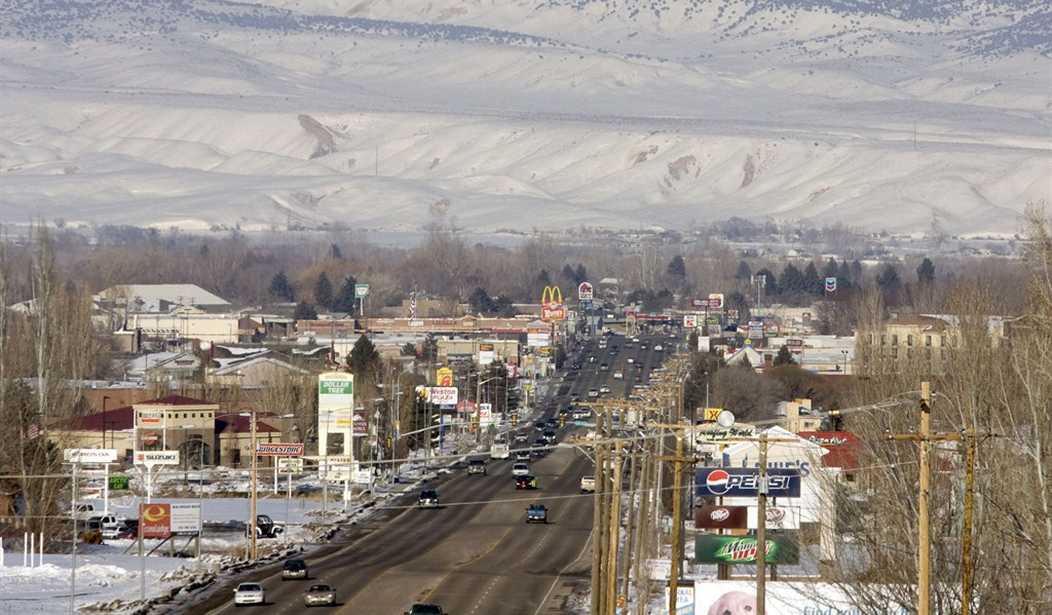
The dream of constructing a railroad that would connect the resource-rich Uinta Basin in Utah with the national rail network is more than 100 years old. The current effort is a public-private partnership between a coalition of seven counties in Utah, the Rio Grande Pacific Corporation, and Drexel Hamilton Infrastructure Partners.
The 100-mile line would be built at a fortuitous moment. Utah's crude oil production is on the rise, reaching a record 174,000 barrels per day in 2024. Along with copper and other minerals, the Uinta Basin promises to bring prosperity to seven rural counties in Utah.
In 2021, the Surface Transportation Board (STB) granted its approval for the project after a review spanning several years and a comprehensive 3,600-page environmental impact study (EIS) as required under the National Environmental Policy Act (NEPA).
The study was apparently not comprehensive enough. A coalition of environmental groups and communities, including Eagle County, sued, claiming the report should have weighed the downstream impacts of the new railroad. And, of course, climate change because of the 5 billion gallons of crude oil that will kill us all.
The Supreme Court took up the case, and Justice Brett Kavanaugh delivered the necessary lobotomy to the idea that a 3,600-page environmental impact statement wasn't enough of a review to meet the requirements of NEPA.
Supporters of the railroad said NEPA was a "procedural regulation" that fanatical greens had turned into a substantial roadblock.
Kavanaugh agreed.
“Simply stated, NEPA is a procedural cross-check, not a substantive roadblock,” reads Kavanaugh’s ruling. “The goal of the law is to inform agency decision-making, not to paralyze it.”
That sound you hear is the sound of green heads exploding. No more using NEPA to paralyze progress.
Kavanaugh points out that “the central principle of judicial review in NEPA cases is deference” to the reviewing agency. “Under NEPA, an agency’s only obligation is to prepare an adequate report,” Kavanaugh wrote.
“Those decisions have instead engaged in overly intrusive (and unpredictable) review in NEPA cases,” he wrote. “Those rulings have slowed down or blocked many projects and, in turn, caused litigation-averse agencies to take more time and to prepare even longer EISs for future projects.”
Utah’s oil fields produced 65.1 million barrels of crude in 2024, a 13% annual increase and a record high. That’s a 110% rebound from 2020, when Utah oil production cratered, dropping to 31 million barrels, according to a May 2 report from the University of Utah’s Kem C. Gardner Policy Institute and the Utah Geological Survey.
With the growth in production, the state exported a record 33 million barrels of crude, most of it from the Uinta Basin and shipped by truck to Price, Utah, and then by train to the Gulf Coast. The Uinta Basin Railway would eliminate the need for trucks and exponentially increase crude production in the basin, which spans thousands of square miles in rural Utah.
In September 2024, the state hit a production record of 191,000 barrels a day. Most of Utah’s crude comes from the Uinta Basin, where production averaged about 174,000 barrels a day in the summer and fall of 2024.
“An agency may weigh environmental consequences as the agency reasonably sees fit,” Justice Brett M. Kavanaugh wrote. The Surface Transportation Board told the appeals court that it didn't need to study unknown but possible impacts from projects. The appeals court disagreed, siding with the green fanatics who demanded that the board study every possible thing that could go wrong.
Paul D. Clement, a lawyer who has litigated several disputes under NEPA, told the Supreme Court that the board had acted responsibly.
“It consulted with dozens of agencies, considered every proximate effect and ordered 91 mitigation measures,” he said, referring to measures intended to dampen noise pollution, protect wildlife, and other steps to answer safety concerns.
“Eighty-eight miles of track should not require more than 3,600 pages of environmental analysis."
No, it shouldn't. Let's hope the greens get slapped down a few more times until they cease their obstructionism of legitimate infrastructure projects.