
The rise and fall of contemporary public figures Karim Khan, Graham Platner, and Cesar Chavez is disturbingly similar to the story arc of the Soviet purges of the 1930s, where the dramatic device of "bourgeois immorality" was repeatedly used to oust people who had fallen out of favor with the current political narrative.
For those who have missed the recent news, Karim Ahmad Khan KC was the British chief prosecutor of the International Criminal Court (ICC). He was seen as a champion of international justice and reached peak prominence by applying for arrest warrants for Israeli Prime Minister Benjamin Netanyahu and Defense Minister Yoav Gallant. Then his star fell. In late 2024, a Malaysian Muslim junior ICC staff lawyer accused Khan of engaging in an inappropriate sexual relationship that escalated to alleged non-consensual sexual contact in his office, private residence, and during official missions. He was investigated and, according to the New York Times, “a majority of the bureau members had found that Mr. Khan — who was already on voluntary leave — had committed serious misconduct.”
Graham Platner was a U.S. Marine/Army combat veteran and oyster farmer who became the Democratic candidate for the U.S. Senate race in Maine in the 2025–2026 campaign, in a fairy-tale rise of the guy next door who made good. Platner entered the 2026 Democratic primary for the U.S. Senate against incumbent Republican Susan Collins, backed by such leftist worthies as Bernie Sanders. He could do no wrong when suddenly the roof caved in. Old, politically incorrect social media posts began to surface. A chest tattoo resembling the Nazi SS "Death's Head" symbol was suddenly noticed in photographs. Reports that he sent sexually explicit texts to multiple women while married came to light. Then, like Karim Khan, multiple ex-girlfriends described "unsettling" or intimidating behavior. One publicly accused him of rape in 2021. Platner was finished. Major Democrats (Bernie Sanders, Elizabeth Warren, Chuck Schumer, Ro Khanna, etc.), the Maine Democratic Party, DSCC, and progressive groups withdrew their endorsements and called for him to drop out.
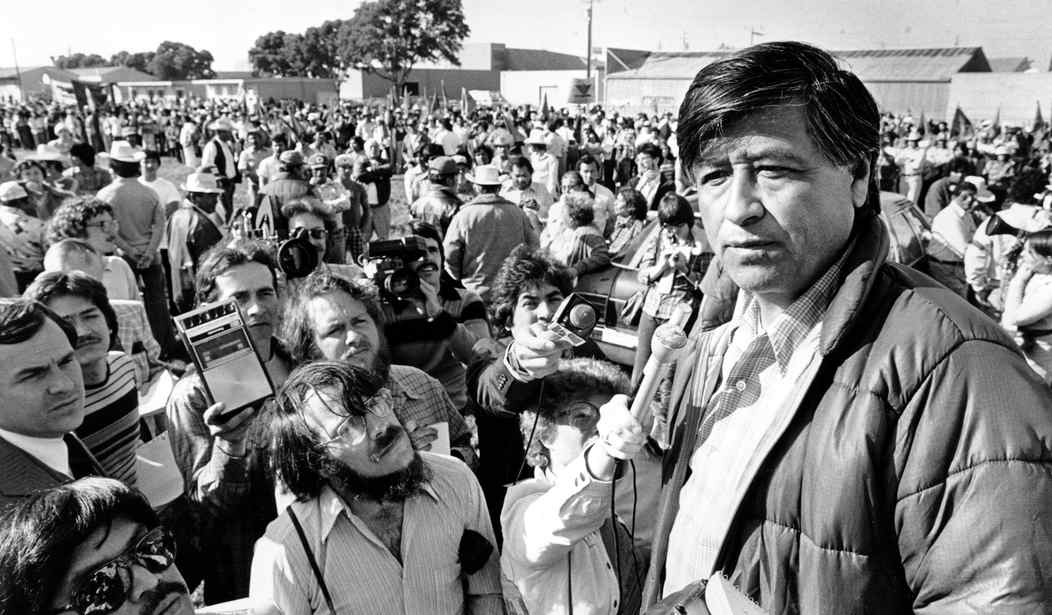
Cesar Chavez was at least dead when he fell out of favor. He did not live to see himself shamed. Once a prominent left-wing labor organizer and founder of the United Farm Workers, he became so famous he was compared to Gandhi. In Wikipedia’s words, “posthumously, Chavez became both a revered and controversial figure. He became a ‘folk saint’ among Mexican Americans, and an icon for organized labor and leftist groups in the US. His birthday was proclaimed a federal commemorative holiday in 2014 and is a state holiday in multiple states, many places are named after him, and he posthumously received the Presidential Medal of Freedom in 1994.”
But like Khan and Platner, his fame rested on sand. By the 21st century, the Chavez legend had outlived its usefulness and the Mexican American was a woke anachronism. He couched his politics in religious terms, was ambiguous about socialism, and, perhaps worst of all, believed in legal immigration and a higher standard of living. These were all good for the 1970s but out of sync for the 2020s. All of this meant he was doomed.
In March 2026, allegations of sexual abuse were raised against American labor leader Cesar Chavez. Chavez, who died in 1993, co-founded United Farm Workers (UFW), a trade union for farmworkers notable for its representation of Latino workers across the United States and wider civil rights advocacy. He was accused of rape and other forms of sexual and emotional abuse by several union affiliates, including co-founder Dolores Huerta, who alleged that Chavez had raped and impregnated her twice. Some have challenged the allegations, saying they lack evidence and noting that Chavez would not have the ability to defend himself.
Shortly before the release of an investigation by The New York Times, UFW learned of the allegations and began distancing themselves from Chavez. After allegations were publicized, many institutions and municipalities began removing his likeness from public spaces.
To those with some historical knowledge, the modern rise-and-fall sagas of Khan, Platner, and Chavez looked disturbingly like remakes of the Great Terror epics of the 1930s. While everyone in Stalin’s USSR was under constant political surveillance, accusations of sexual misconduct were the first sign that something serious was in the works. NKVD chief Genrikh Yagoda kept Stalin posted on "pederast activists" involved in orgies and alleged espionage/counterrevolutionary activities, waiting only for a sign from the Boss to pull the trigger.
Unsurprisingly these methods were turned on him. Yagoda himself was arrested and executed with raids on his apartments and dacha uncovering a large collection of pornographic materials. He died begging for his life from Yezhov, his successor. Then Yezhov (AKA "the dwarf") himself was later arrested and executed by Beria, who charged him, among other crimes, with organizing drunken sexual orgies in his Kremlin apartment involving both male and female partners and engaging in the most perverted forms of debauchery. He too died pleading for mercy but none was forthcoming.
When Beria became too dangerous, he was accused of kidnapping hundreds of young girls and raping them in a special soundproofed room. These acts were framed as "bourgeois immorality," sexual deviancy, and moral corruption — the same rhetorical category used against Yagoda and Yezhov. He met the same end as his predecessors.
The big mystery was how the Communist Party could be such an advocate of “free love”, the enemy of both the traditional family and religion, so strictly morally revolutionary and yet so full of perverts at the same time. How could an organization so skilled at parsing pronouns, quick to take umbrage at the slightest disrespect, and possessed of such ethical standards harbor so many scumbags?
The obvious answer was that sex itself was unimportant to the Party. It mattered only insofar as it was part of the control system. Only power mattered, but sex was useful because it held organizations together through reciprocal blackmail among leaders, with each holding the goods on the others. That is why there was nothing absurd about perverts sitting in judgment of other perverts.
Human beings are biologically wired to have strong disgust reactions over unwanted sex, reactions which evolved over thousands of generations to protect against pathogens and toxins. Intimate contact with bodily fluids, orifices, and sexual malfeasance was a powerful propaganda card. Accusations of misconduct (rape, harassment, infidelity, deviance) triggered atavistic fears of contamination as visceral as images of feces, rotting food and decomposition. Sex was powerful because it could be repulsive.
During his show trial in 1938, former Soviet secret police (NKVD) chief Genrikh Yagoda confidently and desperately begged Joseph Stalin for mercy. Believing he would be spared, he cried out: "I appeal to you! For you I built two great canals!" His plea was ignored, and he was executed shortly after the trial. Records from his execution indicate that Nikolai Yezhov collapsed and begged for mercy. Reports suggest he broke down physically and emotionally, reportedly losing control of his bodily functions. So abject was he that his last words were "Tell Stalin that I shall die with his name on my lips." Lavrentiy Beria broke down and begged for mercy on his knees right before he was shot. He reportedly wailed on the floor and crawled for his life. Witnesses claim that his behavior was so pathetic that his executioners had to stuff a rag in his mouth to silence him before General Pavel Batitsky shot him in the forehead.
Nothing was so joyless, furtive, grim and full of menace as political sex in the progressive movement, where its virtues were inverted. Absent was the romantic nostalgia and transcendent happiness that popular culture associates with sex. In its place was fear we could scarcely imagine. No one was spared from the demons. According to Stalin's daughter herself, the great dictator died in a paroxysm of terror pointing and gurgling at a painting on the wall, as if he were indicating a phantasm only he could see with his dying eyes. The painting has since been taken down by his Kremlin successors and stored never to be seen again.
"Under the spreading chestnut tree / I sold you and you sold me."