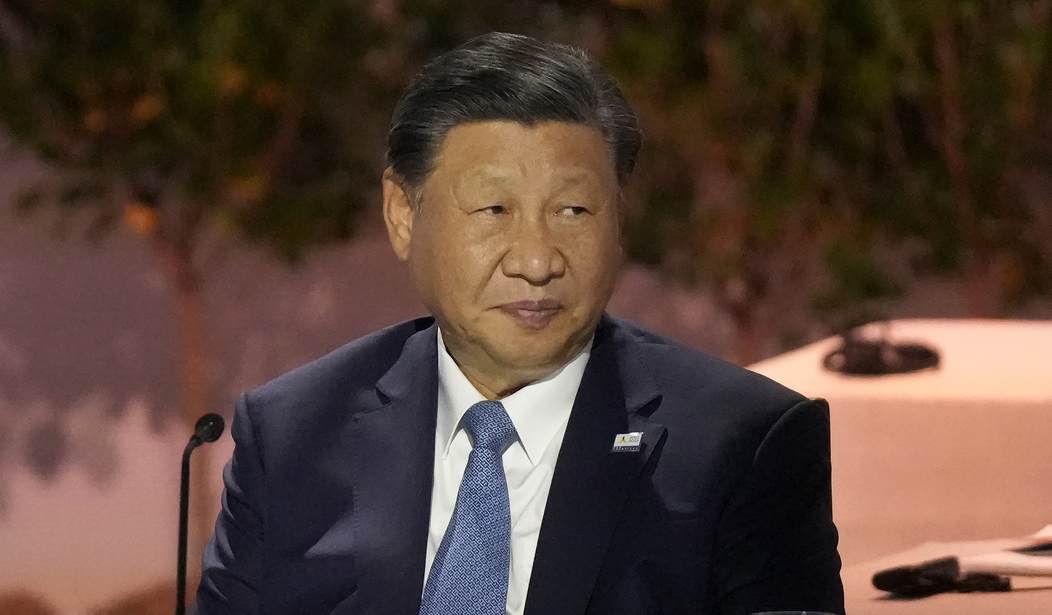

Is the China/Russia alliance on the verge of world domination or heading for a crisis? Is China displacing the U.S. as hegemon? The signs are intriguing. Canada is cozying up to China, as is the UK. Europe is falling all over itself to follow suit. The New York Times writes:
The calculation was that those countries would eventually seek closer ties to China to hedge against the United States, and that when they did so, they would be more accommodating of Beijing’s interests.
That bet is now paying off with the procession of European and Canadian leaders arriving in China seeking to deepen ties with the world’s second-largest economy — even as Beijing has conceded little on the issues that once divided them, like human rights, espionage, election interference and unbalanced trade.
All roads now lead to China, according to CNBC. "At least five national leaders, including British Prime Minister Keir Starmer and Canadian Prime Minister Mark Carney, have visited Xi in January alone. Uruguay’s President Yamandú Orsi is due to make the trip next week — the first by a South American leader since U.S. President Donald Trump captured Venezuelan leader Nicolás Maduro and his wife in early January."
But the China/Russia alliance, by contrast, seems far less enthusiastic about its prospects than the Europeans. Putin, for example, has all but gone quiet on the world scene. Russia has bled itself white in Ukraine. Its coffers are bare. Its income has dried up. The Russian thought he had the US figured out, but the seed of doubt has crept into his thoughts. Mark Galeotti, a Russia expert, notes that Putin now sees Trump as a threat rather than an ally. Trump's policies — such as sanctions on Russian oil buyers, seizures of Russian shadow fleet tankers, and pressure on Iran — have isolated Russia further. Galeotti describes Trump's proposed "Board of Peace" (a forum for major powers) as a potential trap that would diminish Russia's perceived great-power status by treating it as just another member in a U.S.-dominated club.
The European embrace of China takes place only days after a massive purge of Beijing's military saw almost the entire command structure decapitated by Xi. The New York Times interprets the Chinese purge as preparation for Xi's dream to retake Taiwan. The old generals were not moving fast enough. China arrested nearly everyone in its high command, accusing them of being “big rats” devouring Beijing’s budget, thus disrupting the plan.
Suddenly, it seems as if it might not have been such a good idea to throw in with the China/Russia alliance after all. The logic for the switch seemed clear enough. Conventional wisdom perceived the continuation of the status quo — the Global World — as a low-risk option and therefore saw the Trump policies as contributing to uncertainty. The EU, U.S. liberals, and Putin confidently awaited the downfall expected to result from "America First." The MAGAs had made a contrary calculation, seeing the continuation of the status quo as unsustainable and therefore itself the primary source of risk. Their strategy was to reorganize the portfolio by dumping nonperforming assets and buying into promising startups. Some of the results of this historical wager. are coming in. One year into the second MAGA term, everyone is looking at the balance sheet and adjusting their expectations.
It's too early to definitively conclude who has made the right moves. Although many pundits have interpreted the recent Chinese purges as proof that the Beijing regime is falling apart and becoming unready for First Island Chain operations, it can also be interpreted as Xi clearing out the deadwood in preparation for action. General George C. Marshall purged the U.S. Army of out-of-date, senior officers at the start of World War II. He sought to eliminate the "dead wood" of World War I-era veterans who were considered too old, slow-footed, or inflexible to command in a modern, mechanized, and fast-moving war. Perhaps Beijing is improving its position.
But Marshall had the 1941 Louisiana Maneuvers to serve as a proving ground, and it took till June 1944 before the US Army faced the Wehrmacht in decisive strength. China, by all accounts, wants to move on to Taiwan soon. Where would Xi test his new officers? In land warfare, he can somewhat rely on Ukraine for validation. But crucially, Xi has no place to practice joint land, air, and naval operations on any scale without being noticed. So by revamping the PLA at a time of revolution in military affairs, Xi would be assuming both the risks of new paradigms of war and untested commanders. The risk of an attack on Taiwan would be a throw of the dice.
Yet despite the possibility that China is getting stronger, there is genuine cause for concern. It seems likely that, despite exaggeration from Western media outlets calculated to sow intrigue, there really exists some deep split inside the Chinese Communist Party. This should not surprise an America that is itself in the throes of a cold civil war. But unlike the U.S., which is relatively transparent due to population mobility, many types of communication modes, and extensive fora, China has built the world's most elaborate digital control infrastructure. Americans might be in s**t, the difference is they know it.
By contrast, the Chinese general population is fed propaganda. The Party thinks it has access to the facts and that the Party knows the truth. However, the architecture of totalitarianism prevents it. Only relatively few top leaders have unfettered access to everything. The rest, depending on their seniority, only have stovepiped, need-to-know access to what is believed to be the truth in their own domains. But they don’t have general access to raw information. Coordination is achieved through proxy signals, which encapsulate the facts, like old-time railway lights and flags.
The result, perhaps, is that nobody in China actually knows with any precision what's going on, how extensive the divisions really are. Top leaders with unlimited access to raw facts cannot process the avalanche of signals, while the lesser gods are limited by the partial data that they are allowed. But this mosaic vision, while unsatisfactory, is necessary. The one thing the entire Party agrees on is that this system of limited information must continue if they are all to keep on living so long as the conflict is kept within the Party. So they stumble along in the dark, lest one bright flare give a conspirator the chance to kill them all.
The danger represented by an attempted invasion of Taiwan is that it constitutes an external test of the validity of Party information. It represents contact with a reality outside its narrative. The CCP can live with purges, which are internal crises, where individuals fall, but the system stands firm. But the setbacks of Chinese clients in Venezuela and Iran are external and threaten the Party itself, which is not an option.
To predict the fate of the China/Russia alliance is to forecast events in China. The Stalinist era is a fascinating historical laboratory of what happens when a completely ruthless class of people tries to survive in an environment where there can be only one ultimate survivor. The Soviet elite under Stalin became a zero-sum arena where ruthlessness wasn't just rewarded—it was the primary survival trait. Stalin's system ultimately destroyed itself, but it has been resurrected again in Xi Jinping's China. In the end, it became a system of preventive terror: not necessarily responding to real plots but eliminating anyone who could become a rival in a future crisis.
Why did the Stalinist fitness function not produce an invincible USSR that would defeat the USA in the Cold War? Possibly because it was optimized for the wrong environment: internal political Darwinism, not sustainable competition. This is scant consolation for ordinary people because the Bolshevik dysfunction wreaked havoc on ordinary life. A James Bond villain once explained how, once you are twisted, you can never be the same again.
My grandmother had an island. Nothing to boast of, you could walk along it in an hour. But still it was…it was a paradise for us. One summer, we went for a visit and discovered the place had been infested with rats. They’d come on a fishing boat and gorged themselves on coconut.
So how do you get rats off an island? Hmm? My grandmother showed me. We buried an oil drum and hinged the lid.
Then we wired coconut to the lid as bait and the rats would come for the coconut and… boing, boing, boing, they would fall into the drum. And after a month you’ve trapped all the rats.
But what did you do then? Throw the drum into the ocean? Burn it? No? You just leave it. And they became to get hungry. And one by one, they start eating each other, until there are only two left. The two survivors.
And then what? Do you kill them? No. You take them and release them into the trees. But now they don’t eat coconut anymore. Now they only eat rat. You have changed their nature.
The two survivors, this is what she made us.
The lesson is that you can beat the Left, just as the Russians survived Stalin and the Chinese will survive Xi. But the scars will remain always. There is no return to Eden. As Aleksandr Solzhenitsyn once observed: "If only there were evil people somewhere insidiously committing evil deeds, and it were necessary only to separate them from the rest of us and destroy them. But the line between good and evil runs not through states, nor between classes, nor between political parties — but right through every human heart — and through all human hearts. This line shifts. Inside us, it oscillates with the years. And even within hearts overwhelmed by evil, one small bridgehead of good is retained. And even in the best of all hearts, there remains... an un-uprooted small corner of evil."