"This 'silence' of his is bellowing up and down Europe!" —Thomas Cromwell, A Man for All Seasons
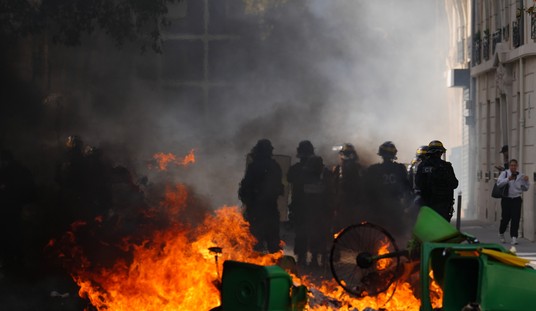
Why has Putin been nearly silent on Greenland, Iran, and Venezuela at a landmark point when the invasion of Ukraine has now gone on longer than the Great Patriotic War? What explains his uncharacteristic reticence? One proposed answer is that he is being consumed by the war in Ukraine. Because of its proximity, Putin views the war next door as an existential issue tied to his immediate security and sphere of influence, far outweighing commitments to distant partners like Venezuela or even Iran.
The need to escape from that quagmire may have made him unusually dependent on America. Putin may be desperate to keep Trump on side to secure a favorable peace deal with Ukraine, even if it means refraining from criticism of U.S. interventions. This hampers his ability to push back against Maduro's abduction by Delta Force or Iranian protests, as escalation could jeopardize negotiations to end the war.
The other reason for Putin’s recent silence is “oil.” The U.S. has intensified enforcement against Russia's shadow fleet — a network of aging, opaque tankers used to evade Western sanctions on oil exports from Russia, Venezuela, and Iran. This fleet has been crucial for sustaining Russia's war funding, allowing Moscow to sell oil above price caps and generate billions in revenue despite sanctions imposed since the 2022 Ukraine invasion.
At least six vessels linked to the illicit Venezuelan oil trade, including the Marinera, M Sophia, Olina, and Veronica, have been seized, with warrants sought for dozens more as the U.S. intensifies its campaign against these sanction-evading tankers. Nothing he can say will alter the fact of American naval superiority. “Force is never more operative than when it is known to exist but is not brandished,” Alfred Thayer Mahan once observed. Fleets speak louder than press releases
An even bigger blow to Russian oil was Maduro's capture on Jan. 3, 2026, and with it an increase in US influence over Venezuela — home to the world's largest oil reserves — leading to direct Russian financial losses and the threat of more. U.S. control could flood the market with Venezuelan oil, lowering global prices and further eroding Russia's export revenues. The Kremlin’s money is running out. Under these circumstances, why make things worse?
The reason for Putin’s silence on Greenland is more obvious. The less he says, the less he helps Trump. The aggressive efforts of the US to purchase Greenland – and potentially encircle Russia would not have been politically possible, or perhaps even necessary, without the proximate assistance of the Russian invasion of Ukraine. The Russian threat in Ukraine has put a gun to the Euro’s head and given Washington the leverage it otherwise lacked in European capitals because they need to keep the US onside.
It is fascinating to compare the Greenland situation to the Alaska purchase. In 1867, it was Russia that was afraid that Great Britain (with its strong presence in Canada and British Columbia) might seize Alaska in a future conflict, especially after Russia's vulnerabilities were exposed in the Crimean War (1853–1856). Today, it is the Europeans who are afraid, after the invasion of Ukraine in 2022, that Russia will sweep through its weak Northern defenses and overwhelm it. Thus, as of this writing, the sale of Greenland is not off the table.
The United States could have to pay as much as $700 billion if it were to achieve President Donald Trump’s goal of buying Greenland, according to three people familiar with the cost estimate.
The estimate was generated by scholars and former US officials as part of planning around Trump’s aspiration to acquire the 800,000-square-mile island as a strategic buffer in the Arctic against America’s top adversaries.
The obvious explanation for Putin’s sudden quiet was advanced in a Washington Post article arguing the Russian leader doesn't want to be noticed for the moment. "Putin’s global standing takes a hit as Russia’s allies are brought low." The manifest vulnerability of Russia's key allies — such as Venezuela, Syria, and Iran — who are facing targeted military actions or other pressures, makes Putin's diplomatic assurances appear increasingly unreliable and empty. He wants to avoid the spotlight just now.
But other observers are not so sure. They cannot believe that Putin has actually been beaten down and are looking for other explanations. The wily fox must be up to something. Tim Willasey-Wilsey, a former diplomat, has warned that the brutal Russian leader's 'project' is not yet finished as he anticipates Putin will 'have a good year in 2026'” by striking where Trump least expects.
The King's College London professor forewarned that even if strikes and gunfire cease in Ukraine, the Kremlin overlord's next moves could be even more audacious…
And a point of particular danger to Nato's foundations will be Narva – a small town on the Estonian-Russian border, he said.
'The one I've always thought is very dangerous is Narva, which has an 80 per cent Russian population,' Willasey-Wilsey told The Sun.
'Do we really believe that the United States is going to go to war for one town in Estonia? I'm not sure I do anymore.'
This scenario evokes the scene in movies where the protagonists look to their front, where the monster has apparently been beaten off by the Sentry Gun, with the action apparently over, only for the camera to show it silently rising behind them. The memory of Pearl Harbor, the Battle of the Bulge, and the Tet Offensive may have dimmed, but it is not quite gone. And if that were not enough, the echoes of the Yom Kippur War, 9/11, and October 7 still ring in our ears. That Putin may surprise everyone is unlikely but not wholly impossible. Who knows?