
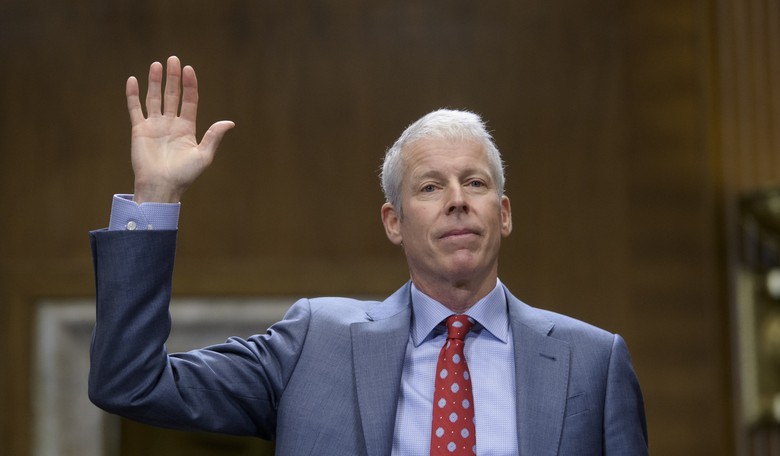
Energy Secretary Chris Wright said something Sunday that deserves more attention than the usual cable news shouting match. President Donald Trump knew his decision to confront Iran would raise energy prices in the short term, Wright said, and Trump chose to accept the hit rather than leave a nuclear threat for the next president.
Wright was unusually clear. He said Trump was “well aware” of the risks to energy flows from the Persian Gulf, and knew prices could rise. He also said Trump believed allowing Iran to become nuclear-armed would create a much larger danger, both to national security and to longterm energy stability. The real tradeoff is worth discussing without pretending the cost doesn’t exist.
From CBS News:
SEC. WRIGHT: If his decisions were political he would have just kicked the can down the road and delivered a nuclear-armed Iran to the next president. You've got to respect that. That's an incredible move to lean in and say I'm not going to let them become nuclear-armed. He knew it was going to elevate energy prices in the short run. He said, "I'm going to take a hit there, but I got to do the right thing."
MARGARET BRENNAN: You did tell him that? That there would be a huge energy price spike when he made the decision.
SEC. WRIGHT: He- he was well aware of- of the risk to energy flows that were coming out of the Persian Gulf region. He said, "I simply cannot. The world cannot sustain a nuclear-armed Iran, and I'm not going to do it."
Americans are already paying it. The latest federal data put regular gasoline at $4.465 a gallon nationally on September 28, up $1.347 from a year earlier. Diesel averaged $6.382. AAA reported last week that regular gasoline was about $4.41, and said prices were the highest ever recorded for this time of year. Those numbers directly land on families, truckers, farmers, and small businesses.
Unfortunately, despite domestic refineries running at near capacity, the fact is that diesel is a global commodity, and that Ukraine’s attack on Russian diesel refineries ties the administration’s hands when dealing with those rising costs.
We’ve already seen how quickly the Iran situation can move pump prices. After a June agreement reopened the Strait of Hormuz, the national gasoline average fell below $4 for the first time since March. By September, renewed volatility around the strait pushed crude prices higher, and gasoline climbed again.
The same conflict that sends prices down after a diplomatic breakthrough sends them back up when shipping or production looks threatened.
Wright believes the pressure will ease, pointing to rising energy flows through the Strait of Hormuz, record U.S. gasoline production, and falling seasonal demand. He has said that gasoline and diesel prices should be lower by Election Day, while acknowledging that there are no guarantees in a conflict. It’s an important qualification, because Iran still has ways to disrupt shipping, Gulf production, and global markets.
Trump’s policy toward Iran has never been subtle. The White House has repeatedly said Iran will not be allowed to get a nuclear weapon. Earlier this year, the administration argued that a nuclear-armed Iran would threaten U.S. forces, embolden terrorism, encourage a regional arms race, and allow Tehran to operate behind a nuclear shield.
Trump has framed the issue as one he will not pass to a future president.
Wright has now added an important piece to that history. Trump didn’t go into this believing the energy consequences would be painless. If Wright’s account is accurate, the president understood that Americans could pay more at the pump and decided the national security risk was greater.
There’s a political cost to saying that out loud. Voters don’t buy groceries or fill their tanks with geopolitical strategy; they use paychecks. A president can make what he believes is the right national security decision and still be held responsible for the economic consequences that follow. Trump will have to persuade voters that the sacrifice served a purpose and that the administration can now bring prices back down.
Wright’s Sunday comments make that argument stronger, because they don’t need to pretend the price spike came from nowhere. Energy markets react to war, shipping threats, sanctions, production disruptions, and fear. Iran sits beside one of the most important oil chokepoints on Earth, so any major confrontation there carries obvious economic risk.
Trump chose the confrontation knowing there could be a domestic price, at least as Wright tells it. Now the administration has two jobs: prevent Iran from rebuilding a path to a nuclear weapon and deliver the energy relief Wright says is coming. If prices fall, voters may view the pain as temporary. If they don’t, the national security argument will face a much harder test at the gas pump.