


by The New European
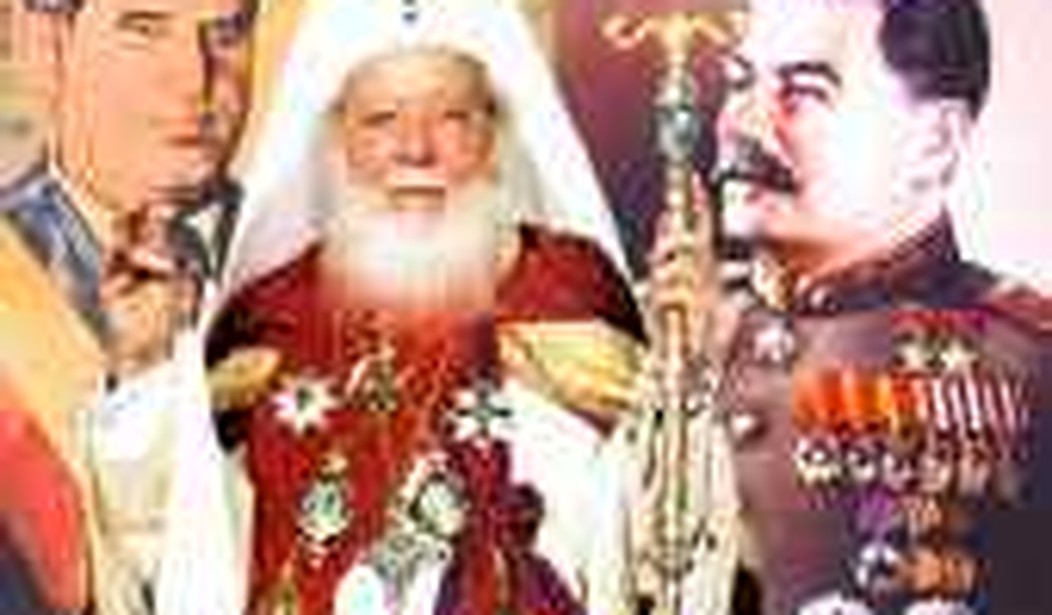
While in Western Europe, churches are empty and transformed into supermarkets or banks, the Eastern Orthodox Church in Romania is enjoying a unique popularity.
The Church ranks first in the opinion polls as the “most trusted institution” with 86%, followed only by the Army, press and NATO. Parliament, judiciary and other democratic institutions trailed far behind.
Around 200 churches have been built every year since the fall of Communism. Sunday churchgoers are no rarity, not even among youngsters. About 89% of the 21.7 million Romanians are Orthodox, making it the largest Orthodox population within the European Union.
Romanians will tell you that their Church kept them spiritually alive and inspired during the hardships of the repressive, 45-year Communist regime.
But the truth is that it also kept the regime well informed about its people. Collaboration between priests and the Secret Police (Securitate) was not accidental, but thoroughly planned and implemented.
The Church has kept stubbornly silent over the past 17 years after the fall of Communism, blocking any attempt of disclosing its stained past. The murky past of the Orthodox leaders and their collaboration with the Communist regime has been kept secret so far.
Now, the death of its national head, Patriarch Teoctist on July 30 and the campaigns to succeed him has set the scene for selected disclosures and “dirty campaigning” among the bishops who are eligible for the highest seat in the Orthodox Church. The new Patriarch will be elected on September 12 by an 180-member Electoral Board.
As the race heats up, leaks from the investigative body of the former Secret Police (Securitate) files have discredited one of the candidates and more are supposed to follow.
The late Patriarch himself was no stranger to the Securitate. Two weeks after his death, a brief version of his Securitate file was disclosed, stating that “in his sermons, he calls upon priests and churchgoers to participate in actions initiated by the state branches and to have a correct moral and citizen-like conduct. As a patriarch, Teoctist Arapasu is appreciated for his consequent leadership and good management of the church, for his correct attitude to guide the clergy in social activities, for his devoted service to the motherland.”
Teoctist took office as a Patriarch in 1986, during Nicolae Ceausescu’s most repressive years. The Romanian dictator was at that time poised to build his “House of the People”, now the second largest administrative building in the world after the Pentagon. In order to do that, he destroyed half of Bucharest’s old city and numerous historical churches — all with Teoctist’s blessing.
Following his election, the new Patriarch thanked Ceausescu in the Party daily newspaper Scinteia, expressing his “special gratitude and deep recognition for the conditions of full religious liberty in which the Romanian Orthodox Church and the country’s other religious denominations carry out their activities.” In a country where the public discourse was dominated by party propaganda, such words didn’t mean a lot. But they didn’t show any signs of resistance either.
After the fall of Communism, Teoctist defended himself by saying he had to play along in order to “save” the Church. But not the churches that were bulldozed, apparently. Nor the followers of other denominations who were forced to pray illegally. The Orthodox Church managed to become a “state church” in a Communist, atheist regime. For that privilege, its clergymen had to “play along”, just as Teoctist did. Confessions were perfect means for the Securitate to find out about people’s plans, relatives abroad, adulteries or illegal abortions, in order take “appropriate measures” against the respective people.
Only the Bishop of Banat (Western Romania), Nicolae Corneanu openly confessed after the fall of Communism that he was a Securitate informer. The vast majority kept silent. They knew their secrets were well kept.
A member of the Council for Studying the Archives of the Securitate, poet Mircea Dinescu, said last week that the files of several high-ranking Orthodox clergymen were burnt during the 1989 revolution, to prevent their names from being disclosed. Some of the clerics he was referring to were candidates for becoming the next Patriarch. “Their files were burned in December 1989 so that their names could be covered up. The church has the opportunity to eliminate suspicion that its high-level clerics collaborated with the Securitate”, he said. But the Orthodox Church dismissed these claims as libel. The Council itself so far has confirmed only two cases of Securitate collaborators: Bishop Corneanu and academician and member of the Orthodox Church Electoral Board Constantin Balaceanu Stolnici – both of whom already admitted their collaboration years ago.
Candles sell well in Romania. Last year, the Orthodox Church made some $19 million just by selling candles. Then there are “taxes and donations” for weddings, funerals, christenings, requiems, special prayers for the ill, the children or even for the local soccer team. Unlike Western Europe, Romania has no shortage of churchgoers. 85% of the total population of 21,7 million declared themselves Orthodox in 2002. This puts the Orthodox Church in an almost monopolist position, trying to cut out its rivals from the “godly market”. Its privileged position and strong ties with the powerful politicians of the day, dating back to the Communist era, when the Orthodox Church was the only one tolerated by the regime, already succeeded in influencing the recently adopted Religion Law, criticized by NGOs and other religious communities as being “the most restrictive in Europe.”
The temptation for holding the highest rank within the Romanian Orthodox Church is not solely of divine inspiration.
With 400 million square meters of forests and the same amount of farming land, with stocks in different companies within the media, agriculture, construction, energy and hotel businesses, the Orthodox Church has an estimated market value of $4 billion, according to Business Standard. It would rank sixth among the most valuable companies in Romania, just below Vodafone ($5.9 billion) and Orange Romania ($6.56 billion). The declared annual revenues of the Romanian Orthodox Church are $123 million, but there is no estimate of the undeclared donations that are tax-free. And if the Church would get its remaining lands, forests and valuable objects seized by the Communists, its total value could exceed $13.7 billion.
With so much at stake, it is no wonder the race has already become dirty. Leaks from the investigative body of the former Secret Police (Securitate) files have discredited one of the candidates and more are supposed to follow.
Similar to a political race where the candidate who raises the most money is the frontrunner, the favorite candidate so far seems to be the “richest” bishop, Daniel of Moldova. His authority expands over the eastern part of Romania, Moldova, where the Church has most of its historical and new monasteries, churches, forests and lands. It is also the poorest region of Romania, and since its EU accession on January 1st, the poorest region of the EU. The Orthodox Church had done little so far in helping the communities help themselves, emphasizing more on praying and adorning the churches.
This is unlikely to change even with the election of a new Patriarch, since the Byzantine-style Church considers reform a heresy. Small, incremental changes might occur. Question is, who will benefit from them?
Whoever the new Patriarch is, a top priority must be confronting the nation’s Communist past and admitting the Church’s wrongdoings. This is the only way the Church will preserve its high credibility and popularity among the increasingly critical and confident Romanians.
“The New European” is a Romanian journalist blogs at www.transatlanticpolitics.com





Join the conversation as a VIP Member