Democrats have weaponized everything in politics. Impeachment. Government shutdowns. The filibuster. The nuclear option. Recess appointments. Executive orders. The list goes on and on. One often-overlooked weapon is Supreme Court recusals. When a conservative justice might rule against them, Democrats and their activist allies make a huge stink about objectivity and conflicts of interest, and make demands for that justice to recuse himself or herself.
But when a liberal justice has a far more obvious conflict, that concern disappears.
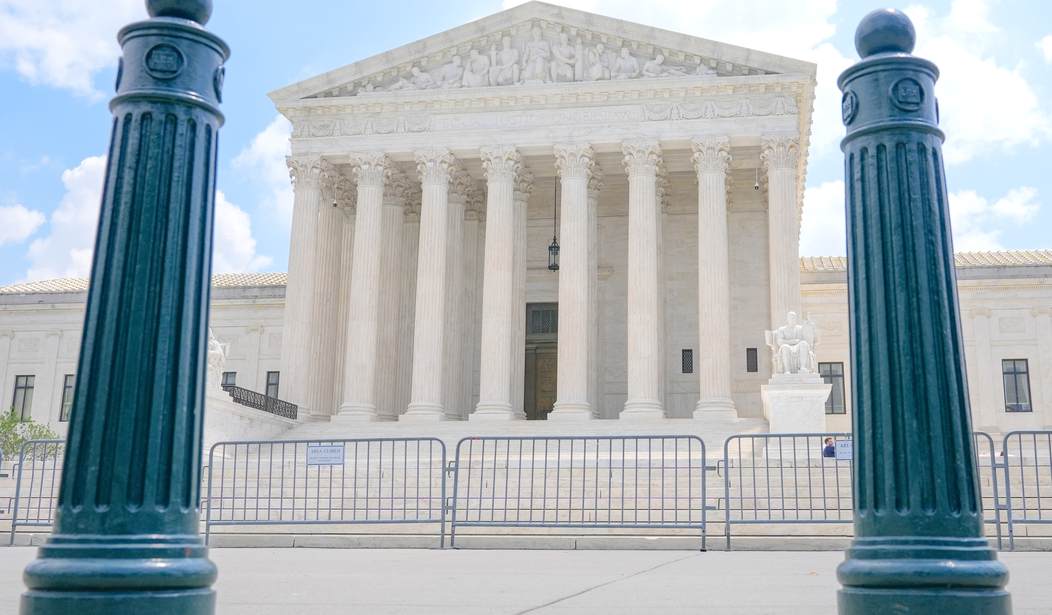
As PJ Media previously reported, Justice Samuel Alito has recused himself from Suncor Energy (U.S.A.) Inc. v. County Commissioners of Boulder County, a major climate liability case, after months of pressure from environmental activists over his energy investments. On Monday, Supreme Court Clerk Scott Harris sent the parties a brief letter saying Alito "has determined that he will not continue to participate." The letter gave no reason, and Alito had resisted earlier calls to step aside.
The case asks whether Colorado local governments can use state tort law to make Suncor Energy and ExxonMobil pay damages for their alleged role in climate change, and the ruling could affect similar lawsuits nationwide. Alito owns no stock in either company, but activists argued his shares in ConocoPhillips and Phillips 66 would gain if the Court limited climate liability. In May, environmental and judicial watchdog groups asked the Senate Judiciary Committee to investigate his "substantial holdings in individual oil and gas companies." A Court spokesperson said Alito had no financial interest in any party and that the Court's legal counsel had advised him recusal wasn't required.
He stepped aside anyway.
Whether that was necessary or not, someone else can answer. But he nevertheless did. And it got me thinking about how it sure does feel like, when it comes to Supreme Court recusals, there’s a huge double standard. Democrats have weaponized recusals for years, and Justice Clarence Thomas is their favorite target. In March 2022, 24 House and Senate Democrats demanded that he recuse from cases involving Jan. 6 and efforts to overturn the 2020 election, and that he explain in writing why he had taken part in related cases. They cited his wife Ginni Thomas's efforts to challenge the results. In 2023 and 2024, they demanded he sit out Trump's presidential immunity case for the same reason. They also wanted him off the 2024 case over whether Section 3 of the 14th Amendment could keep Trump off the ballot, probably because someone involved in the case was his father’s brother’s nephew’s cousin’s former roommate.
Alito gets the same treatment. Democrats said an upside-down American flag outside his Virginia home and an "Appeal to Heaven" flag at his New Jersey home disqualified him from cases involving Trump's efforts to investigate irregularities in the 2020 election. Democratic lawmakers and ethics advocates also pushed Justice Neil Gorsuch to recuse from a 2024 environmental case involving a company connected to his prior work, and he did.
ICYMI: Frank Luntz Just Gave Democrats Devastating News About the Midterms
Left-wing justices don't ever seem to do the right thing when recusal is on the table.
Take Justice Elena Kagan. Before joining the Court, she served as Barack Obama's solicitor general, running the office that defended Obamacare in court. At her 2010 confirmation hearing, she promised to recuse herself from cases in which she had been counsel of record, signed a brief, or played a "substantial role" in the government's litigation. Then she heard NFIB v. Sebelius, the 2012 constitutional challenge to the law. She heard King v. Burwell, the 2015 fight over subsidies on federally run exchanges. She heard California v. Texas, the later challenge to the individual mandate and whether the rest of the law could survive without it.
Each time, she voted to keep Obamacare alive.
The late Justice Ruth Bader Ginsburg had her own recusal controversies. In 1997, she faced questions for taking part in cases involving companies in which her husband owned stock. She refused to recuse herself from a case involving the ACLU despite her history with the group, and Republicans later called on her to sit out the travel ban litigation after her public comments about Trump.
Then there's Justice Sonia Sotomayor, who received substantial royalties from Penguin Random House for her books. The Washington Post reported that she took part in two cases involving the publisher. A Harvard Law Review analysis later argued that her continuing financial relationship could have warranted recusal under the same "impartiality might reasonably be questioned" standard. Alito had no stake in any party to the climate case. Sotomayor had an ongoing financial relationship with a party and stayed on the bench.
Democrats love to weaponize recusals because they're hoping to stack the deck in favor of the result they want. They just never hold liberal justices to the standard they demand of conservatives. Alito stepped aside from a case in which he owned no stock in either company, even though it could leave the Court deadlocked 4–4. Kagan, Ginsburg, and Sotomayor never took comparable action for conflicts that were far harder to explain away.