Democrats have stumbled through this primary season more than once. In Maine alone, Democrats picked a candidate, watched him implode, then swapped him for someone eerily similar. Painful, but survivable. What happened in Michigan this week is different. A safe Senate seat now sits in genuine jeopardy, and the numbers explaining why are getting harder for Democrats to ignore. So what exactly did Democrats just hand Republicans a real shot at winning?
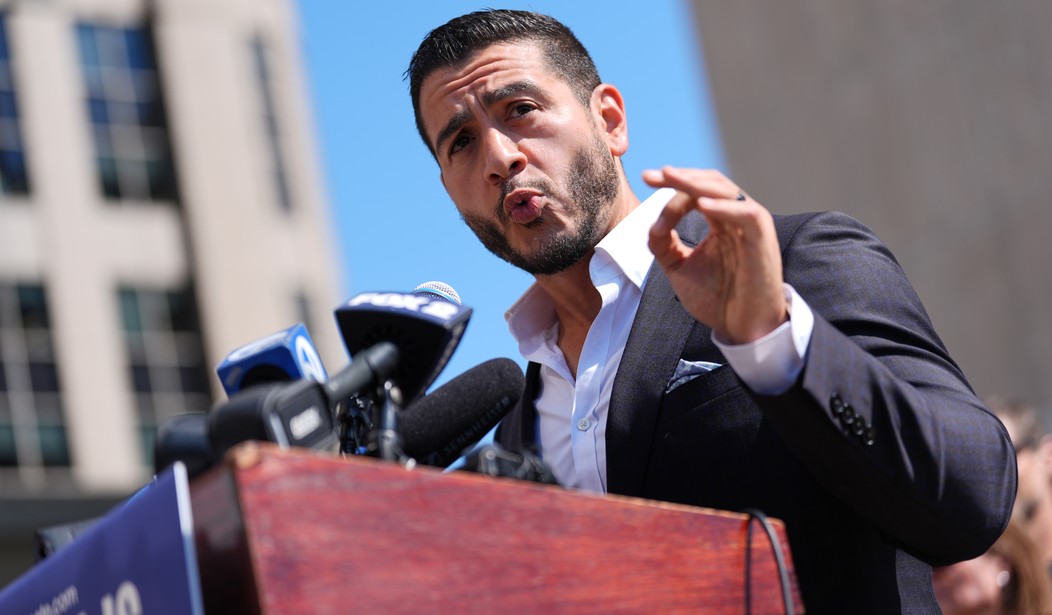
Democrats nominated radical socialist Abdul El-Sayed for the U.S. Senate in Michigan, a race they needed to win comfortably. Instead, they turned a seat that should have been a lock into a genuine toss-up, and Republicans have noticed.
CNN's Harry Enten broke down just how much ground Democrats have lost since El-Sayed became the nominee. "Once El-Sayed became the favorite for that nomination and now that he's actually become the nominee, Democratic chances have fallen dramatically," Enten said.
Back in April, Democrats held a 79% chance of winning the seat, according to Kalshi prediction odds. That number has collapsed to 59%. Meanwhile, Republican nominee Mike Rogers has nearly doubled his odds, climbing from 21% to 41%. Enten still considers El-Sayed the favorite, but barely. “Given Michigan being a purple state and given where Trump's approval rating is, I think it's quite surprising that his numbers are not significantly higher," he said.
ICYMI: Did a Democrat Senator Accidentally Admit He Knows That Fauci Broke the Law?
Here's the problem for Democrats. El-Sayed built his campaign on being the candidate for the working class, the guy who could reconnect the party with voters without college degrees. The primary results tell a different story entirely. Enten pointed to the counties El-Sayed won and the counties he did not.
"Zero of 15, zero of 15 with the lowest share of college degrees," Enten said, referring to the counties with the fewest college-educated voters, none of which went to El-Sayed. Where he did win was a different story. "Where he did win, he won 13 of the 15 counties with the highest share of college degrees," Enten said.
El-Sayed's support ran through faculty lounges and law firms, not factory floors, the exact opposite of the working-class coalition he promised to build. “I think there's real worries among Democrats,” Enten said.
There is another wrinkle here, too.
Primary polling overstated El-Sayed's margin by roughly 10 points, and general election polling in Michigan tends to overestimate candidates with college degrees. Enten flagged the risk directly. "The polling estimated El-Sayed's primary margin by about 10 points, and I think there's a real question, will that happen in the general election again," he said, adding that the general election numbers are already "quite tight."
🚨 NEW: CNN’s data guru Harry Enten STUNNED as Dem odds of winning Michigan seat have “fallen dramatically” after El-Sayed victory
— TV News Now (@TVNewsNow) August 6, 2026
“Mike Rogers, the Republican nominee — look at this: His chance basically doubling, now up to a 41% chance.” pic.twitter.com/fAzhdodObA
Democrats spent this cycle proving they still have not learned how to read their own coalition. Maine was a warning they didn’t heed. Michigan may be the confirmation. A seat that should never have been competitive now hangs on whether a self-described socialist can convince working-class voters he didn’t convince to support him in the primary to show up for him in November. Given what the numbers already show, that is not a bet Democrats should feel good about making.