Democrats have made “affordability” their mantra for 2026, and that may come back to bite them as Trump’s policies give Americans the one thing that makes life affordable — more cash in their pockets. Americans are expected see their take-home pay increase in 2026, a move the Trump administration hopes will supercharge consumer spending heading into the midterms.
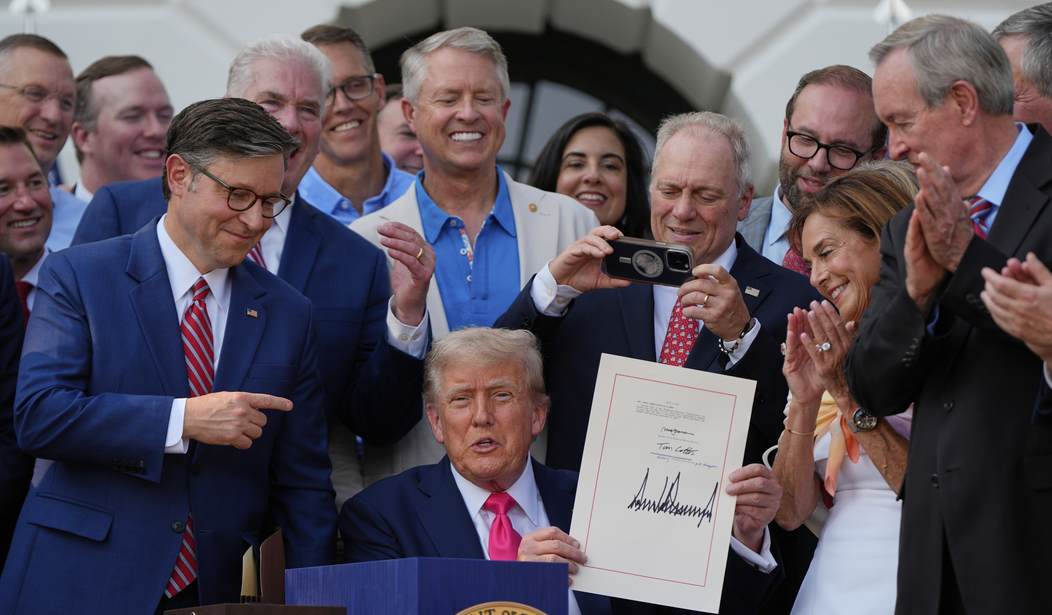
Make no mistake about it, President Trump’s One Big Beautiful Bill reshapes the tax code from top to bottom — keeping corporate rates low, giving families new deductions, and sharpening incentives for work, investment, and domestic production. Treasury Secretary Scott Bessent called 2025 “the table-setting year,” and said that “the feast and the banquet will be in 2026.”
Consumer spending drives roughly 70% of U.S. GDP, and the White House is betting that more after-tax income will mean more cash flowing through stores, restaurants, and dealerships across the country. According to the Tax Foundation, average after-tax pay will rise 5.4% under the new law, with upper-middle-income earners seeing the largest percentage gains. But the design is careful: a collection of targeted provisions scattered across income groups, each meant to hit a political nerve and an economic need.
“The legislation’s impact will be felt beginning early this year as taxpayers secure refunds due to its provisions, which apply to the 2025 tax year,” explains the New York Post. “The changes will be felt most heavily by upper-middle income workers in the 60-80% percentiles, who will see a 6.3% boost in after-tax pay, and least so among the bottom 20% of earners, whose income will increase about 2.6%, according to the Tax Foundation.”
The law maintained lower individual and business tax rates in Trump’s 2017 tax reform, continued business provisions allowing for 100% write-offs for depreciation, boosted expensing amounts for new equipment, and kept perks for investments in lower-income “opportunity zones.”
The yet-to-be-seen impact of the tax law comes at a moment of political peril for Trump, who could spend the final two years of his presidency blocked and investigated by Congress if Republicans lose the congressional elections in November.
Although the economy is growing and inflation fell to an annual 2.7% in November, Democrats trounced Republicans in off-year elections in New Jersey, Virginia and New York City campaigning on “affordability” and 55.5% of Americans disapprove of Trump’s job on the economy, according to the RealClearPolitics average of recent polls.
A key provision raises the cap on the state and local tax (SALT) deduction to $40,000, up from the 2017 limit of $10,000. That’s huge for homeowners and professionals in high-tax blue states such as New York and California — let’s hope they start voting accordingly.
Obviously, the middle class and the service economy are getting a huge benefit thanks to President Trump’s No Tax on Tips and overtime provisions, which eliminate income tax on tip earnings up to $25,000 per person, and taxes on the extra 50% income on overtime.
Related: Did Kathy Hochul Just Signal That Her Campaign Is in Trouble?
Retirees will also see some much-needed relief. The law now grants a $6,000 deduction per senior, or $12,000 for married couples, to offset taxes on Social Security benefits, and is available regardless of whether a filer claims the standard or SALT deductions. Anyone 65 or older by year-end can claim it. “It does effectively wipe away tax liabilities for most elderly taxpayers,” said Alex Durante of the Tax Foundation, noting it primarily helps middle- and lower-middle-income seniors.
While the law ended the $7,500 electric vehicle tax credit, taxpayers can now deduct up to $10,000 in annual interest on vehicles manufactured in the United States. The Bipartisan Policy Center estimates 4 million vehicles sold in 2024 qualify under this policy.
Families and charities benefit as well. Standard filers can now write off up to $1,000 in charitable donations, or $2,000 for married couples. Another provision establishes “Trump accounts” for children born between 2025 and 2028, seeding each account with $1,000 and allowing parents to contribute up to $5,000 per year. The funds stay locked until age 18 and grow like a retirement account.
Trump’s One Big Beautiful Bill is a direct challenge to the left’s tax-and-spend orthodoxy, and a reminder that prosperity doesn’t come from Washington redistributing wealth, but from allowing Americans to keep more of their own money. I’ve said before that how Americans perceive the economy will decide the 2026 midterms. If Americans feel the benefits of the OBBB by summer, the midterms should go very well for the GOP.