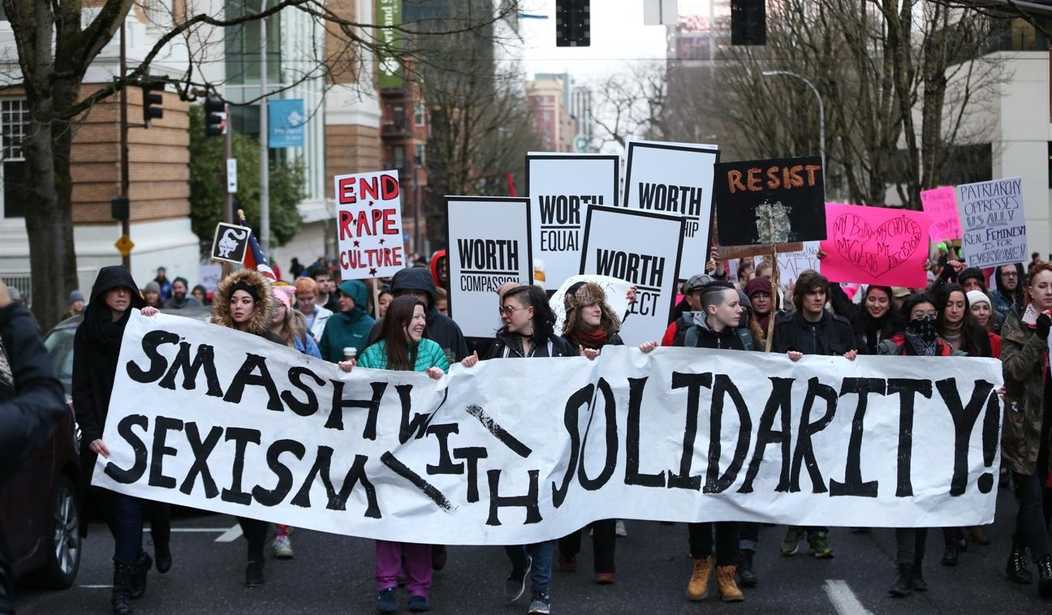

Three interesting legal cases are currently in the news, each quite different. But all of them draw from the same idea: the same story our contemporary culture tells about women.
- At Cornell, a student drank and took ketamine at a fraternity party in October 2024, then had sex with several men. In texts afterward, she said her memory was clouded, that none of the sexual conduct was illegal, and that she would see one of the men again without the others and without the drug; prosecutors declined charges on her signed statement. After a 2026 lawsuit recast the night as a gang rape, campus opinion treated her intoxication as incapacity and the men as the only agents in the room.
- In Tennessee, the state tried and failed to execute Christa Pike on September 30. She was convicted of the 1995 torture murder of Colleen Slemmer, a romantic rival, committed when Pike was 18; two doses of pentobarbital did not kill her, and she was hospitalized. Advocates seeking clemency argued that childhood rape, mental illness, and youth meant the adult who had lived under sentence for 30 years should not fully answer for it.
- In Massachusetts, Lindsay Clancy was tried for the January 2023 killings of her three children. She sent her husband out for food, timed the errand, and strangled Cora, Dawson, and Callan with exercise bands, then told him where they were. Commentary and the defense account treat the planning as something postpartum illness did through her, rather than as acts she authored.
In each case, the story is the same. An adult woman is to be excused, and the liability moved onto illness, intoxication, history, or the men around her.
Two shields, called by one name
This penchant for excuse-making confuses many, perhaps most. It is rational once you remember that, just like race or religion, sex is treated as a protected class. Women are seen as less powerful, and so, in the name of fairness, special protections are applied. The same habit covers Jews, black people, children, and the mentally ill. All of them are spoken of as protected classes. But in reality, there are two shields here, and they do not belong together. The line between them has been blurred, perhaps deliberately, but more likely through a lack of rigorous thinking by those who spread the stories.
The first shield is a rule against discrimination. Sex, race, and creed are not reasons to refuse someone a job, a vote, a contract, or a fair hearing. Nothing in that rule says the protected person cannot form an intention, sign her name, refuse, or answer for a crime; in fact, the rule against discrimination explicitly states that a woman, a black man, a Catholic, or a Muslim all should be treated the same as any other group of like kind. Under it, a woman is an adult who may not be barred for being a woman. She remains responsible for what she does. The protection is against other people treating the trait as if it were a defect.
The second shield acknowledges that the person being protected is incapable of responsibility and therefore should not be subject to consequences. Children, and adults a court has found incompetent, are not full authors of their acts. This includes young minors, people who are mentally ill or mentally retarded, people who are senile, and a few other classes. Guardians and civil commitment follow from that finding. They are spared some, most, or all consequences because the law and society have determined they lack real agency.
In the first case, the shield ensures the listed classes are treated as if they have agency. In the second case, it ensures they are treated as if they lack agency. These two types of protected classes are not just different; they are completely opposite.
What the claim does
One of the three cases cited is rape; the others are murder. But they share the common habit of moving an adult woman from the first shield, agency and responsibility, to the second, lack of agency and responsibility. That habit was taught, and then spread, by a claim about rape. The claim said that:
- Ordinary sexual life was already a kind of violence.
- A woman’s distress was evidence she had not really acted.
- Rape was not only a crime by individual men, but a strategy by which men as a class held women down.
- A woman’s refusal was to be believed, while her agreement could be treated as the product of pressure or incapacity.
- The remedy was not only to punish proved crimes, but to transform ordinary relations between the sexes.
Once that story was in place, it no longer needed a rape to do its work. It could be applied to a drunken night, a clemency brief, or a planned killing. The name of the story is “rape culture,” and it is worth tracing how a sectarian idea became the account institutions used.
But look at what this claim really does. It redefines normal life in a highly civilized culture as something charged with implicit violence, literally all the time. It removes agency from the woman. And it places all the agency on men. In short, it infantilizes women, moving them from the first type of protected class — those who deserve to be treated as their own agents — to the second type, those who have little or no agency and who must be shielded from harm, while simultaneously doubling the load on men. Where did this idea come from? You might be surprised. But then again, knowing my readers, you probably are not.
Where the idea came from
The idea now called “rape culture” began in a small feminist circle in the mid-1970s. The first published use was in Rape: The First Sourcebook for Women (1974), a New York Radical Feminists project edited by Noreen Connell and Cassandra Wilson. The book said the goal was not only to punish rape but to transform society. Susan Brownmiller’s Against Our Will (1975) argued that rape was a means by which men as a class held women down. That same year, Margaret Lazarus and Renner Wunderlich released the documentary Rape Culture, which used the term in the broad sense still current. A 1978 mention in the Congressional Record is the first known appearance in national politics.
For a long time the idea stayed mostly in activism and the academy. It circulated through Take Back the Night rallies, women’s-studies courses, and anthologies. Transforming a Rape Culture (1993) collected the argument in book form. It was not yet a rule governing schools, employers, or ordinary news coverage.
That changed in 2011. The Department of Education’s “Dear Colleague” letter told colleges that sexual violence was a Title IX matter, lowered the campus standard of proof to a preponderance of the evidence, and instructed schools to address “unwelcome conduct of a sexual nature.” From about 2012 to 2014, the phrase became common in campus and national media. In late 2014, a Rolling Stone story on an alleged gang rape at the University of Virginia spread widely, then collapsed. In 2017 the #MeToo campaign carried the same frame off campus, into workplaces, publishing, and public speech. A claim that had lived for decades in pamphlets and classrooms had, in about 15 years, become part of the way nearly all institutions handled sex.
Once the claim had force
Once the claim had institutional force, it did not stay inside rape cases. Force, threat, and true incapacity remained crimes, as they should. Added to these were intoxication, distress, embarrassment, shame, or just anger that the woman did not attain her desired goal. Childhood trauma? The adult woman has no agency. Postpartum depression? No agency. Lies? #BelieveAllWomen. Not only did the woman not have agency in these cases, but she was always to be believed. Two classes of protection, blurred into greyness.
The pressure came mostly from women, particularly feminist activists. They were angry, so they were to be believed. The media spread the narrative enthusiastically. Politics, and then the law, followed suit. Solidarity was suddenly the guardian of women, and the result was called “fairness.”
Women paid for this in the loss of men’s trust. Shame, which ordinarily would have deterred future recklessness, could be shifted to the man simply by crying “rape.” Other women watched and internalized the lesson: if I feel bad the next day, it is not shame; it is because he raped me. If a woman committed a crime, she could be excused because of hormones, trauma, or men’s cruelty.* A person who is considered to have no agency is a person who cannot be trusted.
Men made the rational update. They refused to be alone with women. They stopped dating. They were confused by both “yes” and “no.” And they started assuming women were roughly on the same level as children, because society refused to require that women take agency for their actions. Movements and habits sprang up to name the withdrawal. MGTOW, Men Going Their Own Way, treated non-marriage and even celibacy as a strategy. The “red pill” sold a cynical account of female motives to men who no longer trusted the official one. “Passport bros” left for countries where the local rules still paired consent with responsibility. Alongside the named movements was the quieter pattern: fewer dates, later marriage, more men living alone. A culture that would not let women own a yes produced men who stopped offering one.
The older claim of women’s rights was a claim to adult standing. The capacity to contract, to vote, to be believed, and to be held to one’s word. A right that depends on incapacity is not an enlargement of that claim. It is a return to infancy. Legally, equalities remain. Yet in reality, equal obligation is waived in the setting where character is most exposed.
Fifteen years is long enough to have trained a cohort. It is also, thankfully, short enough to reverse.
Keep the shields apart
The repair is not complicated, and it is not a request that women be left unprotected. It is a request that the two shields be kept apart. Do not call voluntary drunkenness rape. Do not ascribe a planned killing to female hormones. Do not convert trauma into permanent non-authorship. Do not use “protected” to mean “not liable.” Require force, threat, or true incapacity before you call an act “rape.” Assume women can say “no,” and teach your daughters to do just that. Shame the choice, not the guy who is foolish enough to assume yes means yes and will continue to mean yes. Let mental illness mitigate only where it actually destroys intent, and say so as a finding about capacity, not as solidarity.
If that line is not restored, the rest follows from what has already happened. Men will keep refusing the private room, the date, and the benefit of the doubt. Institutions will assume guardianship, robbing women of agency, and keep calling it equality. Women who want adult rights will be answered with protection instead, and the protection will be the disability: a class excused from its worst acts cannot, at the same time, insist that its word binds in a contract, a courtroom, or a refusal.
Women’s rights, if they are the rights of adults, require that a woman’s consent and a woman’s refusal are both hers. A doctrine that allows women to void the consent after the fact returns her to the status the movement once existed to leave. The blur was useful — to a certain class of activists. They thought it moved women forward; certainly it kept funds rolling into their charities. But it was a step backward, back into the infantilization of women that we fought so hard to eliminate. Naming and separating the two shields is how things progress once more.
*I must note here that historically, when a woman married, her husband assumed all responsibility for her behavior. This is not all that different, except that the man need not be married now.