Everyone loves Robin Hood: the bold yeoman outlaw, wronged and oppressed by corrupt officials, who fights back with daring archery, merry companionship with his band of men, and a code of noble behavior detailing who to target. He robs the Sheriff's ill-gotten gains — extracted through heavy taxation and abuse of power from peasant and honest merchant alike — and returns them to those who truly earned them. This tale of resistance against coercive authority lives vividly in the American imagination, sprung as we are from the blood of rebels who defied kings and distant bureaucracies.
Yet today that imagining has been subtly corrupted. The corrupt nobles, grasping churchmen, and rapacious sheriffs of legend have been quietly recast as capitalists and entrepreneurs. In their place stand new heroes clad in the new green of environmentalism and progressivism: the academic theorist, the crusading journalist, or the rolled-sleeves politician battling on behalf of the “Little Guy” against the supposed new nobility and oppression of business. Once a story about restoring stolen goods from illegitimate extractors, Robin Hood has become a morality play demanding systemic redistribution from anyone who succeeds through voluntary exchange and innovation.
The original Robin Hood didn’t burn the mill or nationalize the land. He targeted unscrupulous intermediaries who forcibly confiscated what free Englishmen had earned. He stood for restoring a moral order where production and voluntary exchange might flourish again. Today’s self-appointed Merry Men — whether in academia, media, or politics — too commonly aim not at corruption but at the mechanism of abundance itself: the profit motive, private property, and entrepreneurial risk taken by a bold few that have lifted billions out of subsistence. In doing so, they have transformed a timeless story of justice into a perpetual treadmill of envy and control.
Capitalists in Sheriff’s Clothing
Today’s corrupted version of this legend indicates a deeper evolution in what societies rebel against. Historically, resentment targeted feudal nobles and officials who extracted wealth through coercion and birthright. Today, that same psychological slot is occupied in the shared imagination by entrepreneurs and businessmen who were honest, not corrupt; producers, not thieves. They mostly earned their positions by creating value that millions voluntarily buy and prosper with. Yet they inherited the old resentment (without the feudal glamour) while celebrities (who got the glamour), insulated by parasocial affection, largely escape it despite their arguably more parasitical existence.
Marxism arrived at the perfect moment to cement this shift: after the French Revolution, at the beginning of the Industrial Revolution's worst chaos. Amid the dislocations of the time, it reframed capitalists as the new nobility living off stolen “surplus value” extracted from workers. History became a permanent class struggle between exploiter and exploited. Legitimate grievances against early factory conditions were elevated into a sweeping indictment not of worker treatment, but rather of the entire system of private property and voluntary exchange, the thing that fed those workers.
Both certain early capitalists and their Marxist critics fell into the same trap. They argued endlessly over whether the worker’s share was half-full or half-empty inside a fixed glass, ignoring the possibility of a pitcher of infinite abundance. What they missed was the vast universe outside the glass: explosive productivity gains, creative destruction, automation, and rising real wages that could enlarge the pitcher itself and render labor as we know it obsolete.
Russia as Patient Zero
Modernizing Russia was the perfect “patient zero” for this ideological disease. Rigid hereditary serfdom persisted centuries longer than in Western Europe. Peter the Great, in the early 1700s, modernized his backward nation by emulating Louis XIV’s centralized court absolutism (the same system that led directly to the French Revolution), going so far as to require his nobles to shave their beards - perhaps an unkind demand in Russian winters. However, he intensified serf labor to fund his modernizations.
Later, the 1861 Emancipation Manifesto granted personal freedom but left most peasants trapped in the ancient mir commune system of collective land redistribution. This bred resentment of the successful kulaks, who were able to prosper within the new system, without delivering broad opportunity or secure individual property. The visible aristocratic exploiters, bound masses, and communal zero-sum mindset were a perfect fit for the Marxist shadow play. The 1917 revolution and Soviet experiment simply replaced old extractors with new ones, the Party elites, smoothly and efficiently delivering a smaller, state-owned half-full glass enforced by terror.
Even today, long after the Soviet collapse, the disease festers in mutated form. Post-Soviet Russia achieved some absolute gains in living standards, but insecure property rights, state-linked oligarchs, endemic corruption, and cultural suspicion of independent success persist. The current war economy has reinforced extraction over genuine abundance.
Breaking Out of the Glass
The abiding popularity of Robin Hood reveals an inherent hunger in the human spirit: a love of justice, a hatred of illegitimate power, and an instinctive sympathy for the underdog. The original legend celebrated the bold yeoman who struck back at corrupt officials and grasping authorities not to destroy production or punish success, but to stop the theft so that honest labor and voluntary exchange could once again thrive.
Today’s corrupted version of that story has lost its way. The Sheriff of Nottingham is (unfairly) recast as the entrepreneur and innovator. The Merry Men now wear academic robes, journalistic press badges, or rolled-up political sleeves, battling not abuses of power but instead the private-property capitalist system that has generated unprecedented material progress. There are endless arguments over whether the glass is half-full or half-empty, trapped inside the old exploiter/exploited binary that Marxism so skillfully weaponized. Meanwhile, the immense universe outside the glass — the explosive productivity, creative destruction, automation, and abundance made possible by secure property rights, voluntary cooperation, and technological optimism — remains largely ignored.
The true spirit of Robin Hood was never about redistribution. It was about restoring the conditions under which ordinary people could rise through their own effort. In our time, that spirit points not toward punishing the successful or romanticizing permanent rebellion against producers, but toward expanding the universe beyond the glass. It means favoring policies and cultural attitudes that reward genuine value creation: clear and secure property rights, reduced cronyism, openness to creative destruction, and the embrace of technologies, from robotics to AI, that can lift drudgery from human shoulders.
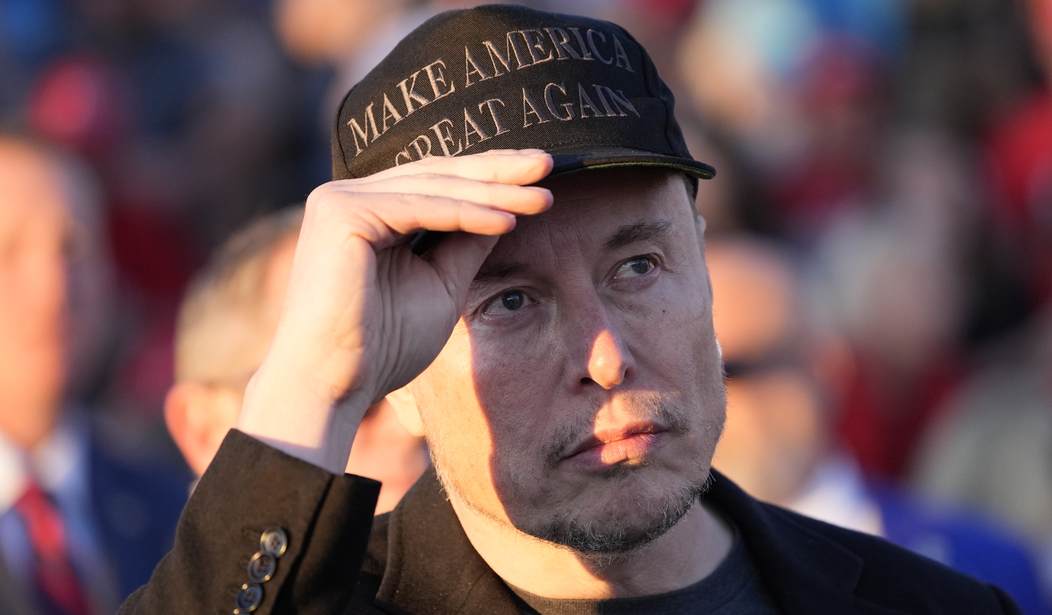
Elon Musk’s vision of abundance through innovation captures this better than any political slogan. When machines handle the routine and dangerous work, when goods and services become radically cheaper, and when human labor shifts toward higher-purpose pursuits, the old zero-sum fights over shares inside a fixed container begin to look quaint and slightly ridiculous. The real rebellion: refusing to stay trapped in the Marxist-feudal mindset that has held so many societies back.
We do not need new Merry Men to rob the rich. We need a renewed understanding that the greatest service to the “Little Guy” is not to confiscate and redistribute the existing half-full glass, but to make even the pitcher small and irrelevant through growth, invention, and opportunity. That is the uncorrupted Robin Hood legacy worth preserving not as banditry, but as the bold defense of human potential against every form of coercive extraction, old or new.
Only by looking outside the glass can we finally escape the treadmill and create a world where the bold yeoman no longer needs to live as an outlaw, and the creators are recognized as the heroes they are.