


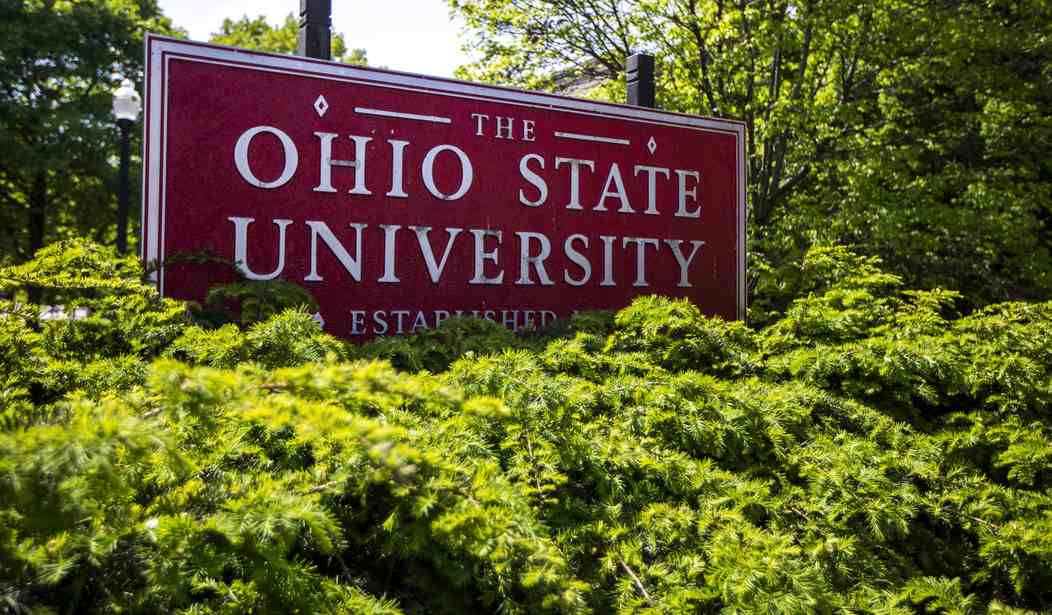
At Ohio State University College of Medicine, applicants compete for a limited number of seats. Grades, test scores, experience, and interviews are supposed to help determine who gets in. Federal investigators now say some applicants could bypass important parts of that process. The Justice Department calls it a “side door,” and the numbers behind its October 21 findings demand an explanation.
The department reviewed admissions records for entering classes from 2023 through 2025. It found that some applicants received admission without an initial screening score or review by the admissions committee. In 2024 and 2025, black applicants using this pathway had four times the admission odds of white applicants with comparable academic credentials. No Asian applicants were admitted through it.
Federal investigators concluded that the normal process had its own problems. Ohio State’s screeners rated applicants on attributes, experiences, and academic metrics. Attributes could receive 12 points, experiences 16, and grades and MCAT performance only eight. Those weights aren’t automatically illegal. Medical schools can reasonably consider more than a test score, but the department says race influenced who advanced.
Its statistical analysis found that, in 2025, black applicants had 7.7 times the odds of reaching the interview stage as Asian applicants with similar academic credentials. Compared with white applicants, the odds were 4.6 times higher. Among applicants who completed screening and interviews, black applicants had roughly 2.8 times the admission odds of comparably credentialed Asian candidates.
From the DOJ:
Despite SFFA, OSU Med allows some applicants to bypass its own screening process and skip interviews solely because of the color of their skin,” said Assistant Attorney General Harmeet K. Dhillon of the Justice Department’s Civil Rights Division. “A university’s admissions process, and all its stages, should apply equally to all applicants regardless of race. The use of a separate admissions process based on race is plainly illegal under federal law, and this Department will not allow these appalling practices to continue at OSU Med or any other federally funded higher ed institution.”
OSU Med uses a “Holistic Approach” to admit more so-called “underrepresented minorities”. As part of the Holistic Approach, “screeners” score applicants across three scoring categories that have different maximum point values: Attributes (12 max), Experiences (16 max), and Metrics (8 max). OSU Med’s admissions process also includes an interview stage. The Department’s investigation found that black applicants who are screened and interviewed are about 2.8 times as likely to be admitted than Asian applicants with equal credentials.
The letter describes another troubling detail. Some admissions officers were shielded from racial information, but the school’s specifically trained “Super Screeners” weren’t. Ohio State says those reviewers checked for consistency in scoring. The DOJ argues their access to racial information, combined with the disparities it found, indicates intentional discrimination.
Investigators also questioned Ohio State’s adoption of a socioeconomic disadvantage score after the Supreme Court’s 2023 admissions ruling. An admissions official discussed using a method developed at UC Davis to account for applicants’ disadvantages. Considering poverty or hardship is lawful. The legal problem arises if a school deliberately uses such a measure to award racial preferences it can no longer openly.
The Supreme Court settled the central legal question in Students for Fair Admissions v. Harvard. Universities may consider how personal hardship shaped an applicant’s character and accomplishments. They can’t use individual experiences to justify giving advantages based on race. Federal civil rights law also bars racial discrimination by institutions receiving federal financial assistance.
Ohio State strongly disagrees with the findings. The university says its medical school doesn’t consider race, ethnicity, or any other protected classification during admissions, insists its practices comply with the law, and plans to contest the department’s conclusions. The letter represents an investigative determination, not a court judgment.
From Reuters:
Ohio State University said on Wednesday it disagreed with the US Department of Justice's findings that alleged its medical school favored Black and Hispanic applicants in admissions and discriminated against white and Asian applicants.
The DOJ said findings from a federal probe showed Ohio State College of Medicine discriminated against white and Asian students in granting admission to its 2023, 2024 and 2025 incoming classes.
- In a letter, opens new tab to the institution, the DOJ alleged the school's ?admission practices aimed "to benefit preferred race classes of Black and Hispanic."
- It alleged the school's diversity commitments showed discriminatory intent, marking the latest targeting of diversity programs at universities by President Donald Trump's administration.
- The DOJ said it seeks a voluntary resolution agreement and will file suit if those efforts fail.
- "Ohio State strongly disagrees with the findings," the university said in a statement. It said it is in full compliance with the Supreme Court's ruling and all ?federal and state laws regarding admissions.
- The medical school does not consider race, ethnicity or any protected class during admissions, it said, adding it will "contest these findings."
- The Supreme Court rejected affirmative action at colleges in 2023 when it struck down race-conscious admissions? programs at Harvard and the University of North Carolina.
- …more
Although the school’s denial deserves to be heard, so does a serious answer to the underlying evidence. Why did some applicants miss normal review? How were those exceptions approved? Why could Super Screeners see information after reviewers couldn’t?
The university should be able to explain each practice without hiding behind broad assurances about diversity.
The stakes reach beyond applicants who never received an acceptance letter. Medical education rests on demanding standards and public confidence in how future physicians are selected. An MCAT score alone can’t tell us who will become a good doctor. Fair treatment, however, shouldn’t depend on an applicant’s ancestry.
The DOJ wants a voluntary agreement to bring Ohio State’s admissions procedures into compliance and says it may sue if negotiations fail. Whatever happens next, the school owes applicants a transparent account of its rules. Every qualified applicant deserves to know that the same doors and standards are open to everyone.
Help PJ Media keep asking the questions powerful institutions would rather avoid. Become a VIP member today and save 60% with promo code FIGHT. Your support keeps independent conservative journalism going.


Join the Conversation
VIP members get the ability to comment on articles.