





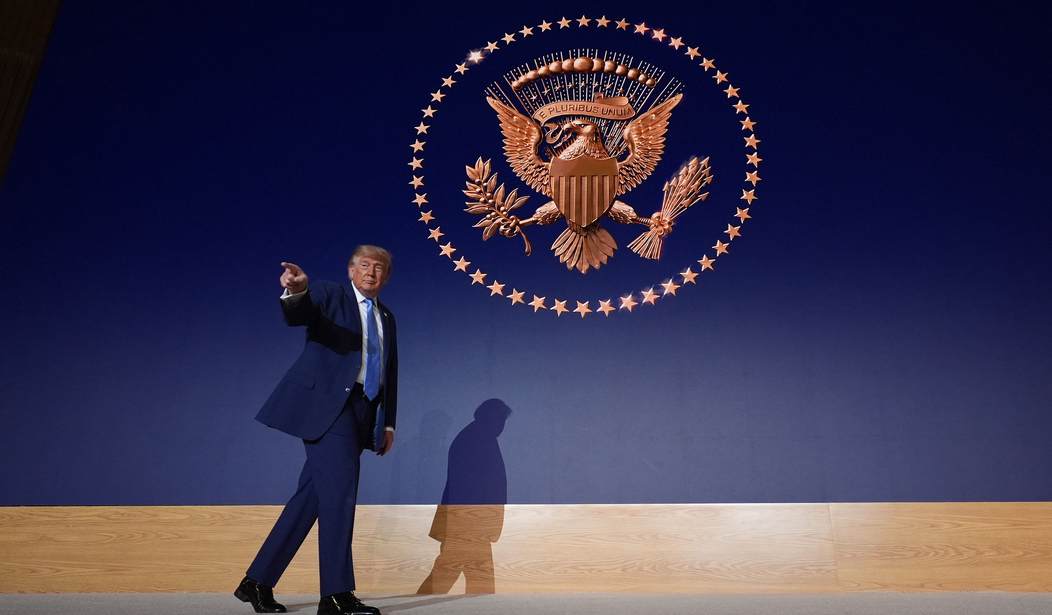
President Donald Trump put some yuge numbers on the table Wednesday: up to $200 billion in South Korean investment for American energy projects, including Alaska LNG, eight nuclear power plants, and a massive natural gas power project in Texas.
The announcement finally gives shape to part of the $350 billion investment package South Korea agreed to as part of last year's trade deal with Washington. Of that total, $150 billion was set aside for shipbuilding and another $200 billion for strategic investments selected in cooperation with the United States.
From Reuters:
"Thanks to the agreements my administration has secured with the Republic of Korea, they will invest up to $200 billion," Trump said.
He said that the investment would include the construction of eight large-scale nuclear power plants, a liquefied natural gas pipeline in Alaska and a 6-gigawatt power generation facility in Texas.
The announcement is part of a series of economic and investment deals Trump is highlighting ahead of November's midterm elections, as he seeks to reinforce his economic record amid voter concerns over the Iran war and high gasoline prices. The Alaska LNG project also comes as Republicans seek to retain incumbent Senator Dan Sullivan who faces Democrat Mary Peltola. Sullivan was in the Oval Office for the Wednesday announcement.
The Alaska LNG project includes an 807-mile (1,299-km) pipeline carrying natural gas from the North Slope to a liquefaction facility on Alaska's southern coast, allowing the fuel to be shipped to Asian markets. The project is designed to transport about 3.9 billion cubic feet of natural gas per day and produce up to 20 million metric tons of LNG annually, according to the White House.
The largest headline belongs to Alaska. Trump said roughly $54 billion could support the long-discussed Alaska LNG project, including an 807-mile pipeline carrying natural gas from the North Slope to a liquefaction facility near Nikiski. The project is designed to move about 3.9 billion cubic feet of gas per day and eventually produce as much as 20 million metric tons of LNG annually.
For Trump, Alaska LNG offers several things at once: domestic construction, American energy production, exports to Asian allies, and another destination for foreign capital negotiated through his trade policy.
There's just one inconvenient word hanging over the celebration: could.
Alaska LNG has been discussed for decades, and financing has repeatedly been the problem. The development is estimated to cost between $44.5 billion and $54.5 billion. Its developer has lined up agreements covering about 13 million metric tons of LNG annually from prospective buyers in Japan, South Korea, Taiwan, Thailand, and France.
It still needs another 3 million tons of commitments, and most existing agreements must become binding before financing can be secured.
South Korea has also made clear that projects drawing from its investment pool must pass commercial-viability reviews. Seoul isn't simply wiring $200 billion to Washington and asking where to send the thank-you card.
One project has already cleared more of those hurdles. South Korea selected a $22.3 billion gas-fired power project in Encina, Texas, as the first project under the strategic investment program. The facility would generate more than 6 gigawatts and supply electricity directly to AI data centers, with initial commercial operations planned for 2029.
The eight proposed nuclear plants could become another enormous piece of the package as electricity demand rises from data centers, manufacturing, and other power-hungry industries. South Korea has deep nuclear construction experience, but discussions of those plants are still developing.
None of this makes Wednesday's announcement meaningless. A year ago, $350 billion was essentially a diplomatic number attached to a trade agreement. Now portions of it have project names, locations, generating capacity, and proposed construction.
But there's a sizable distance between announcing an investment framework and pouring concrete.
Trump can fairly point to South Korea's agreement as evidence that his trade negotiations are producing plans for investment inside the United States.
The harder test begins now.
Alaska LNG has to find enough customers; financing has to close; nuclear projects have to survive their own reviews; and South Korea still has to decide whether the numbers work for its taxpayers.
If those pieces come together, Wednesday's announcement could eventually mean pipelines, reactors, power plants, shipyards, and tens of billions of dollars moving into American infrastructure.
For now, Trump has put names and addresses on the promise. The next question is how many construction crews eventually show up.
Big announcements deserve a second look, especially when politicians start adding zeroes. PJ Media VIP helps us keep digging past the press conference and into what the money, contracts, and commitments actually say. Join today and get 60% off with promo code FIGHT.

Join the Conversation
VIP members get the ability to comment on articles.