







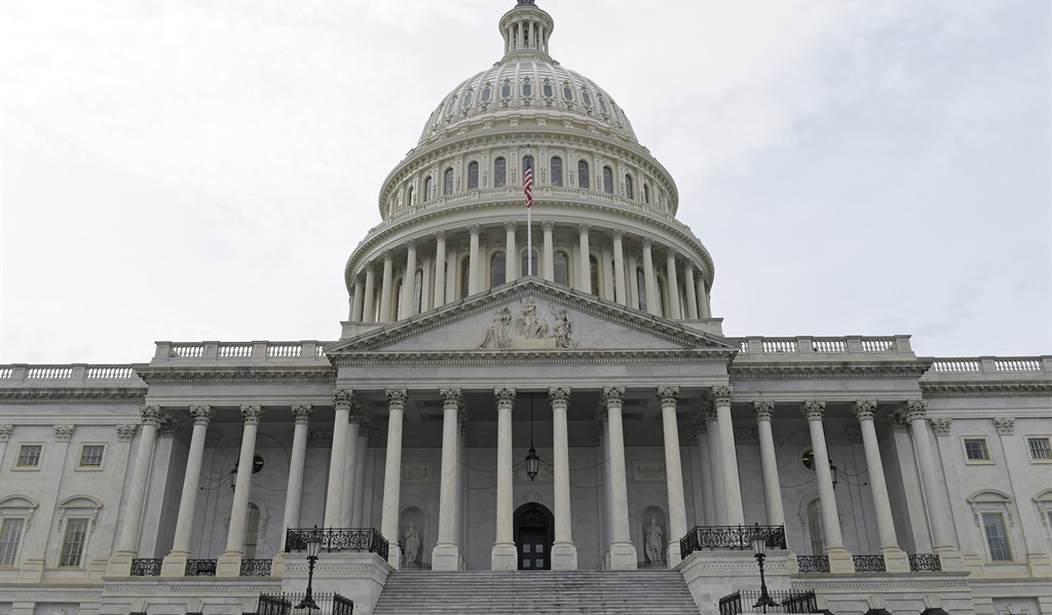
The Census Bureau has opened a fight over one of the most basic questions in American government: Who counts when the country divides 435 seats in the House of Representatives among the states?
A proposed rule signed by Commerce Secretary Howard Lutnick would change the residence rules used for congressional apportionment beginning with the 2030 Census. U.S. citizens and lawful permanent residents would count. Illegal aliens and every other foreign citizen without permanent resident status would not.
The rule is scheduled for publication in the Federal Register on Thursday.
The scope is important; the proposal goes beyond illegal immigration. Foreign citizens legally here under temporary statuses would also be excluded from the apportionment base unless the Census Bureau ultimately decides their status is sufficiently similar to permanent residency.
The agency argues that a person's "usual residence" involves more than physical presence and can include allegiance, an enduring tie, and durable permission to remain in the country.
The Bureau is considering using records from Homeland Security, Treasury, State, HHS, the Postal Service, state and local governments, and commercial sources to determine legal status. Officials are also inviting comments on whether the 2030 short form should directly ask about legal status.
Political consequences could be enormous. House seats are apportioned among the states from census population figures. Those seats also determine Electoral College strength.
Some contend that the language employed—actual enumeration—requires an actual count, but gives Congress wide discretion in determining the methodology of that count.3 The word enumeration refers to a counting process without describing the count’s methodological details, and the Court has held that the word actual refers to the enumeration that was to be used for apportioning the Third Congress, and thereby distinguishes a deliberately taken count from the conjectural approach that had been used for the First Congress.4 Finally, the conferral of authority on Congress to direct the manner of enumeration underscores the breadth of congressional methodological authority.5 In Dep’t of Commerce v. U.S. House of Representatives, the Court held that the Census Act prohibits the use of statistical sampling to determine the population for congressional apportionment purposes, but declined to reach the constitutional question of whether the Census Clause’s requirement for an actual enumeration foreclosed the use of statistical sampling in gathering census information.6 In Utah v. Evans, the Court held that the use of hot-deck imputation, a method used to fill in missing census data, did not run afoul of the actual enumeration requirement.7 The Court determined that Constitution’s text uses a general word, ‘enumeration,’ that refers to a counting process without describing the count’s methodological details.8 The Court distinguished imputation from statistical sampling and indicated that its holding was relatively narrow9—that imputation was permissible under the Constitution in this case where all efforts have been made to reach every household, where the methods used consist not of statistical sampling but of inference, where that inference involves a tiny percent of the population, where the alternative is to make a far less accurate assessment of the population, and where consequently manipulation of the method is highly unlikely.10 Thus, the Court held that the Framers did not write detailed census methodology into the Constitution and methods, such as imputation, were constitutionally valid.11
States with large populations of people who would no longer qualify for the apportionment count could lose relative political power even though the people affected may continue to live there for years.
The administration is walking directly into a constitutional fight. Section 2 of the 14th Amendment says representatives are apportioned by "counting the whole number of persons in each State."
Opponents have an obvious argument: the amendment says "persons," not "citizens," "voters," or legal residents.
The Census Bureau answers that "persons in each State" historically referred to inhabitants, and inhabitants had a genuine connection to the political community. Its proposed rule relies heavily on the Supreme Court's recognition that "usual residence" can include allegiance or an enduring tie rather than mere physical presence.
We've been near this fight before. President Donald Trump tried to exclude illegal aliens from the apportionment base after the 2020 Census. The Supreme Court dismissed the resulting challenge because it was premature.
The justices expressly declined to decide whether Trump's policy was constitutional or lawful under federal statutes.
Three dissenting justices thought the answer was already clear in the opposite direction. Stephen Breyer, joined by Sonia Sotomayor and Elena Kagan, argued that the statutes, historical practice, and longstanding government interpretation required including illegal aliens in the apportionment count. The majority never reached that question.
The new proposal adds another political grenade. The Census Bureau also wants to prohibit questions about race, ethnicity, and sexual orientation on the decennial short-form questionnaire.
Officials argue those questions aren't necessary for the constitutional population count and create privacy and response-rate problems.
Race and ethnicity data could still be gathered through administrative records and other surveys, including the American Community Survey.
So the 2030 Census fight is taking shape years early. Trump isn't merely asking how many people live in America; his administration is asking which of them should translate into political representation.
Courts are almost certain to have the final word.
Battles over immigration increasingly become battles over political power, and the 2030 Census could reshape Congress long after President Trump leaves office. Join PJ Media VIP and save 60% with promo code FIGHT.

Join the Conversation
VIP members get the ability to comment on articles.