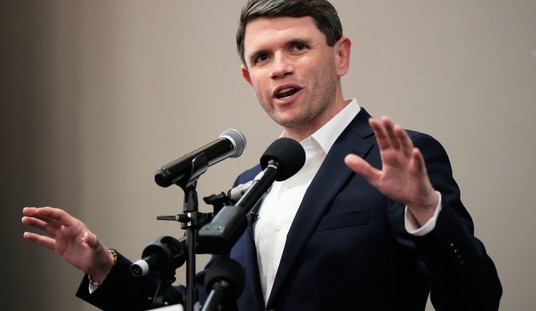
Tucker Carlson can hurt Republicans without ever appearing on a ballot. His audience is large enough that even a small migration away from Republican candidates could change close races without creating a viable replacement for the GOP.
Carlson, host of The Tucker Carlson Show, said in June there was "no chance" he would support the Republican Party in the 2026 midterms.
In July, he went further, saying he would help build a third party because he believes Republicans and Democrats are aligned on war and finance, though he said he doesn't want to be its candidate.
Longtime conservative commentator Tucker Carlson said on a podcast that "there's no chance I would support the Republican Party."
— ABC7 News (@abc7newsbayarea) June 23, 2026
"Not gonna support the Democratic Party," Carlson was quick to add, speaking late last week on the show "Can't Be Censored." "I don't know what I'm… pic.twitter.com/ngD66jhl4x
From the Columbia Journalism Review:
On his show, Carlson advocates long-held hard-line conservative views, which include total opposition to immigration, abortion, and trans rights. He also takes a strong stand against war: Carlson has vociferously denounced the American and Israeli attacks on Iran—during which over thirteen thousand targets have been bombed and more than three thousand people killed—as well as Israel’s post–October 7 assault on Gaza. Carlson has personally lobbied Trump, whom he’s known at least since both were NBC television personalities, not to attack Iran. He’s an imperfect vessel for the anti-war argument, but his reach and influence may make him America’s most prominent crusader for the cause.
Because of his reputation among American conservatives, Carlson can book guests such as Ted Cruz, the Republican senator from Texas, and grill them on their warmongering. In a 2025 interview that went viral, Carlson asked Cruz to tell him the population of Iran; Cruz couldn’t do it. “You’re a senator who’s calling for the overthrow of the government,” Carlson shouted in response, “and you don’t know anything about the country!” It was a rare thing: a complete pantsing of a powerful public figure. “I am always struck by the ignorance of policymakers,” Carlson told me. “I wanted him to feel shame. And he felt no shame.”
Carlson’s relevance is rooted in the fact that he can both book Cruz and embarrass him. It’s also connected to his symbiosis with a subset of Republicans. According to a recent New York Times/Siena poll of self-identified Republicans and Trump voters, nearly 60 percent of those with a “very favorable” view of Carlson say “they want the next Republican presidential nominee to take the party in a new direction.”
What may be most significant about Carlson now is that his campaign against the Iran war and Israel’s influence on the American political system has placed him in strange cultural territory: suddenly, he has fans on the left. Cenk Uygur, the creator of the progressive news show The Young Turks, has cheered Carlson for criticizing Trump’s attacks on Muslims. When Olivia Reingold, a writer for the Free Press, compiled a dossier against Rama Duwaji, the First Lady of New York City, one of Reingold’s ostensibly damning reveals was that Duwaji had liked a Carlson post criticizing AIPAC.
Victor Davis Hanson sees the danger. Hanson, the Martin and Illie Anderson Senior Fellow at the Hoover Institution and probably in the top three of conservative voices, argues that Carlson and other disaffected MAGA figures could become spoilers, pulling enough support from Republicans to help elect Democrats whose policies they oppose. From the Daily Signal:
So, I don’t know the purpose of what the Tucker Carlson group is, because historically it would suggest that all they want to do is make sure that Donald Trump’s successor, JD Vance or Marco Rubio, loses the 2028 election.
What is their agenda?
Well, they’ve said that they have 10 points if they really are going to form a third party. I looked at them. I could say confidently that 80%, 8 out of 10, are what they’re getting right now with Donald Trump.
They’re worried about a porous border. They’re worried about crime. They’re worried about DEI. They’re worried about the family. They’re worried about all of these things.
But who’s giving them relief? Who’s offering a remedy to their anxieties? Donald Trump is. Do they really think the Left has a better idea that will better fit their agenda on the border that saw 12 million people come in under Joe Biden, or defund the police, or the DEI chauvinism that came in under the Democrats?
So, their agenda is very similar to what they’re getting now, except on two issues on which they differ. They do not want wars abroad, and they feel if we have collateral damage, we had it in World War II, we had it in Korea, we had it in Vietnam, we’ve had it in every war we’ve fought, especially now in the Middle East, where the enemy uses human shields on the premise that the United States doesn’t deliberately hit civilians, and therefore, they’re willing to expose their own civilians’ lives to protect their combatants.
Tucker would have us pay cash reparations to any civilian who was killed in a war. You can imagine how that would work in the real world.
So, given all of this, the agenda they’re getting pretty much dovetails with what we have in Washington. And given the record that third parties don’t work too well, other than to hurt the similarly ideologically akin party, why are they doing this?
Hanson also looked at the emerging moment's 10 stated priorities and concluded that roughly eight already overlap with President Donald Trump's agenda.
Border security, crime, DEI, and the family are hardly areas where Carlson's audience would find the Democrats more attractive. The deepest rupture is foreign policy, especially Carlson's opposition to the Iran war.
And the overwhelming evidence of his antisemitism.
History gives Hanson a strong case. In 1912, Theodore Roosevelt broke with President William Howard Taft and ran under the Progressive, or Bull Moose, banner. Roosevelt won 27.4% of the popular vote, Taft took 23.2%, and Democrat Woodrow Wilson won with only 41.8%, while the Republican vote lay shattered between two candidates.
Ralph Nader offers another warning. In 2000, the Green Party nominee won 2.7% nationally. George W. Bush carried Florida by only 537 votes, and the state decided the presidency. Nobody can know how every Nader voter would've behaved in a two-candidate race, but small defections can have enormous consequences when elections are close.
Ross Perot is a shakier example than many Republicans remember. He won nearly 19% in 1992, yet later research found his candidacy may actually have reduced Bill Clinton's margin over George H.W. Bush. Perot undeniably disrupted the race, but saying he simply handed Clinton the presidency might be a stretch. But a realistic one.
Carlson's threat is more immediate. He doesn't need to split MAGA in half. A few points of Republican turnout are lost here, a Senate race surrenders there, and several House seats slipping away would give the left something Carlson plainly doesn't want: more power.
Carlson has a right to complain about Republican foreign policy. Conservatives should argue fiercely about war, spending, immigration, trade, and the proper limits of American power. A coalition that can't survive disagreement deserves to fall.
Walking away from Republican candidates in 2026 carries consequences beyond settling a score with Trump. Every lost Senate seat affects judges and legislation; every lost House seat affects spending, investigations, and control of the chamber.
Hanson is right to sound the alarm. Carlson has earned influence by challenging powerful Republicans, including some who deserved it, but influence brings responsibility when millions listen.
Carlson may never win an election or create a durable party, but he can still make Republicans lose.
And the left will gladly collect the victories.