
President Donald Trump didn't invent the dream of supersonic travel, but he may have reopened the runway for it.
On June 30, the FAA proposed a new rule that could allow civilian supersonic flight over land again, so long as aircraft meet modern noise limits. After more than 50 years of treating speed as a threat, Washington is finally admitting technology has moved on.
BREAKING: FAA officially announced the rulemaking to legalize supersonic flight, including the Boomless Cruise ("Mach cutoff") approach we demonstrated on XB-1.
— Blake Scholl 🛫 (@bscholl) June 30, 2026
This is a major step toward the supersonic renaissance. pic.twitter.com/1in06V68Qk
The old rule came from another age. Since 1973, civilian aircraft have been barred from flying faster than Mach 1 over U.S. land because of sonic booms. Those blasts rattle buildings, crack windows, and turn a marvel of flight into a daily nuisance for families on the ground. From Popular Science:
According to a new FAA rule proposal, revised noise-based certification standards for supersonic aircraft will ensure any upcoming planes’ sonic boom overpressure doesn’t exceed 0.11 pounds per square foot (psf). Basically, supersonic civilian travel would sound more like a car door slamming than an explosive gunblast to anyone at ground level.
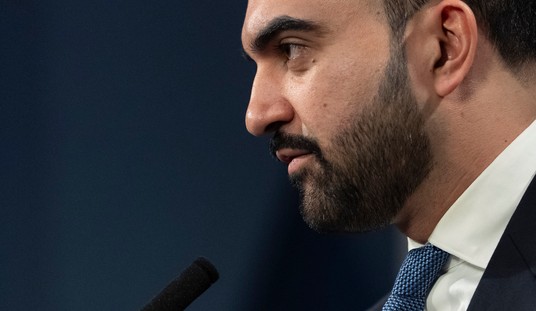
“We can ultimately repeal the ban from the 1970s on supersonic flight over U.S. territory while minimizing noise impacts to residents in communities along the route and near airports,” FAA administrator Bryan Bedford said in an accompanying statement.
Although domestic supersonic flight never became a major form of travel, the U.S. military once routinely conducted aircraft tests near residential areas. The resultant sonic boom shock waves frequently shattered windows, cracked building walls, and unnerved citizens within earshot. After sustained pushback, the government banned continental supersonic aircraft outside of remote designated areas in 1973.
The fear wasn't imaginary and the rule wasn't crazy, yet a rule built for 1970s technology shouldn't get a veto power over 21st-century engineering.
U.S. Transportation Secretary Sean Duffy called the proposed rule part of a “Golden Age of Travel.” FAA Administrator Bryan Bedford said advances in aerospace engineering, materials science, noise reduction, and new flight concepts eliminate the old sonic boom problem while reducing noise for communities near routes and airports. From the DOT:
“Restoring supersonic flight over land isn’t just about speed, it's about unleashing American innovation and ushering in a Golden Age of Travel,” said U.S. Transportation Secretary Sean P. Duffy. “Thanks to President Trump’s leadership , we are working at lightning speed to safely enable the next quantum leap in aviation technology and deliver an exciting new way to fly to the American flying public.”
“Advances in aerospace engineering, materials science, noise reduction, and new operational concepts will eliminate the old sonic boom,” said FAA Administrator Bryan Bedford. “This means we can ultimately repeal the ban from the 1970s on supersonic flight over U.S. territory while minimizing noise impacts to residents in communities along the route and near airports.”
“This is how America wins—by moving at the speed of our innovators,” said Assistant to the President for Science and Technology and Director of the White House Office of Science and Technology Policy Michael Kratsios. “For too long, outdated rules held back our engineers and manufacturers. Under President Trump’s leadership, we are clearing the runway for supersonic flight, strengthening our industrial base, creating high-skilled jobs, and ensuring the future of aviation is invented and built in America. American ingenuity broke the sound barrier once before, and today’s action ensures it will define the new Golden Age of Aviation.”The FAA wants both supersonic noise rules finalized by mid-2027.
Trump's June 6 executive order pushed the FAA to repeal the old overland ban, create an interim noise-based certification standard, and update regulations that have slowed supersonic development.
The order also directed federal agencies to coordinate research so regulators can rely on test data instead of old assumptions. The point is simple enough: if aircraft can fly faster without punishing the ground below, the federal government should stop blocking the future.
NASA has already shown why the debate has changed. Its X-59 aircraft reached supersonic speed for the first time on June 5, hitting around Mach 1.1 at 43,400 feet. NASA built the plane for its Quesst mission, which aims to prove a quiet supersonic aircraft can create a softer thump instead of the sharp boom that doomed overland civilian supersonic flights decades ago.
Boom Supersonic has been moving from theory to hardware, too. Blake Scholl, founder and CEO of Boom Supersonic, has argued that the 52-year ban belongs to a past era because modern designs can fly beyond the speed of sound without producing a disruptive boom at ground level.
The company's XB-1 demonstrator went supersonic in January 2025 and later completed additional supersonic test flights.
The Concorde proved passengers would cross oceans at stunning speed, but it never became normal travel. Noise rules, fuel costs, maintenance demands, and limited routes kept it exotic.
Its retirement in 2003 left the world slower, not faster. Since then, Americans have watched phones, computers, medicine, and weapons systems leap ahead while commercial air travel still asks them to spend much of a day crossing the country. From Popular Science:
Between the damaging shock waves and multiple deadly Concorde aircraft crashes, the supersonic aviation industry’s image remained tarnished for decades, but that hasn’t stopped private companies and the government from pursuing multiple projects focused on improving safety and dampening the noise. Last year, NASA finally confirmed its long-rumored X-59 experimental airplane that produces more of a sonic “thump” than of a sonic boom. Meanwhile, private companies like Dawn Aerospace and Boom are developing their own commercial supersonic aircraft.
In addition to this week’s rule proposal, the FAA said it intends to introduce another proposal later this year intended to codify supersonic plane takeoff and landing noise standards. The return of ultrafast air travel may still be a few years away, but the FAA’s support will ensure it happens sooner than later.
A New York to Los Angeles flight under four hours isn't a fantasy anymore. The technology isn't finished, the economics still have to work, and regulators must protect families on the ground.
Yet the right question has changed; Americans shouldn't ask whether old noise fears can keep freezing progress. America should ask what safe, quiet, fast flights could do for business, medicine, defense, emergency response, and ordinary families separated by long distances.
Trump's move breaks the old habit of saying no first and thinking later. The FAA isn't handing the sky to reckless builders; it's telling innovators the rulebook can be updated if their aircraft meet the test. That's how a serious country treats progress, sets standards, demands proof, and then lets builders build.
The sound barrier is back in America's sights. If the engineers can solve the noise, Washington shouldn't keep the brakes locked. A nation that once led aviation shouldn't spend another generation explaining why speed is too much to ask.