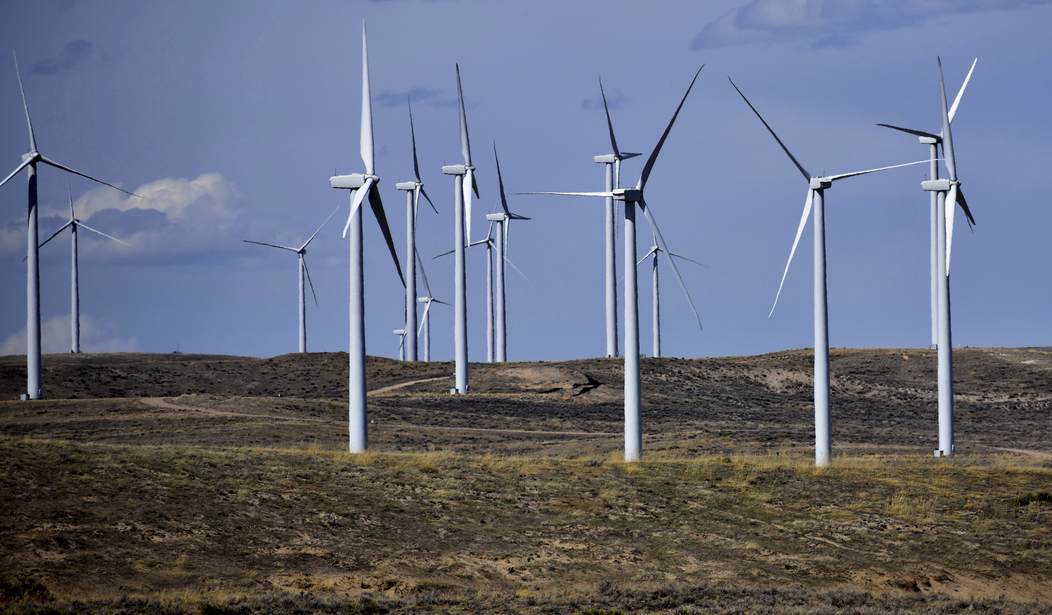
A farmer can lose a skyline the same way a family loses an old photograph. One day it's there, familiar and quiet; then somebody with more money, more lawyers, and more access to the statehouse decides the view belongs to a larger cause.
Marathon County, Wisc., is learning how fast a local landscape can become a statewide energy map. Alliant Energy's proposed Hub City Wind Farm would place 28 to 38 turbines across the towns of Day, McMillan, Eau Pleine, Cleveland, Green Valley, and Brighton. The company says the project would generate 150 megawatts, produce up to 450,000 megawatt-hours a year, and power about 45,000 homes. From Boardman Clark:
With respect to license term and renewal, for example, the Court rejects the developer’s claim that a local ordinance is more restrictive than state statute when it includes a specific time limit for an initial license term and a renewal procedure because PSCW rules and accompanying guidelines expressly contemplate that local authorities must have a procedure to monitor compliance, even though the rules do not use the word “license” or specify a specific time period for the initial term or renewal period.
Similarly, on the inclusion of the various “subjective criteria” in the ordinances, the Court emphasizes that a local government remains subject under Wis. Stat. §66.0401 to a reasonableness standard and must issue its decision with written findings of fact supported by evidence that are subject to administrative review. The Court reasoned that in this instance the developer’s complaint was unwarranted because the PSCW rules expressly limit the discretion of the local authorities by also subjecting them to a reasonableness standard. Here, according to the Court, that standard was met because the factors at issue concern safety, zoning, economic impact, health risks, nature, radar effectiveness, and impacts on the military, all of which are reflected in state law, explicitly enumerated in Chapter 128 of the administrative code and included in the PSCW’s application guidelines. Hence, “the subjective criteria listed in the ordinances are not a basis to invalidate them” (Marathon Wind Farm at 17).
In the absence of the developer’s briefing on the merits of its legal challenge to the town ordinances, Marathon Wind Farm is not definitive precedent that local governments have free reign to impose standards that may be deemed overly restrictive by wind developers. Quite the contrary; the case underscores the importance of drafting wind siting ordinances that adhere closely to the framework of PSCW rules and its guidance for local authorities.
Those numbers sound clean in a boardroom. On the ground, they come with roads, transmission lines, construction traffic, decommissioning questions, emergency response worries, property concerns, and a permanent change to the horizon.
For people who live there, the issue isn't an abstract debate over renewable energy; it's the place where their grandparents farmed, where their kids learned to drive, and where the night sky still means something.
County leaders have gathered public comments and held listening sessions, but the central problem remains power. A wind or solar project under 100 megawatts can rely more heavily on local approval. Once a project rises above that level, the Public Service Commission of Wisconsin takes over the main approval process. Hub City sits at 150 megawatts.
That turns local feedback into something weaker than consent. People may speak, file the concerns, fill out surveys, and show up after work. Yet the final decisions can still move away from the town hall and toward Madison. Rural families know the feeling; they're asked to carry the cost of a policy sold somewhere else.
Marathon County's pushback didn't begin yesterday. The towns of Brighton and Eau Pleine adopted wind siting ordinances. A developer sued to wipe them out; in May 2025, a Marathon County circuit judge dismissed the lawsuit.
The ruling didn't give every town a blank check, but it did show local governments can still write rules rooted in safety, land use, economic impact, health concerns, and environmental effects.
Now comes the wider question: what happens when Big Wind meets the Mississippi Flyway?
Wisconsin is part of the administrative Mississippi Flyway, one of the great migratory systems managed across states and Canadian provinces. The phrase may sound distant from Wausau, like something belonging to duck blinds downriver or bayous far south.
It isn't.
Migration doesn't respect county lines. Birds move through broad corridors, stopover habitats, farm country, wetlands, and river systems. A tower may stand in one township, but the question it raises can stretch across half a continent.
The U.S. Fish and Wildlife Service doesn't say every wind project is a bird-killing machine; the agency's own guidance is more careful and more useful. Wind facilities can kill birds and bats. Risk varies by site; bird use, behavior, habitat, raptor presence, and nearby stopover areas all matter. Careful siting is the difference between responsible energy and industrial hurry. From the U.S. Fish and Wildlife Service:
Studies have documented that wind energy facilities kill birds and bats. Mortality rates vary among facilities and across regions. Studies indicate that relatively low raptor fatality rates are found at most modern wind energy developments with the exception of some facilities in California and Wyoming. Turbine-related bat deaths have been reported at each wind facility, and studies generally indicate lower bat fatality rates at facilities in the West than in the East. There is still much uncertainty regarding geographic distribution and causes of bat fatalities.
Most birds killed at wind turbines are song birds. Migratory songbirds often migrate during the night at altitudes generally above rotor swept areas when weather conditions are favorable. Risk may be greatest during take-off and landing where wind facilities abut stopover sites. Studies have indicated that the level of bird use at the site and the behavior of the birds at the site are important factors to consider when assessing potential risk. For example, raptor fatalities appear to increase as raptor abundance increases. Certain species – including red-tailed hawks (Buteo jamaicensis) and golden eagles (Aquila chrysaetos) – that forage for prey in close proximity to turbines appear to have increased fatalities, while others like common ravens appear to avoid collisions with turbines.
All studies of bat impacts have demonstrated that fatalities peak in late summer and early fall, coinciding with the migration of many species. Bat fatalities also occur during spring migration for some species at some facilities. Several species of bats are vulnerable to collisions with turbines. Three migratory tree-roosting species seem to be particularly vulnerable: the hoary bat (Lasiurus cinereus), eastern red bat (Lasiurus borealis), and silver-haired bat (Lasionycteris noctivagans).
There is also evidence that ground nesting birds, such as prairie-chickens and sage grouse, may avoid areas with wind turbines. It is believed that they avoid structures that could be used as perches for predators such as raptors. Turbine strings or arrays may also affect the habitat, causing the birds to search for less disturbed habitat. This can disrupt their breeding and nesting behaviors, resulting in fewer chicks surviving to adulthood.
Federal guidance for land-based wind projects also warns about habitat loss, fragmentation, displacement, and collision risk. Those words matter because they move the argument beyond slogans.
The question isn't whether a turbine can produce electricity.
It can.
The question is whether a specific project belongs in a specific place, especially when that place sits inside a major migratory system.
The same concern is already being argued far south of Wisconsin. Mississippi lawmakers took up proposals aimed at industrial wind facilities, farmland, migratory birds, aquifers, agricultural aviation, and the Mississippi Flyway.
One resolution called for studying wind tower impacts on farming, water, crop-dusting safety, decommissioning funds, and possible danger to migratory birds.
Mississippi may be a different state with a different landscape, but the warning travels north: local land and migrating wildlife are not empty space waiting for a developer's spreadsheet.
Supporters of Hub City will point to jobs, tax revenue, and electricity. Those are real arguments and deserve a hearing. A county can't pretend energy comes from nowhere; America needs power, and Wisconsin needs a serious mix of reliable sources.
Still, a serious energy policy shouldn't treat rural people like scenery; it shouldn't shrink local authority by scaling a project just high enough to move the fight out of town. It shouldn't ask farmers and small-town families to trust distant regulators while their roads, fields, emergency plans, property values, and wildlife concerns sit beneath the blades.
Marathon County's flyway fight isn't just about turbines; it's about whether local memory has any standing against state ambition. It's about whether a farm community gets to defend its future before the permits, contracts, and talking points harden into inevitability.
The birds keep moving when the seasons call them. The question is whether the people beneath their path will still have a voice before Big Wind redraws the sky.