





People across New England heard the sky clap back Saturday afternoon, and for a while, nobody knew why. Houses shook, windows rattled, and police departments fielded calls from worried residents.
The early guesses ranged from earthquake to sonic boom to aircraft trouble.
NASA then gave us the answer: a natural meteor tore into the atmosphere, broke apart roughly 40 miles above northeastern Massachusetts and southeastern New Hampshire, and released energy equal to about 300 tons of TNT.
The meteor arrived around 2:06 p.m. EDT on Saturday, traveling near 75,000 mph. NASA spokesperson Allard Beutel identified the object as a natural meteor rather than space junk, a satellite, or man-made debris.
NOAA's GOES-19 satellite detected the flash, and eyewitnesses reported a bright daytime streak before the boom rolled across neighborhoods. U.S. Geological Survey data ruled out an earthquake, leaving the atmosphere as the source of the shaking.
Robert Lunsford, fireball report coordinator for the American Meteor Society (that's a job title!), described the object as roughly three feet wide. Reports reached the society from Delaware to Montreal, a huge footprint for a rock small enough to fit through many front doors. From the Associated Press:
American Meteor Society program monitor Robert Lunsford said the group received dozens of reports from Delaware to Montreal with people either hearing the double boom, feeling the ground shake or seeing the fireball — which he said looked like a shooting star in the daytime sky.
“It was definitely bigger than a normal fireball, about a yard wide,” he said.
But Lunsford said it wass unlikely the meteor struck the ground.
“We would need more information about the trajectory the speed and other aspects to know for sure if it hit the ground, but if it didn’t burn up, then it would have landed in the ocean,” he said. “Most of them do burn up before they hit the ground.”
No injuries or major damage followed because the explosion happened high enough for the atmosphere to absorb most of the force before the pressure wave reached the ground.
The obvious question follows fast: what would've happened if the same rock had exploded much closer to the ground?
A 300-ton TNT airburst wouldn't have created another Tunguska; the 1908 event over Siberia exploded about three to six miles above the ground and flattened roughly 770 square miles of forest. Modern estimates place its power far above the New England meteor, often in the megaton range. From NASA:
On June 30, 1908, an asteroid plunged into Earth’s atmosphere and exploded in the skies over Siberia. Local eyewitnesses in the sparsely populated region reported seeing a fireball and hearing a large explosion. They also reported massive forest fires, and trees blown over for miles. Because of the remoteness of the site, the event garnered only brief attention even within Tsarist Russia and much less outside. The first scientific expedition did not reach the area until 1927, but still found ample evidence that eventually led to our understanding that an aerial explosion of an asteroid caused the destruction. Scientists have found evidence of similar events in the past, and smaller asteroids regularly break up in the atmosphere causing little or no damage. NASA established the Planetary Defense Coordination Office and during the DART mission tested the technology to redirect a small asteroid should one pose a danger to Earth in the future.
New England heard a warning shot, while Tunguska was a hammer blow.
A lower explosion over a crowded area still could've caused harm: windows probably would've shattered; roofs and light structures could've taken damage near the strongest part of the pressure wave; and injuries would likely have come from flying glass, falling objects, or vehicle crashes.
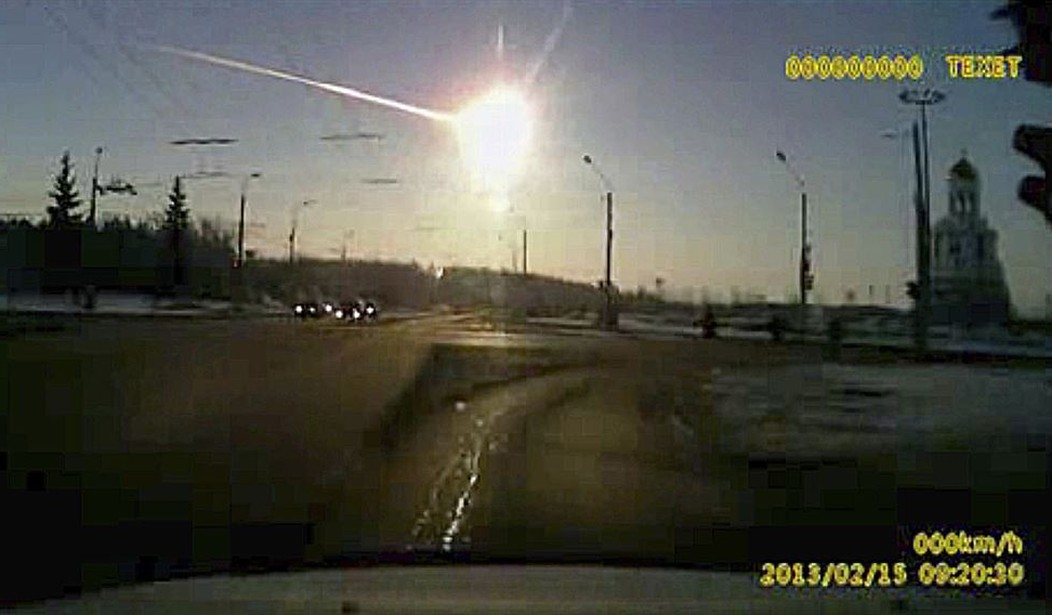
A better comparison is the 2013 house-sized asteroid that exploded about 14 miles above Chelyabinsk, Russia, with energy near 440,000 tons of TNT. That blast blew out windows across more than 200 square miles and injured over 1,600 people, mostly from broken glass. Also from NASA:
The house-sized asteroid entered the atmosphere over Chelyabinsk at over eleven miles per second and blew apart 14 miles above the ground. The explosion released the energy equivalent of around 440,000 tons of TNT and generated a shock wave that blew out windows over 200 square miles and damaged some buildings. Over 1,600 people were injured in the blast, mostly due to broken glass.
“The Chelyabinsk event drew widespread attention to what more needs to be done to detect even larger asteroids before they strike our planet,” said NASA Planetary Defense Officer Lindley Johnson. “This was a cosmic wake-up call.”
New England got lucky because the rock was small, the breakup occurred high, and the atmosphere took the beating before people did. NASA's planetary defense work exists for bigger threats, but smaller rocks still sneak through. Most burn up without notice, while a few arrive in daylight, light up satellites, shake homes, and remind everyone that space doesn't need much mass to get loud.
The meteor didn't become a disaster, just a lesson with a BOOM! attached. A three-foot rock moving at cosmic speed made several states look up and wonder what had just happened.
NASA quickly answered, and the facts brought relief. Altitude spared New England from damage, but the sky still has traffic.
A 3-foot meteor over New England released energy equal to about 300 tons of TNT, but altitude turned danger into noise. VIP members get the deeper read on what NASA confirmed, why Tunguska doesn’t fit, and why Chelyabinsk gives the better warning. Use promo code FIGHT for 60% off.



Join the Conversation
VIP members get the ability to comment on articles.