As I was working in the yard, cleaning up items the dogs wouldn't flush, I listened to the audio version of Geddy Lee's autobiography, My Effin' Life. Chapter three of his bio is dedicated to the story of his parents surviving the work and death camps that Nazi Germany designed.
Listening to Geddy describing the horrific conditions his parents lived through, up to their liberation, I was struck with a thought: What if Anne Frank had survived the death camps?
That's the impetus behind this column. I know it's based on my imagination, but it's also built from the sadness and anger I felt when I toured Auschwitz last year. Being the father of three daughters, Frank's story truly struck home.
The gates opened in 1945, revealing a horror that the world saw and what lay hidden behind barbed wire and silence. Allied forces entered camps that had operated in darkness, where names became faces and numbers became people again.
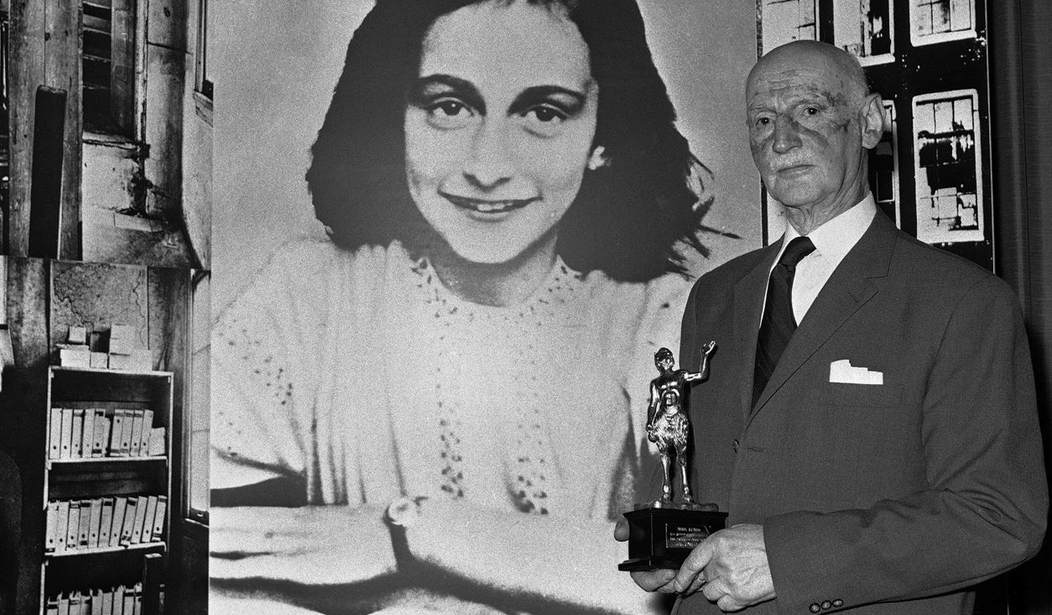
Among the millions who never returned, one name still echoes louder than most: Anne Frank.
Frank died at Bergen-Belsen concentration camp in early 1945, only weeks before liberation reached those around her. Typhus swept through the camp and took her life, along with her sister Margot. Her father, Otto, survived; he walked back into a world that no longer held his wife or daughters.
Though her writings survived, Anne died of typhus fever at the age of 15. For decades, historians listed the date of her death as occurring on March 31, 1945 — a mere two weeks before the Bergen-Belsen camp was liberated by the American forces. The Dutch Red Cross interviewed many survivors and estimated the date of her death as occurring between March 1 and 31, 1945. Later, the Dutch authorities chose the official date of March 27 for Margot, who also perished from the disease, and March 31 for Anne. At the time, Dutch probate laws required Otto to list an "officially established date" in order to draw up a certificate of inheritance with respect to his "missing" daughters.
Given the proximity of time between Anne's reputed death on March 31 and the liberation of the camp on April 15, this chronology added an extra dimension of sadness to her tragic story.
That's historical fact. Now? Consider a different outcome.
Imagine Anne Frank surviving the illness and that she holds on long enough for liberation to arrive. British troops enter Bergen-Belsen in April 1945, not seeing the guards who fled but holding the ones captured.
Survivors slowly stumble forward, weak but alive. Among them stands a teenage girl who once wrote in hiding about fear, hope, and belief in the good in people.
She returns to Amsterdam.
Otto Frank greets her not as the sole survivor, but as a father who didn't lose everything. The house at Prinsengracht 263 still holds the hidden annex, where her diary still sits, preserved by Miep Gies, who risked her life to protect it.
Anne reads her words, not as a legacy left behind, but as a beginning.
It's a shift that changes everything.
The diary still reaches the world, yet now it carries a living voice behind it; Anne speaks for herself, explaining what she wrote, meant, and learned while hiding from Adolf Hitler's regime.
Anne grows beyond those pages; she writes again. Not as a frightened young girl, but as a survivor who has seen what evil and hatred produce when left unchecked.
The late 1940s and early 1950s bring trials and testimony, where survivors step forward, including Anne Frank. Her words wouldn't remain confined to a single diary; she would testify, speak, be heard, and write in ways that reach far beyond a single book.
Just her presence would carry weight; a young voice, once hidden, now speaking in the open, would've reshaped how the world heard the story of the Holocaust.
Her writing would mature; early entries show clarity and insight beyond her years. Survival would sharpen that voice. She might have written novels, essays, or memoirs that follow the long shadow of survival. She wouldn't remain frozen at 15 in the public mind; she'd age, adapt, and challenge readers with the same honesty found in her diary, now backed by lived experience beyond the annex.
Consider the postwar world she'd enter.
Europe rebuilds, borders shift, nations confront the ruins left behind, and Jewish survivors search for families, their homes, and a sense of stability. Many emigrate, while some remain. Choices Anne Frank would face: stay in the Netherlands or leave for a new country?
Regardless, each path leads to a different legacy, yet both carry the same foundation: survival and voice.
Her influence wouldn’t rely on a single text caught in classrooms; it would evolve over decades in interviews and speeches, and later works would deepen her reach. The diary would introduce her to the world, while her life after 1945 would define how that introduction grows.
That absence of that future leaves a gap that no archive can fill.
The world reads Anne Frank as a symbol of innocence lost. Survival would've turned her into something else; a witness could speak across generations, not just through pages written in hiding, but through a lifetime shaped by survival. It's a difference that shapes how history is told, how memory is preserved, and how future generations understand the cost of hatred.
Otto Frank carried her words forward, alone, editing and publishing her diary, ensuring the world would hear her voice.
‘This is the legacy of your daughter Anne,’ helper Miep Gies told Otto Frank when she gave him Anne’s diary documents. Otto had just learned that his daughters Margot and Anne had died of spotted typhus in Bergen-Belsen.
At first, Otto could not bear to read Anne's texts. ‘I don't have the strength to read them,' he wrote to his mother on 22 August 1945. A month later, he had changed his mind and could not put them away. Otto decided to copy excerpts for his relatives in Basel and started working on a translation into German.
If Anne had stood beside him, the story wouldn't end with a father honoring his daughter; it would continue with a woman shaping her legacy.
History often turns on moments measured in days or even hours. Anne Frank came within weeks of survival, a narrow margin that stands as one of the most haunting near misses of the 20th century.
And yet, her diary endures, capturing her powerful voice. Unfortunately, the life behind those words never had the chance to unfold.
Her unfinished story still speaks, even in silence.