





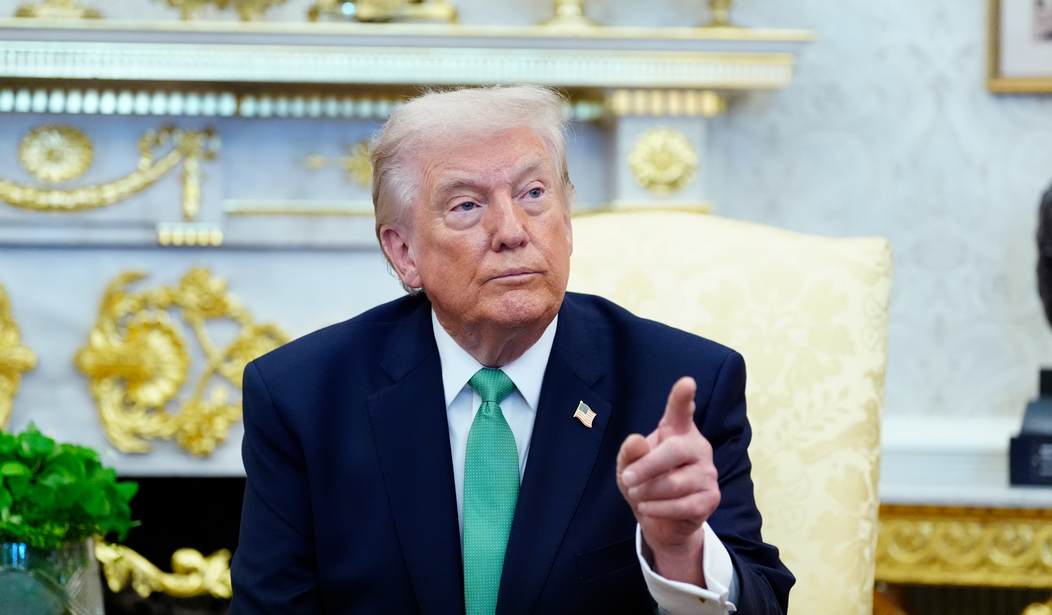
President Donald Trump made his position clear. Standing in the White House during the swearing-in ceremony of new Homeland Security Secretary Markwayne Mullin, he said the Gulf allies have carried real weight in the fight against Iran, but NATO needs to do more. It was a typical direct message: The United States and its regional partners can't carry the burden alone while Europe continues to watch from a safe distance.
Trump Demands More From NATO After Gulf States ‘Hit So Hard’
— The Daily Signal (@DailySignal) March 24, 2026
When asked by The Daily Signal's @TheElizMitchell if @POTUS wants the Gulf States to become more involved in the war, Trump said "a little bit, but more—more NATO."
"I think our Gulf allies have been pretty good, to… pic.twitter.com/ohJDrso81X
The scale of the attacks shows what's at stake. The United Arab Emirates absorbed roughly 1,400 rockets launched by Iran, and U.S. Patriot missile defense systems intercepted every one of them. Iran also fired over 100 missiles toward the USS Abraham Lincoln, and American defenses stopped them, too.
Those numbers tell a simple story: There's a lot of kinetic action, and by staying away, NATO is either cowardly or willfully ignorant.
NATO's response, or more candidly, lack of response, hasn't come close to matching that urgency. German Chancellor Friedrich Merz emphasized that Germany doesn't view the current crisis as a NATO war and has no plans to join military operations to secure the Straits of Hormuz. UK Prime Minister Keir Starmer allowed limited cooperation after initial hesitation over U.S. base access but stopped short of deeper involvement.
NATO Secretary General Mark Rutte and Deputy Secretary General Radmila Shekerinska met with Gulf leaders from Bahrain, Kuwait, Qatar, and the UAE last week and issued statements condemning Iran's attacks, but no ships moved and no forces deployed.
Allies and representatives from Bahrain, Kuwait, Qatar and the United Arab Emirates exchanged views. NATO Deputy Secretary General Radmila Shekerinska and Allies expressed their solidarity with Gulf partners and strongly condemned Iran’s indiscriminate attacks across the region. Allies also referred to UN Security Council Resolution 2817 and recognised Gulf partners’ right to self-defence under the UN Charter.
Allies underlined the importance of increased dialogue with partners to strengthen practical cooperation. This could include areas such as maritime security, countering Uncrewed Aerial Systems, protection of critical infrastructure, and countering terrorism.
Bahrain, Kuwait, Qatar and the United Arab Emirates are members of NATO’s Istanbul Cooperation Initiative, a partnership forum established more than 20 years ago to help contribute to long-term global and regional security through political dialogue and practical cooperation.
Yes: NATO hit Iran with a formidable, strongly worded memo.
It's not a new pattern. Several NATO countries spent years maintaining economic and diplomatic ties with Tehran. Trade agreements moved forward, energy needs shaped policy, and tensions were managed rather than confronted. That history now sits in the background as the war continues to unfold, helping explain the hesitation.
Cutting ties with Iran carries economic consequences, and some European leaders appear unwilling to take any step unless the threat reaches their doorstep.
Picture a commercial fishing fleet tied to the same harbor. One boat pushes out into rough water to keep the shipping lanes open while the rest stay docked, engines idling, radios on, offering advice over the air. The storm builds, the current tightens, and the lone vessel keeps working while the others calculate risk from a distance. At some point, the storm doesn't stay offshore; it moves in, and every boat in the harbor feels it.
That's the position NATO faces. Europe depends heavily on energy flows that pass through the Strait of Hormuz, and when Iran disrupts that route, the impact doesn't stay in the Gulf. Prices rise, supply chains tighten, and the strain hits European industries and households faster than it hits the United States. The longer the strait remains under threat, the more pressure builds on economies that rely on steady access to those shipments.
Trump has already signaled how he views the moment, saying the United States can continue operations with Israel and Gulf partners if necessary, but he will remember which allies stepped forward and which held back.
That statement carries weight beyond this current conflict, speaking to future cooperation, future commitments, and how responsibilities will be shared inside the alliance.
NATO leaders have chosen words over action so far — and don't forget that strongly worded memo, without any bold text. Meetings have taken place, statements issued, and concerns expressed, but none of that keeps shipping lanes open or stops missiles. The gap between rhetoric and action grows increasingly visible with each passing day.
Iran continues applying pressure through direct attacks and proxy activity. U.S. forces remain engaged, and Gulf allies continue to absorb and respond to strikes. The situation doesn't pause while alliances debate their role; it moves forward, with or without full participation.
Trump's left the door open, but not indefinitely. NATO faces a choice that's no longer abstract. The alliance can continue to treat the war as somebody else's problem, or it can see that the consequences won't stay contained. Energy routes, economic stability, and long-term security all intersect in the same narrow stretch of water.
The next move belongs to NATO, and the clock isn't waiting for an even more strongly worded memo, this time in bold.
Related: Iran Wants Vance at the Table and Cuts Out Kushner and Witkoff
Readers who want a clearer, fact-driven analysis can join PJ Media VIP today. Use promo code FIGHT to save 60% on your membership.
Join the Conversation
VIP members get the ability to comment on articles.