





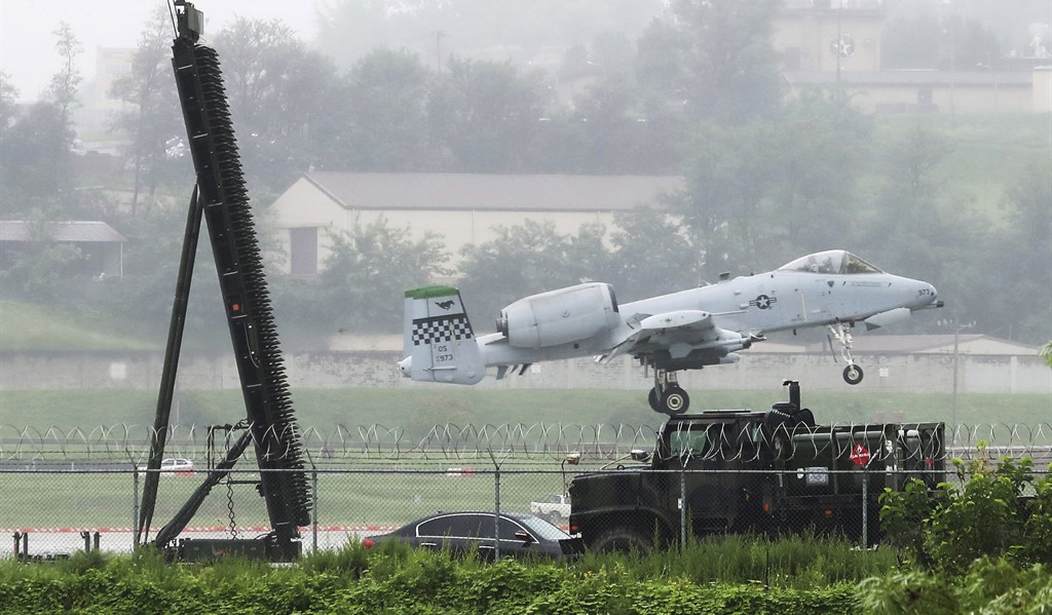
The A-10 Warthog never tried to impress anyone with looks. Good thing, because it couldn't; the plane looks as though it was assembled in a scrapyard during a bar fight.
And when things get serious, it's still one of the first aircraft anybody wants covering them overhead. Operation Epic Fury just drove the point home again, this time over the Strait of Hormuz.
The current operational tempo in the Strait of Hormuz highlights why the A-10 remains uniquely suited for this type of warfare. Iranian tactics rely heavily on swarm attacks using fast, low-signature boats, often armed with rockets, mines, and short-range anti-ship missiles. These targets are difficult to detect and track using conventional high-altitude strike profiles. The A-10, by contrast, operates at low altitude with extended loiter time, allowing pilots to visually identify, pursue, and engage these threats in real time, even in congested maritime environments where civilian and military vessels are intermingled.
The aircraft’s GAU-8/A Avenger 30mm cannon remains central to this mission, offering sustained, high-precision firepower against small and maneuvering maritime targets. The system fires depleted uranium or high-explosive incendiary rounds at a rate of up to 3,900 rounds per minute, with a typical combat load of around 1,150 rounds. This gives the A-10 a unique ability to conduct multiple attack passes and maintain pressure on targets, something no other Western aircraft can replicate at this scale.
Built by Fairchild Republic, the A-10 exists for one purpose: to kill enemy threats close to American forces.
That mission hasn't changed since the 1970s, and no amount of PowerPoint presentation has replaced it. The aircraft was designed around the GAU-8 Avenger cannon, a 30 mm monster that roars like a lion and leaves fire in its wake like a dragon. Everything else on the plane exists to support that weapon and keep the pilot alive long enough to use it.
Thunderbolt IIs have Night Vision Imaging Systems (NVIS), goggle compatible single-seat cockpits forward of their wings, Helmet Mounted Cueing Systems, and a large bubble canopy which provides pilots all-around vision. The pilots are protected by titanium armor that also protects parts of the flight-control system. The redundant primary structural sections allow the aircraft to enjoy better survivability during close air support than previous aircraft.
The aircraft can survive direct hits from armor-piercing and high explosive projectiles up to 23mm. Their self-sealing fuel cells are protected by internal and external foam. Manual systems back up their redundant hydraulic flight-control systems. This permits pilots to fly and land when hydraulic power is lost.
That design shows up in every inch of the aircraft. The cockpit sits inside a titanium bathtub that protects the pilot from ground fire. The engines ride high and far apart to reduce the chance of both getting hit at once. The wings stay straight, not sleek, because control at slow speed matters more than speed at altitude.
None of it is elegant-looking, and all of it works.
Operation Epic Fury showed exactly why that matters. Reports from the operation describe the A-10s flying sustained missions in complex environments, including open water zones where traditional close air support gets tricky.
The Warthog didn't just show up; it stayed, loitered, and delivered precise firepower where it mattered, when it mattered. Fast jets hit and leave, while the Warthog sticks around to make sure the job's finished.
Beyond its visible combat performance, Operation Epic Fury is revealing a less discussed but critical function of the A-10 within the joint force. According to Army Recognition's defense analysis, the aircraft is acting as a tactical kill-chain stabilizer in a fragmented battlespace where targets are fleeting, communications are contested, and identification cycles are compressed. By maintaining continuous presence over key maritime corridors, A-10 pilots are effectively bridging the sensor-to-shooter gap, validating targets visually, and executing strikes without the latency associated with higher-altitude or remote platforms.
Another exclusive analytical insight emerging from Epic Fury concerns the A-10’s role in degrading not only physical assets but also the operational tempo of Iranian forces. Persistent overhead presence forces adversary units to remain concealed, delays launch decisions, and disrupts coordinated swarm tactics. This suppression through the presence effect is rarely quantified but has significant operational value, particularly against decentralized naval forces relying on speed and surprise.
The operation also highlights a critical limitation in the current U.S. force structure. While fifth generation aircraft excel in penetrating defended airspace and striking fixed high value targets, they are not optimized for sustained engagement of numerous low value but operationally decisive targets such as fast attack craft or mobile launch teams. Epic Fury exposes this gap under real combat conditions and reinforces the need for platforms capable of persistent close engagement.
The Air Force keeps trying to retire it in favor of fifth-generation fighters. It sounds like a modern and efficient argument, but in reality, it keeps running into the same problem. The A-10 does a job no other aircraft on the planet handles as well as the Warthog does.
While multi-role fighters can do plenty of things, the Warthog brings a completely loaded tool belt. Pilots and ground troops understand that difference better than anybody sitting in a briefing room. The bond between the Warthog and troops on the ground is legendary; when troops hear that distinctive sound overhead, they know help isn't passing on their left, help is staying put. That kind of confidence doesn't come from theory; it comes from years of results.
The Warthog has taken hits, flown home with missing pieces, and gone right back out again. That's not marketing; it's history from conflicts across Iraq and Afghanistan. The aircraft absorbs punishment and keeps flying, which is critical in environments where conditions change fast and mistakes carry real consequences.
Cost matters too. The A-10 remains far less expensive to operate than newer aircraft. It doesn't demand the same maintenance complexity or support footprint. In sustained operations, that reliability becomes a force multiplier; you don't need something flashy when something durable keeps showing up every time it's needed.
The A-10 Warthog keeps proving a simple truth: looks and hype don't win fights; capability does.
And over the Red Sea, the ugliest plane in the sky is doing again what it was built for.
There’s a reason stories like the A-10 keep getting overlooked or watered down. Straightforward effectiveness doesn’t fit the narrative most outlets prefer, and that leaves a gap between what’s happening and what gets told. That gap continues to grow, and it won’t close on its own. If you want coverage that actually respects performance, results, and reality, you’re in the right place. Get 60% off with promo code FIGHT.



Join the Conversation
VIP members get the ability to comment on articles.