


When there's meth being cooked in a house down the street, decent neighbors don't throw a block party hoping for the best. Nope. They lock doors, call the cops, and cut off access, not because they crave conflict, but because ignoring danger never makes it smaller. Foreign policy works the same way, even when critics pretend otherwise.
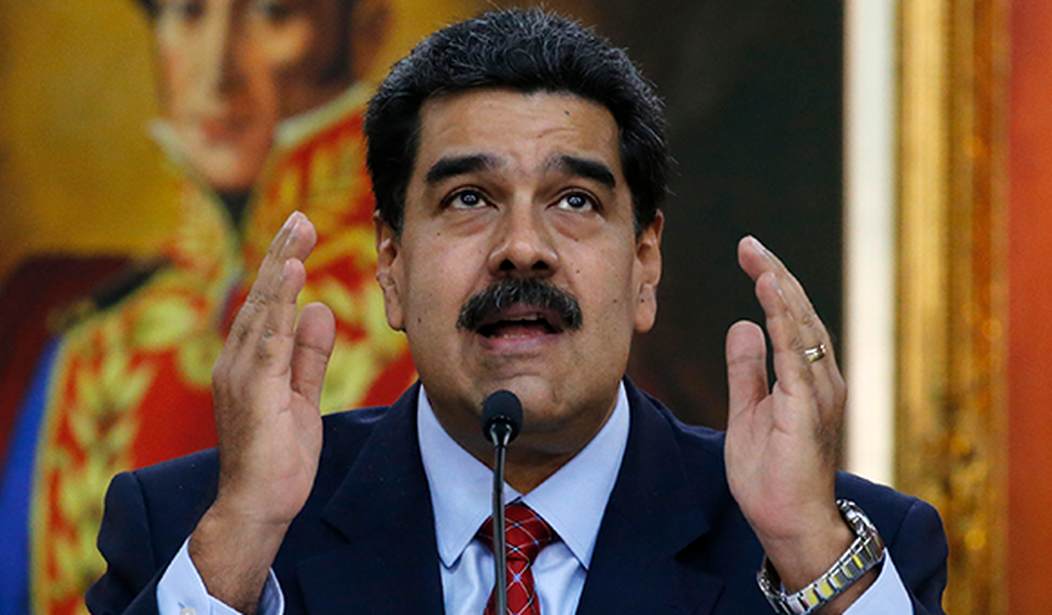
President Donald Trump's vow to impose a massive blockade around Venezuela follows that logic. The announcement triggered an eruption from Caracas, complete with speeches about imperialism and warmongering.
The anger from Dictator-in-Chief Nicolás Marduro sounded theatrical, but the reaction raised a more honest question: Is the outrage really about the embargo, or about the sudden pressure on a regime that survives only when nobody pushes back?
The Trump administration framed the blockade as a security measure tied to narcotic trafficking, sanctions enforcement, and regional stability. Trump described Venezuela as a hub for criminal networks that profit from chaos while funneling drugs toward American communities. Cutting maritime access is a chokepoint, not an invasion, and the goal stays containment, not conquest.
Venezuela's leadership responded as a cornered power structure often does. Loud accusations replaced calm arguments. State media leaned into language meant to rally internal support while deflecting blame outward. International law suddenly mattered deeply to a government that routinely ignores it at home. The volume of the response suggested fear rather than confidence.
When pressure hits income and movement simultaneously, bad actors panic, blocking tankers and tightening patrols; the lifeline, not the rhetoric, is the target. Venezuela's economy depends heavily on oil exports and on access to shipping routes. Restricting those routes threatens the very machinery that keeps the regime afloat.
While critics may call the approach dangerous, supporters call it overdue; both sides miss a simpler option. A blockade functions like a quarantine. It isolates a threat to prevent its spread while avoiding a full-scale fight.
History is full of examples where half measures invite escalation, while clear boundaries reduce it.
The administration framed the action as part of a broader strategy to protect American borders and disrupt cartel operations tied to state actors. Officials argued that drug seizures and interdictions already underway justify more vigorous enforcement at sea.
Maduro's fury reads differently through that lens; losing access equals losing leverage, and losing that leverage exposes weakness. Strong governments negotiate calmly, while fragile ones can only shout.
The pressure campaign also fits a pattern, but rather than endless talks that produce photo ops and little else, the administration favors visible consequences tied to behavior.
That approach unsettles regimes accustomed to symbolic scolding without follow-through. Call it doctrine or instinct, the methods are consistent. When threats from afar appear on the horizon, confront them early, before they reach American neighborhoods.
With thoughts of our meth lab down the street, we know that neighbors don't apologize for installing cameras or calling law enforcement, because families sleep nearby. Complaints from the offender don't outweigh the safety of everyone else.
Venezuela's leadership knows that reality; the blockade threatens money, movement, and narrative controls all at the same time. It's a combination that explains the outrage far better than any legal argument delivered from a podium.
When the beer foam hits my mustache, we learn that this dispute isn't about tone or diplomacy. Instead, it's about power and consequences. The administration applied pressure where it hurts. How do we know it worked?
Because Maduro reacted.
PJ Media VIP exists to dig beneath surface outrage and explain why certain moves trigger panic while others earn indifference.
Join VIP today and support reporting that treats foreign policy like adult business, not performance art.




Join the conversation as a VIP Member