


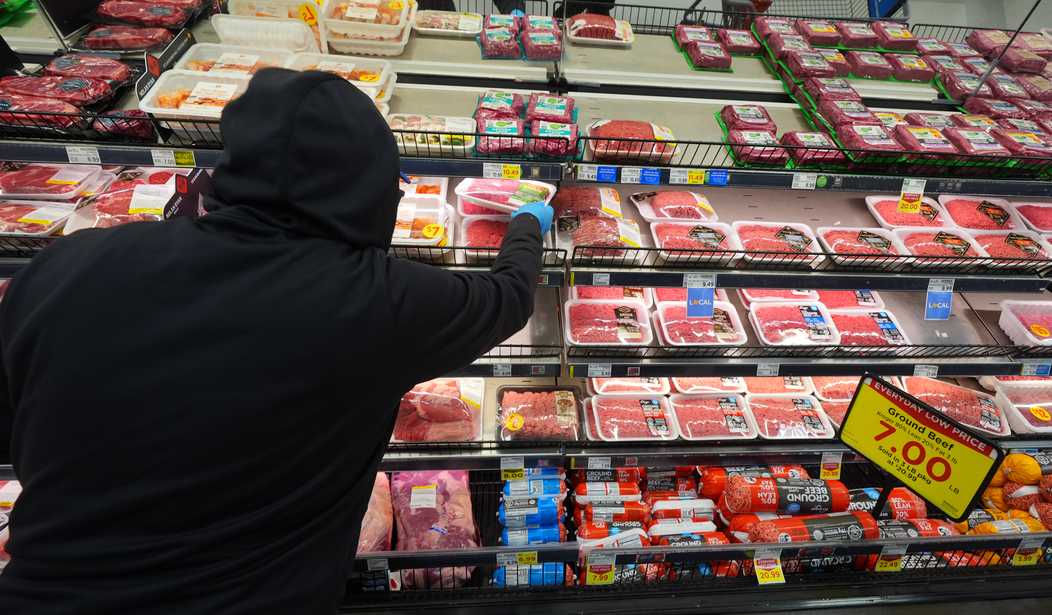
Grocery shopping is a necessary evil. And when you’re trying to squeeze every last bit of value from your grocery shopping trip, it can get exhausting. Aldi has great prices on their stuff, but maybe it’s out of the way. Publix doesn’t have any BOGO items that benefit you that week. Costco and Sam’s are a 30-45 minute drive. Sometimes it takes a logistical miracle to get everything you need and want for the best price.
So many factors converge to determine grocery prices. It’s nice to buy directly from farms or grow our own food when we can, but that’s not 100% feasible. We rely on a supply chain that adds to our food costs at every level.
Polling shows that Americans want the government to do what it can to help lower food prices, but not in an intrusive way. Eighty-two percent of those surveyed support protecting American-owned farmland and lowering the regulatory burden on farmers, while 78% believe that lower energy prices from American energy production will help alleviate grocery costs.
“Food processors, manufacturers, wholesalers, retailers, and foodservice providers transform raw agricultural commodities into convenient food products for U.S. consumers,” reports the U.S. Department of Agriculture’s Economic Research Service. “Value added to commodities through these companies’ marketing services accounts for a substantial portion of consumer food prices.”
The costs that farmers pay to grow their food affect the prices we pay for our groceries. One huge part of that equation is fertilizer.
“American families’ concerns about high grocery store bills continue to deepen, and elevated fertilizer prices are a big reason why,” reported my Townhall colleague Mike Conaway this summer. “Fertilizer accounts for 33-45 percent of corn and wheat farmers’ operating costs. When input prices rise, food prices follow close behind.”
Add to the operating costs the fact that China is manipulating the global fertilizer marketplace by restricting its exports and forcing other countries to rely on American exports. Thus, American farmers have to compete with international farmers for the fertilizer they rely on.
Related: The Cost of an Ordinary Life: Your Paycheck Should Buy More Than an Economic Lecture
The Trump administration is making inroads to help lower the cost of fertilizers, particularly when it comes to nitrogen and natural gas, as my RedState colleague Ward Clark pointed out earlier this year:
...the Trump administration has made "drill, baby, drill" the order of the day. One particular key item that isn't mentioned here is potash, which adds potassium to soils, which makes plants hardier and yields higher. Onshoring this material isn't so easy, as the United States doesn't have great supplies of potash domestically. But the world's leading supplier of potash lies just to our north: Canada.
Transportation is an obviously massive factor in food prices as well. It goes without saying that when — fuel prices — particularly diesel — go up, our food bills do, too.
I hesitate to use the word “oligopoly” because of its connotations, but that’s really the best word to describe the next factor in high food prices. A handful of companies handle meat processing for the major farms across the nation. President Donald Trump wants to break that cycle.
“Allowing farmers and ranchers to process their own animals for sale would effectively decentralize this process,” Ward Clark wrote earlier this year.
The Department of Justice is going after the elements of the industry that have tried to suppress competition, including a proposed settlement that addresses Agri Stats’ sharing of sensitive pricing, production, and cost information among competing processors. From a DOJ press release:
“A stable and affordable food supply is critical to our country’s well-being,” said Acting Attorney General Todd Blanche. “This Department of Justice is laser-focused on making everyday life affordable for all Americans.”
“A fair market depends on real competition, not privileged access to competitors’ playbooks,” said Associate Attorney General Stanley Woodward. “When dominant firms share sensitive data in ways that exclude buyers and the public, they gain an artificial advantage that weakens market discipline and drives up prices for everyday Americans. This settlement proves the Department’s commitment to promoting transparency in the marketplace, enforcing the law, and delivering real relief for American consumers at the grocery store.”
According to the USDA, foreign owners held 46 million acres of U.S. agricultural land as of the end of 2024. This, of course, is more about security than prices, but the security of American farmers will help with affordability. The Trump administration is trying to do something about that, too.
“President Trump is putting America First, and this includes increasing transparency and scrutiny of one of our most valuable national assets, American farmland. We are working to improve reporting of foreign-owned land in the United States...” said Agriculture Secretary Brooke Rollins. “The online portal will allow us to obtain verifiable information about foreign interests in American agricultural land and protect the security of our farmers.”
On Election Day, we face a choice. Do we put our future in the hands of those who would allow foreign ownership of American land, food processing near-monopolies, and regulations that drive prices up? Or do we elect legislators who will work to make food more affordable?
Editor’s Note: Thanks to President Trump’s leadership and bold policies, America’s economy is back on track.
Help us continue to report on the president’s successes and combat the Democrats' lies about America's economic revival. Join PJ Media VIP and use promo code FIGHT to receive 60% off your membership.


Join the Conversation
VIP members get the ability to comment on articles.