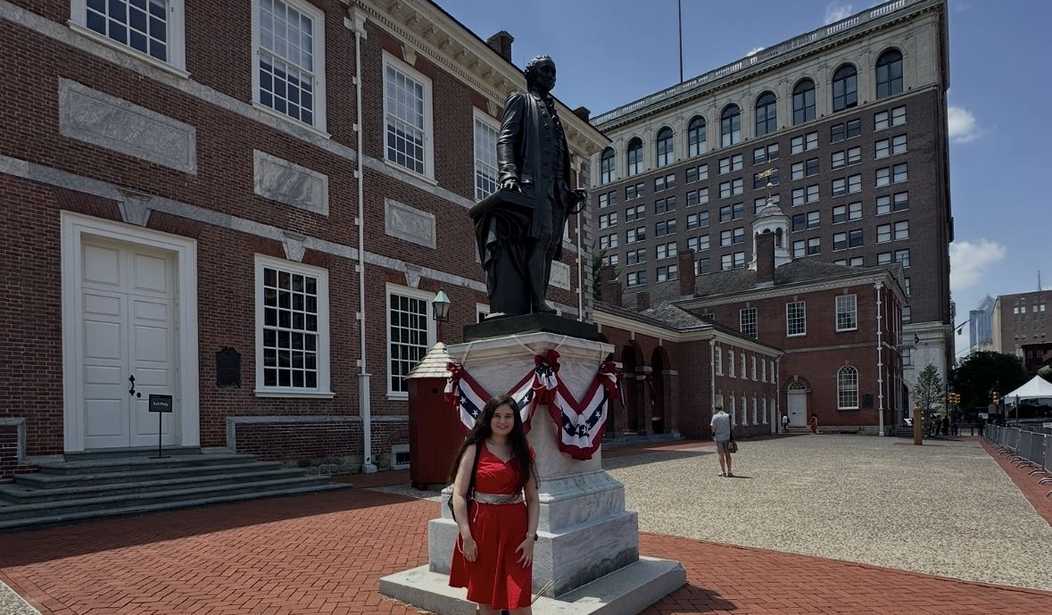
Today, September 17, is Constitution Day, but it is also the anniversary of an event almost a decade later, in 1796: George Washington finishing his “Farewell Address,” which appeared in print for the public two days later.
There were achievements to celebrate and causes for concern since Washington had been the first to sign the Constitution in 1787. The war hero and president of the Constitutional Convention had become the first U.S. president, with everything he did setting a precedent. He had made mistakes, and some of his former friends had backstabbed him (Thomas Jefferson most notably), but Washington had managed to bring America through the first tumultuous years of constitutional governance as he had brought America through the Revolution. The Republic had survived the most crucial years.
Washington did not actually deliver the address as a speech; he wrote it with help from trusted advisers — most especially Alexander Hamilton, his most brilliant associate — and provided it to the press for publication. By refusing to seek a third term, Washington set yet another precedent that would hold until the power-hungry Democrat Franklin Delano Roosevelt. But Washington also signaled the end of an era.
Related: America 250: It’s Constitution Day!
He had brought the United States of America through the first couple of decades of her existence, first as a general and later as a statesman, but now Washington was handing that task of supreme leadership over to others. The man who would not be king once again reaffirmed his republican beliefs by retiring. And not unreasonably, given that there was no one so great as he, there was cause to fear for America’s future. Of course, Washington himself was not worried out of personal vanity, but because of the growing evidence of factionalism and signs that some Americans were already forgetting why they originally sought independence. Since we are still struggling with some of the same problems he identified more than two centuries ago, it is worth studying his address in full if you can.
Related: Trump Proposes Smithsonian Tributes to George Washington, ‘America’s Greatest Hero’
But today, in this 250th year of America’s existence, I want to focus on one paragraph in particular from the address. Washington thanked the people of America who had supported him through all his years of public service and assured them that their support was what had kept him out of private rural life so long.
Profoundly penetrated with this idea, I shall carry it with me to my grave, as a strong incitement to unceasing vows that heaven may continue to you the choicest tokens of its beneficence; that your union and brotherly affection may be perpetual; that the free Constitution, which is the work of your hands, may be sacredly maintained; that its administration in every department may be stamped with wisdom and virtue; that, in fine, the happiness of the people of these States, under the auspices of liberty, may be made complete by so careful a preservation and so prudent a use of this blessing as will acquire to them the glory of recommending it to the applause, the affection, and adoption of every nation which is yet a stranger to it.
Washington provided a great deal of advice in his address, but the above paragraph reads almost like a fatherly benediction. The “Father of our country” had a last blessing and prayer for his people before he returned to his farm. And it is a prayer that we could and should offer up so many years later in our own time, as the evils that Washington foresaw threaten to tear our country apart.
Joseph Ellis’s book Founding Brothers was a source for this article.