
In 1776, the American Revolutionaries were camped in the snow with little to no supplies and a series of defeats behind them, wondering how to survive the winter, let alone defeat the most powerful empire on earth. In 2025, politically-fueled violence, foreign assaults, domestic corruption, and institutional disintegration seem the order of the day. What can we learn from how the Founders handled their American Crisis?
Today is the anniversary of multiple important events in American history, including the arrival of George Washington's Army at the infamous Valley Forge encampment in 1777 (and it's also my sister's birthday). But before Valley Forge, there was the miserable November and December of 1776.
We think of 1776 as a triumphant and glorious year, especially as we prepare for the 250th anniversary of our nation's founding. But while that was the year America declared independence, it had been a difficult and disappointing autumn and winter for the Continental Army -- to put it mildly. After the devastating loss at New York and the fall of Manhattan and nearby forts, the army retreated across New Jersey, with the British taking more and more towns. Some Patriots even reneged on support for independence, agreeing to take the oath of loyalty to the British crown.
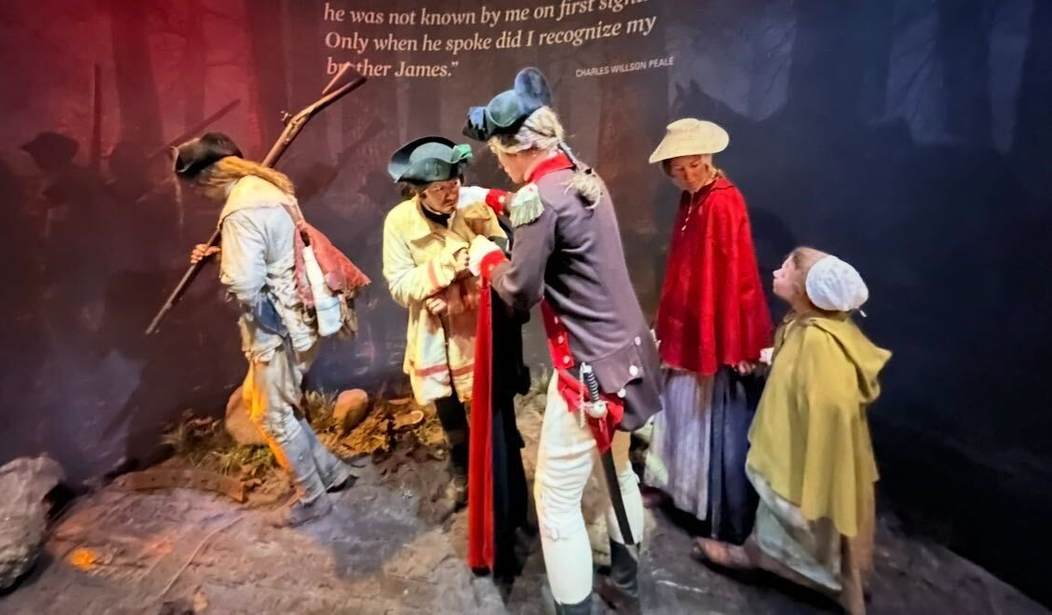
George Washington was a talented general, and his men were brave, but bad luck, inexperience, low supplies, and several other factors contributed to that string of defeats. Washington managed to save his Army from destruction, but as they huddled in the frigid weather on the banks of the Delaware River in December 1776, it must have seemed as if the death of American independence was not far off. Enlistments were set to expire with the coming of the new year, and the men were in desperate straits. Charles Willson Peale, afterwards a famous painter, recalled how a man without any clothes but a dirty blanket jacket "staggered out of line," his face covered in sores behind the straggling beard. "Only when he spoke did I recognize my brother James," Peale remembered.
Related: What Was the Boston Tea Party About? The Misunderstood History of a Famous Protest
In the midst of this time of suffering and near-despair, Thomas Paine, a writer who came from England to America and espoused the cause of freedom, took up his pen. Paine was serving with the Army himself and had seen the crisis up close. But on Dec. 19, 1776, the first pamphlet in his series "The American Crisis" was published in Philadelphia. Below are the immortal opening lines:
These are the times that try men’s souls: The summer soldier and the sunshine patriot will, in this crisis, shrink from the service of his country; but he that stands it now, deserves the love and thanks of man and woman. Tyranny, like hell, is not easily conquered; yet we have this consolation with us, that the harder the conflict, the more glorious the triumph. What we obtain too cheap, we esteem too lightly: It is dearness only that gives every thing its value. Heaven knows how to set a proper price upon its goods; and it would be strange indeed, if so celestial an article as FREEDOM should not be highly rated. Britain, with an army to enforce her tyranny, has declared, that she has a right (not only to TAX) but “to BIND us in ALL CASES WHATSOEVER,” and if being bound in that manner is not slavery, then is there not such a thing as slavery upon earth. Even the expression is impious, for so unlimited a power can belong only to GOD.
That pamphlet changed the course of history. Those who read it, both the soldiers freezing in the snow and the colonists in their homes, felt the flame of love for liberty leap up within them and burn brightly. Washington's men read it just before a tide-turning battle. Only a few days after "The American Crisis" was published, on Christmas Night, Washington and the Marbleheaders managed to transport their Army and artillery across the icy Delaware River. The Americans pulled off a surprise attack on Trenton with dozens of Hessian casualties and no American casualties (even though there was hand-to-hand fighting -- the Hessians weren't simply lying in bed as is often reported).
So what can we learn from this? First of all, that no situation is hopeless and no enemy is so powerful that he cannot be defeated. It often seems as if we are losing the culture war, but that is because the leftists have been far more aggressive in infiltrating institutions, voting, changing language, and making public protests than we have. Secondly, like Paine, Washington, and the other Revolutionaries, we must learn to be original in our thinking, daring in our actions, and so dedicated to liberty that we are willing to risk everything to preserve it.
Lastly, as Paine repeatedly appealed to God in his writings, and as Washington always turned to prayer in crisis, we too should remember that no great deed is accomplished without Divine Aid.
The Museum of the American Revolution in Philadelphia was a source for this article. The image is of the museum's depiction of the Peale brothers' meeting.