


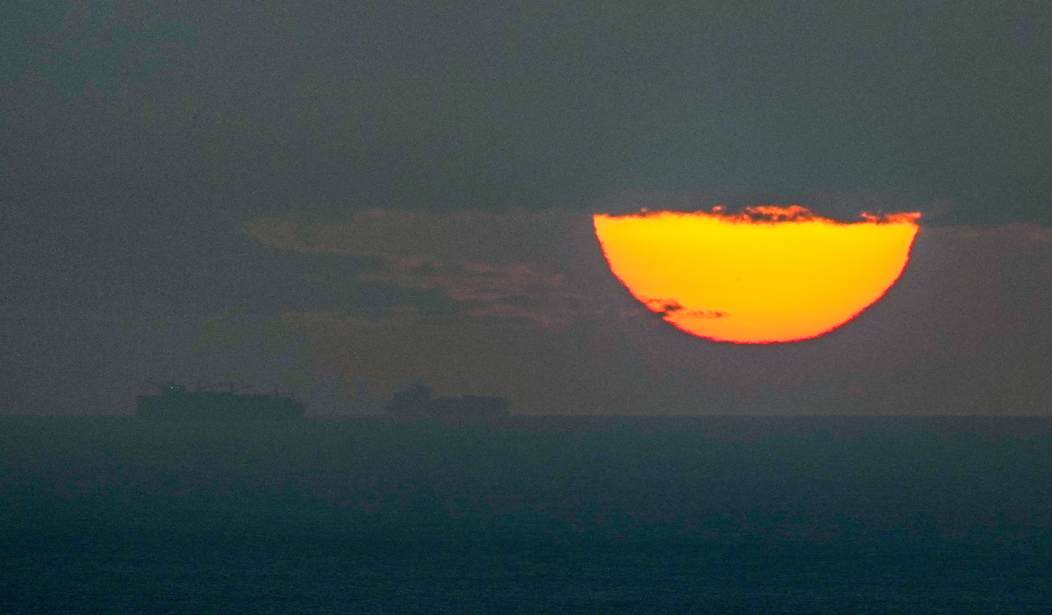
The U.S. military intercepted and destroyed multiple Iranian one-way attack drones targeting commercial vessels in the Strait of Hormuz, according to the U.S. Central Command (CENTCOM).
Officials said all incoming drones on June 13 were neutralized, and that commercial maritime traffic through the strategic waterway remained operational.
“U.S. forces have downed all of them in recent hours as traffic flow through the strait continues unimpeded,” CENTCOM said in a statement posted on X.
“The international trade corridor remains open for transit.”
According to Reuters, CENTCOM conducted the interceptions after determining that the drones posed a threat to commercial shipping operating in the Strait of Hormuz, one of the world’s most important energy transit routes.
The latest incident follows a series of military encounters in the region, as CENTCOM previously reported defensive operations on May 27 and June 5–6, after Iranian drones attempted to attack commercial shipping routes in the strait.
During those operations, the U.S. military intercepted the drones and carried out strikes against infrastructure believed to support additional launches, including ground control facilities and coastal radar systems.
On June 5, U.S. forces reportedly destroyed four drones approaching the waterway and conducted strikes against surveillance radar facilities near Goruk and Qeshm Island.
Earlier, on May 27, American forces intercepted four drones targeting a commercial vessel and destroyed a ground control station in Bandar Abbas that was preparing additional launches.
U.S. officials characterized the actions as limited defensive operations intended to protect international shipping lanes and preserve regional stability.
The military activity comes amid renewed diplomatic negotiations between Washington and Tehran, with officials signaling possible progress toward a broader agreement that Pakistan is mediating.
President Donald Trump said on June 11 that the Strait of Hormuz could reopen following the signing of a potential agreement.
“The strait will officially open as soon as we sign, which could be soon, very soon, maybe over the weekend in Europe,” Trump told reporters at the White House.
However, Iran’s Persian Gulf Strait Authority (PGSA) stated on X that the waterway would remain “closed until further notice,” citing tensions involving U.S. military actions in the region.
Trump later accused Iran of negotiating in bad faith after leaked draft agreement terms appeared in the media.
“The terms that Iran leaked out to the Fake News have NOTHING to do with the terms that were agreed to, in writing,” Trump wrote on Truth Social.
He added that Iran’s actions, including what he described as a drone attack targeting Indian vessels near the Strait of Hormuz, were “totally unacceptable.”
"They better get their act together, and FAST!," he continued.
Meanwhile, Pakistani Prime Minister Shehbaz Sharif said on June 12 that negotiators had reached “a final, agreed upon text” for a potential U.S.-Iran peace agreement.
According to Axios, the proposed 14-point memorandum of understanding would reportedly restore full maritime traffic through the Strait of Hormuz in exchange for the United States lifting its naval blockade on Iranian ports.
Iranian Foreign Minister Abbas Araghchi said discussions with Washington involve several major issues, including Iran’s nuclear program, sanctions relief, and the future administration of the Strait of Hormuz.
Araghchi said the proposed agreement would include lifting the U.S. naval blockade and establishing a new framework for managing the waterway.
He insisted that Iran and Oman would continue overseeing the strait, while future arrangements would differ from previous practices.
The Strait of Hormuz remains a vital global energy corridor, through which a significant share of the world’s oil shipments pass.
The ongoing security situation has disrupted maritime operations, with more than 100 commercial vessels reportedly rerouted due to heightened risks.
Despite continued military tensions, international shipping has not been halted, and diplomatic efforts remain underway to secure a ceasefire extension and broader agreement between Washington and Tehran.
The developments reflect the fragile balance between military escalation and diplomacy as both sides negotiate over regional security, maritime access, sanctions, and Iran’s nuclear activities.
Support and follow PJ Media’s coverage of breaking news and key events. Join PJ Media VIP and use promo code FIGHT to get 60% off your membership.





Join the conversation as a VIP Member